- U.S.
- World
- Science
- Health
- Life
- Rankings
- Opinion
- Entertainment
- Fact Check
- My Turn
- Education
- EventsSportsPodcastsBetter PlanetBetter WorkplacesMightierAutosNewslettersUnconventionalVantageExpertsLeadershipDev Pragad
- Subscribe

- Login
×
Subscribe Login
- U.S.
- World
- Science
- Health
- Life
- Rankings
- Opinion
- Entertainment
- Fact Check
- My Turn
- Education
- Events
- Sports
- Podcasts
- Better Planet
- Better Workplaces
- Mightier
- Autos
- Newsletters
- Unconventional
- Vantage
- Experts
- Leadership
- Dev Pragad
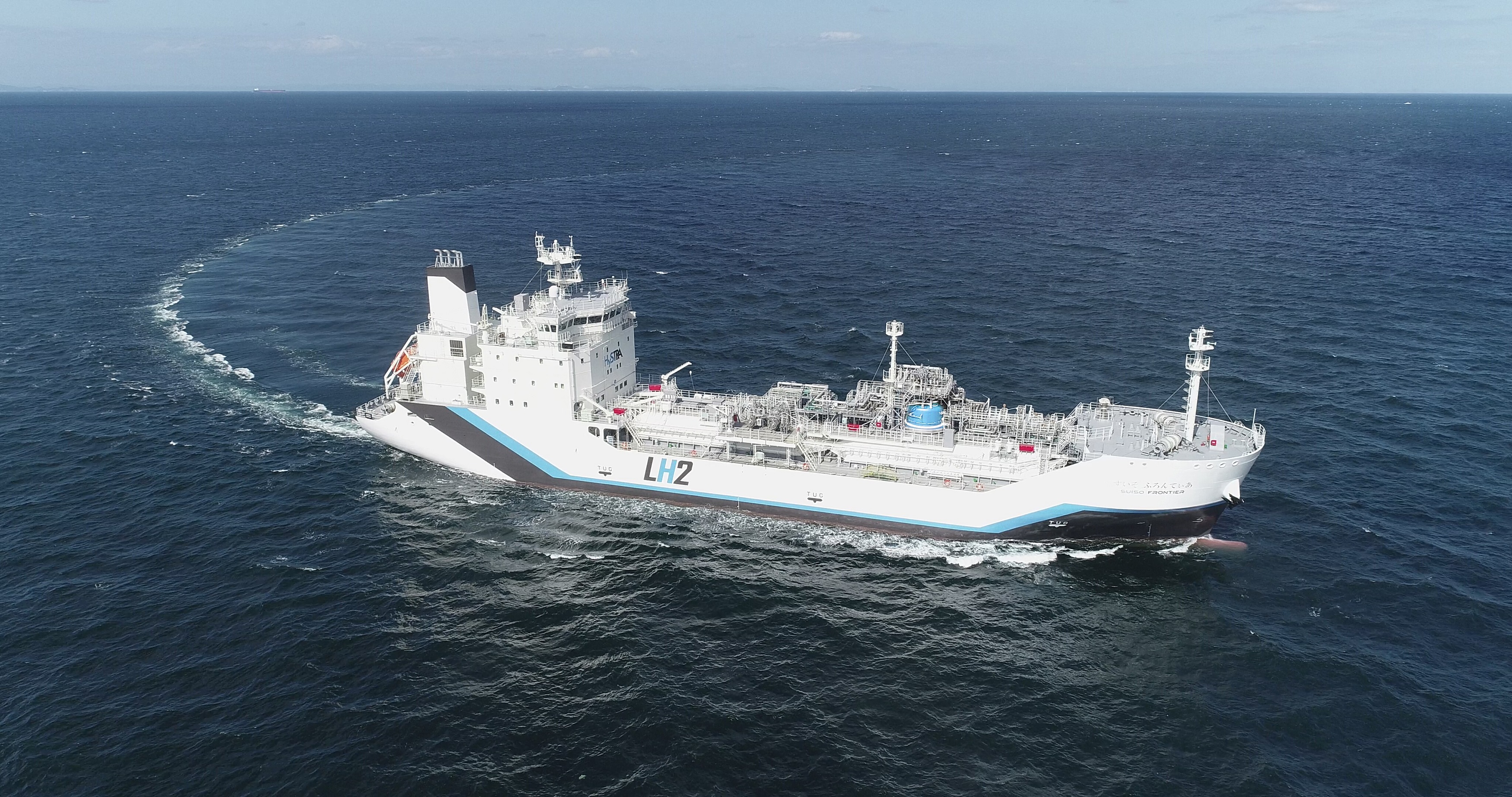
The “Suiso Frontier” is the first-ever liquid hydrogen carrier. Developing hydrogen carriers is critical to creating an international supply chain. The “Suiso Frontier” is the first-ever liquid hydrogen carrier. Developing hydrogen carriers is critical to creating an international supply chain. KAWASAKI HEAVY INDUSTRIES, LTD
Harnessing Hydrogen to Realize a Carbon-Free Society
By The Government of Japan
 Newsweek Is A Trust Project Member
created for
Produced for an organization or individual that has paid for and approved the content.
Share
Copy Link
✓ Link copied to clipboard!
Listen
Translate
- English (Original)
- Español
- 中国人
- Français
- Deutsch
- Portuguese
- हिन्दी
Newsweek AI is in beta. Translations may contain inaccuracies—please refer to the original content.
Read original
Speed: 0.5xSpeed: 1xSpeed: 1.5xSpeed: 2x
🎙️ Voice is AI-generated. Inconsistencies may occur.
✖
Hydrogen is garnering attention as a crucial energy resource in achieving carbon neutrality since it does not emit carbon dioxide (CO2) when combusted as an energy source. As a global pioneer in utilizing hydrogen, Japan is striving to achieve decarbonization by further promoting hydrogen energy.
With the effects of global warming–induced climate change becoming an increasing threat, many countries and regions are accelerating their efforts toward carbon neutrality for the sake of sustainable development. One of the keys identified for realizing the important goal of achieving carbon neutrality is energy produced through hydrogen, the combustion of which produces no CO2 emissions. In the Green Growth Strategy, formulated by former Japanese Prime Minister Suga Yoshihide in response to Japan's pledge to tackle global warming by becoming carbon neutral by 2050, utilization of hydrogen energy was positioned as one of the top priorities. Up to 370 billion yen (more than $3 billion) of Japan's 2 trillion yen fund to support the development of decarbonization technology has been allotted to hydrogen projects.
In addition to producing no CO2 when combusted, hydrogen's advantage is that it offers various energy applications, including power generation and heating. The government of Japan has been an early mover in the field, drawing up a hydrogen utilization roadmap in 2014 and instituting the Basic Hydrogen Strategy in 2017, the first of its kind in the world. Japan has also backed the development of fuel cells, which generate electricity and heat by combining hydrogen with oxygen. In 2014, Toyota Motor Corporation released the Mirai, the world's first mass-produced fuel cell vehicle. Further development will produce synthetic fuels for use in aircraft and maritime vessels that are made by reacting hydrogen with CO2 captured from factories and elsewhere.
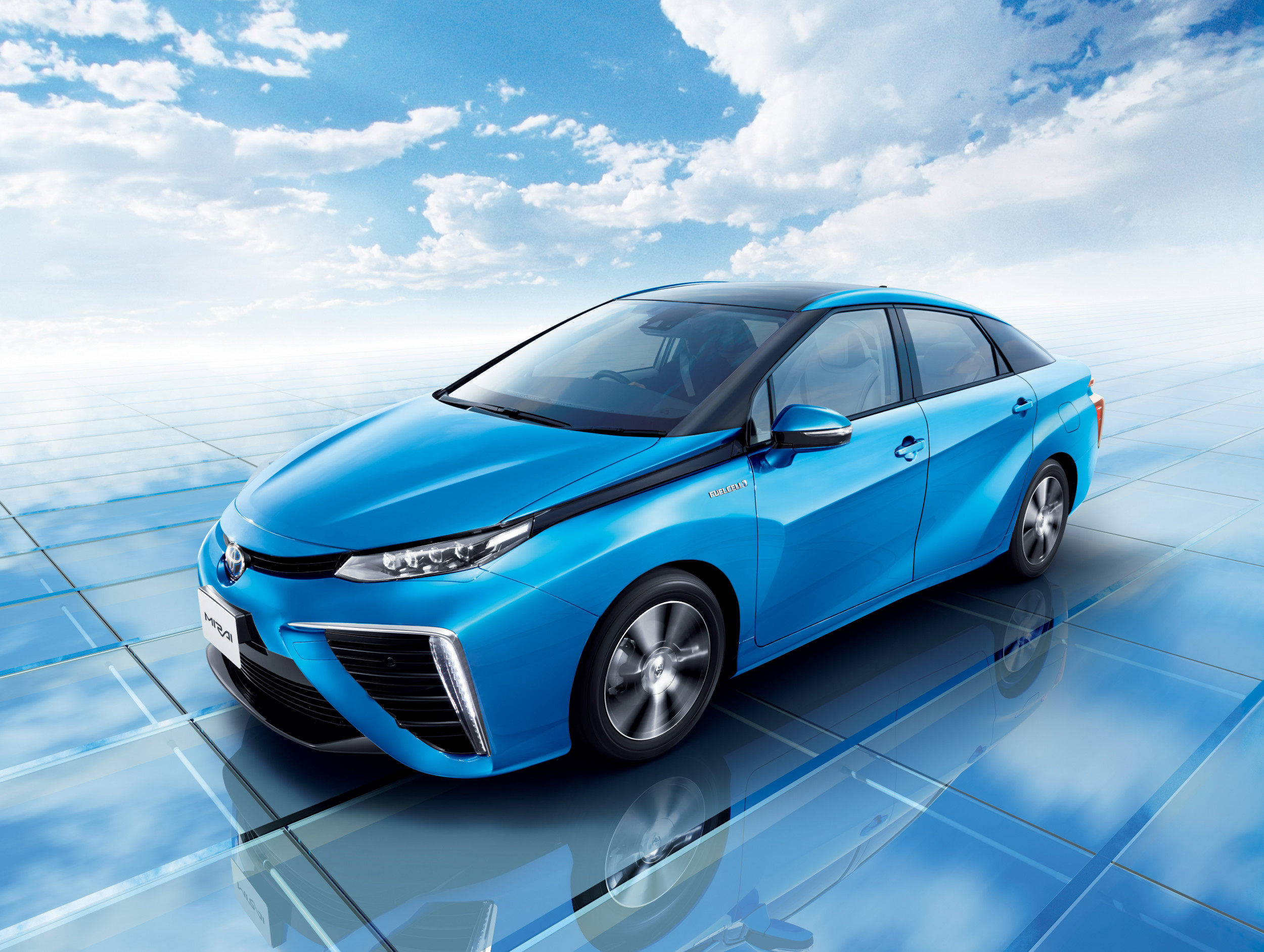
The Toyota Mirai, the world’s first mass-produced fuel-cell vehicle, was released in 2014. The Toyota Mirai, the world’s first mass-produced fuel-cell vehicle, was released in 2014. Toyota Motor Corporation
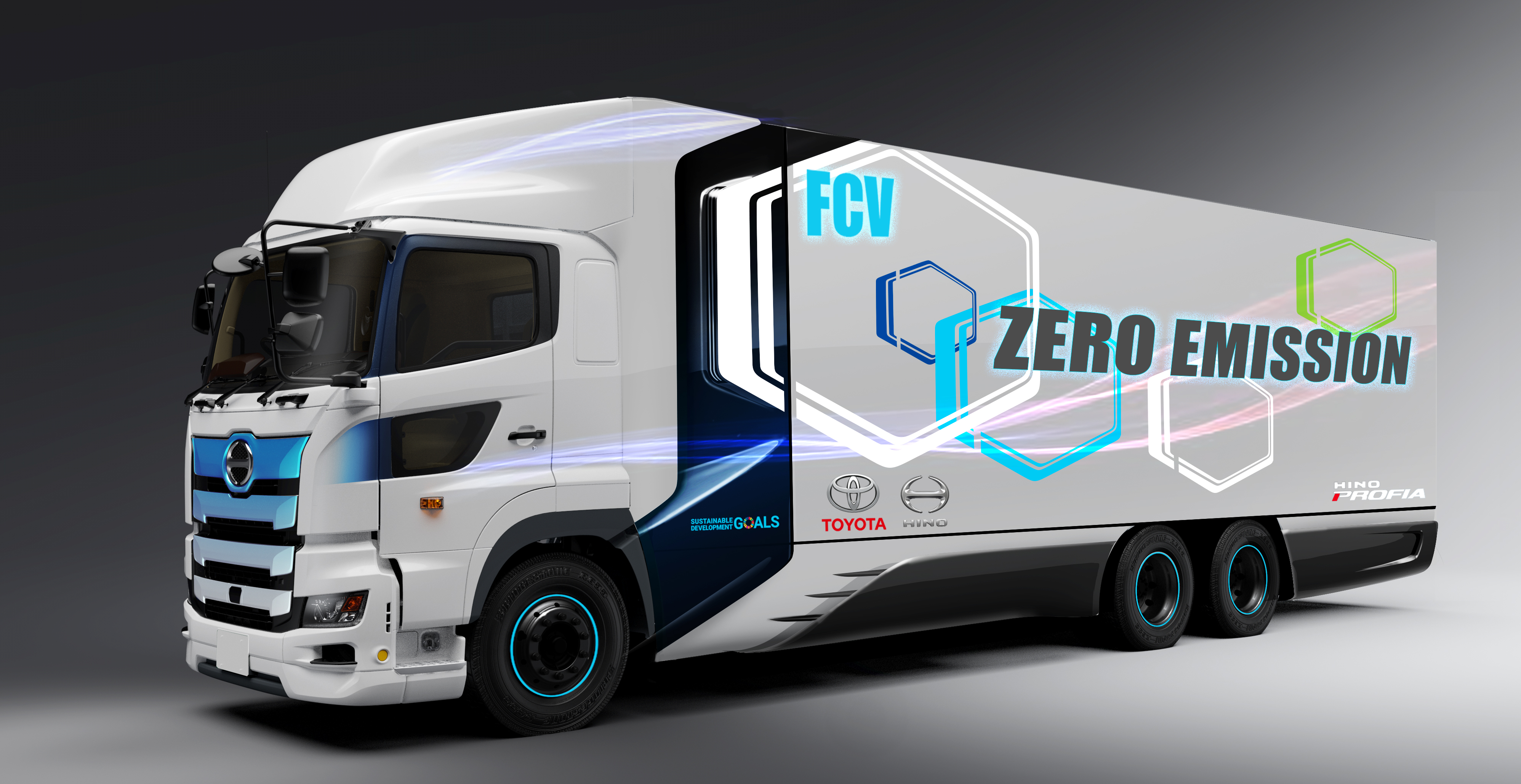
Fuel cells are also being developed for heavy-duty trucks, which account for a high proportion of CO2 emissions among commercial vehicles Fuel cells are also being developed for heavy-duty trucks, which account for a high proportion of CO2 emissions among commercial vehicles HINO MOTORS, LTD
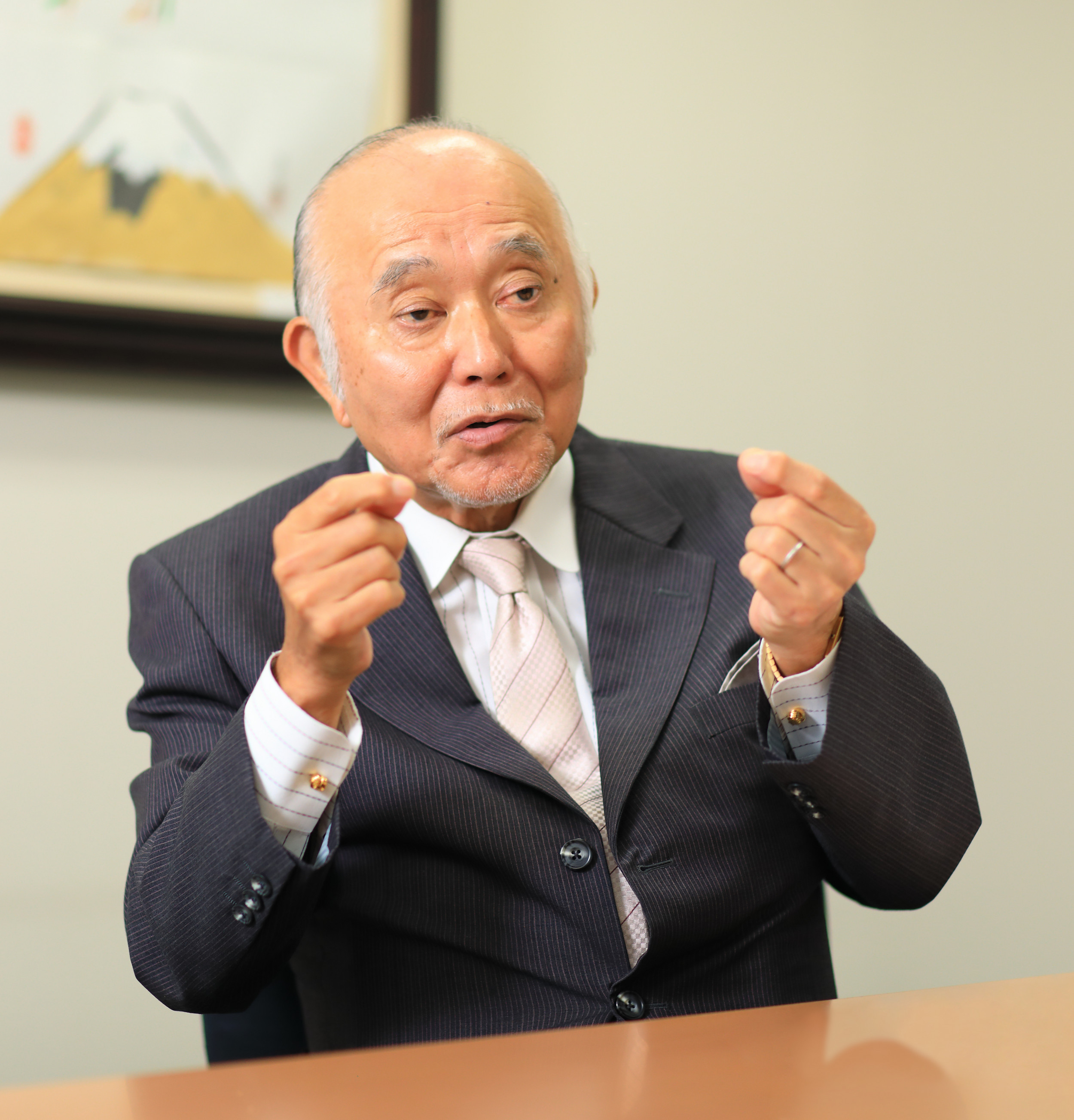
Kashiwagi Takao, emeritus professor at the Tokyo Institute of Technology and chairperson of the Council for a Strategy for Hydrogen and Fuel Cells, noted, “Because of its powerful chemical industry, Japan could become an energy... Kashiwagi Takao, emeritus professor at the Tokyo Institute of Technology and chairperson of the Council for a Strategy for Hydrogen and Fuel Cells, noted, “Because of its powerful chemical industry, Japan could become an energy exporter by producing carbon-free synthetic fuel.” More The Government of Japan
Although hydrogen is rarely found naturally on Earth as an isolated element, it can be produced from various raw materials. One method is to generate hydrogen from fossil fuels and to capture the CO2 released as a byproduct. Another is to use renewable energy to extract hydrogen from water through electrolysis. In addition, since liquefying hydrogen through ultralow temperatures (below minus 253 degrees Celsius [minus 423.4 degrees Fahrenheit]) reduces its volume, enabling compact storage and transportation, renewable energy could be widely distributed if kept in liquefied form.
Kashiwagi Takao, a leading researcher on energy systems and the chairperson of the Council for a Strategy for Hydrogen and Fuel Cells (established by Japan's Ministry of Economy, Trade and Industry), has been involved in Japan's hydrogen policymaking for many years. Explained Kashiwagi, "It's essential to make the widespread shift to hydrogen by 2030, but to decarbonize thereafter, we need cleaner hydrogen produced from renewable energy. At present, however, producing such hydrogen tends to be expensive, and the issue is how to reduce its cost. Having acted early to utilize hydrogen, Japan has the technical prowess to create solutions to this problem."
One possibility is the development of an international hydrogen supply chain. The Suiso Frontier, the world's first liquid hydrogen carrier, was completed in 2021 by Kawasaki Heavy Industries, Ltd. The company is now conducting a verification test in which hydrogen—produced in Australia from the country's affordable and abundant lignite (brown coal) with carbon capture and storage technology—is liquefied and then carried to the port of Kobe, Japan. With hydrogen's ability to be transported by sea, places that can generate large amounts of affordable renewable energy have the potential to supply hydrogen for shipment across the globe. The use of hydrogen in sectors such as transport, industry and power generation will contribute to decarbonization.
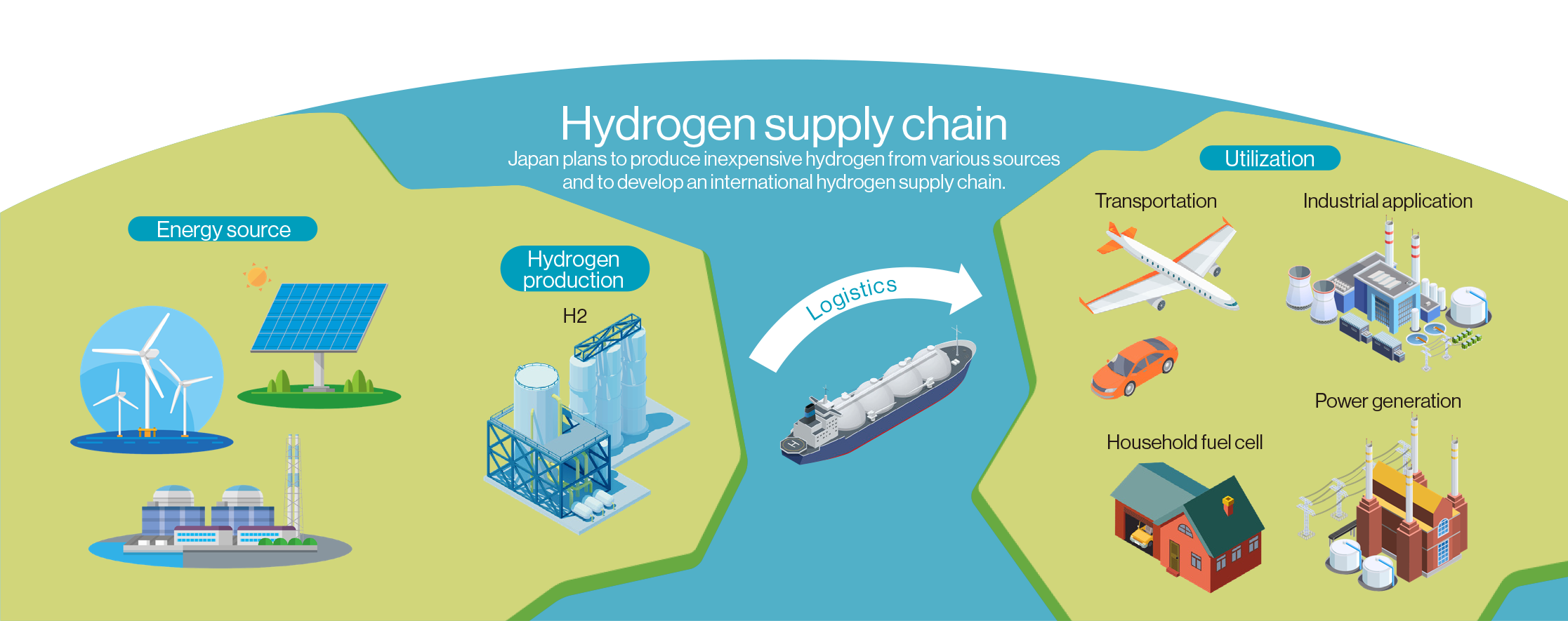
Japan plans to produce inexpensive hydrogen from various sources and to develop an international hydrogen supply chain. Japan plans to produce inexpensive hydrogen from various sources and to develop an international hydrogen supply chain. The Government of Japan
Meanwhile, Kashiwagi said that community-level approaches to steadily promoting the local production and consumption of hydrogen are also vital to accelerating the creation of a hydrogen-based society. The town of Namie, Japan, in Fukushima Prefecture, for example, uses solar power to produce hydrogen in a pilot project to provide electricity to households in the area.
"No country can build a hydrogen society by itself," Kashiwagi said. "Japan will work with the international community to build a global society that can enjoy the benefits of hydrogen energy, thereby contributing to the achievement of carbon neutrality around the world."
This article is reproduced from KIZUNA. Check other articles in KIZUNA: http://www.japan.go.jp/kizuna/


U.S.WorldScienceHealthRankingsOpinionEntertainmentFact CheckMy TurnEducationEventsSportsPodcastsBetter PlanetBetter WorkplacesMightierAutosNewslettersUnconventionalVantageExpertsLeadershipDev Pragad
Trending
Israel at War Vladimir Putin Russia-Ukraine War Donald Trump
Subscriptions
Membership Monthly $4.99 Membership Yearly $49.00 Membership+Print Monthly $9.99 Membership+Print Yearly $99
Newsletters in your inbox See all
The Bulletin (Daily)See Sample
The Gist of It (Daily)
Geoscape (Twice a Week)
The 1600 (Daily)
Inside Trump Policy (Weekly)
Newsweek AI (Weekly)
Sports Daily (Daily)
The Josh Hammer Report (Weekly)See Sample
For The Culture (Three Times a Week)See Sample
Discoveries (3 Times a Week)
Like & Subscribe (Daily)
Breaking News (As it Breaks)
The Debate (Twice a Week)
Pawsitively (Daily)
Better Planet (Weekly)
The Good Life (Weekly)
Newsweek Pulse (2x3 Times a Month)
Sign up now
You can unsubscribe at any time. By signing up you are agreeing to our Terms of Service and Privacy Policy
In The Magazine  September 19
2025 Issue
Company
About UsMastheadDiversityAnnouncementsArchivePolicies and StandardsMission StatementLeadershipNewslettersPress Center
Editions:
Contact
AdvertiseCareersContact UsCorrections
Terms of Use
Cookie PolicyCopyrightPrivacy PolicyTerms & ConditionsTerms of Sale Privacy Settings
© 2026 NEWSWEEK DIGITAL LLC