- U.S.
- World
- Science
- Health
- Life
- Rankings
- Opinion
- Entertainment
- Fact Check
- My Turn
- Education
- EventsSportsPodcastsBetter PlanetBetter WorkplacesMightierAutosNewslettersUnconventionalVantageExpertsLeadershipDev Pragad
- Subscribe

- Login
×
Subscribe Login
- U.S.
- World
- Science
- Health
- Life
- Rankings
- Opinion
- Entertainment
- Fact Check
- My Turn
- Education
- Events
- Sports
- Podcasts
- Better Planet
- Better Workplaces
- Mightier
- Autos
- Newsletters
- Unconventional
- Vantage
- Experts
- Leadership
- Dev Pragad
Sponsored Article
Bloated Gut and You Don't Know Why? 5 Reasons You Might Not Suspect
Avoid Bloating and Constipation
By Sponsored Content Team On 11/17/21 at 9:27 AM EST

Bloating may be caused by constipation, excess intestinal gas, excess water, too much salt in the diet and certain foods. Bloating may be caused by constipation, excess intestinal gas, excess water, too much salt in the diet and certain foods. Andrea Piacquadio/Pexels.com
Share
Share on Facebook Share on Twitter Share on LinkedInShare on RedditShare on Flipboard Share via Email Comments
It's important to consult your doctors with any medical concerns, and before making any changes or adding supplements to your health plan.
Let's talk about bloat, the five-letter word that often prompts anguished utterances of certain four-letter words. Got a feeling of tightness and heaviness in the belly? Clothes don't fit? Prone to passing gas? You could be bloated.
Bloating symptoms can range widely, from mild discomfort to intense pain, according to Temple Health. The feeling usually recedes after a period of time, but it can be a chronic problem for some: About 10 to 25 percent of people who are otherwise healthy report occasional abdominal bloating, while about 10 percent say they experience it with some regularity, according to the Cleveland Clinic.
To battle bloat, we first need to find out why it's happening. How it manifests is relatively clear, but understanding what's causing the problem is not always so straightforward. A dietary supplement called ColonBroom may help reduce bloating triggered by some of these factors.
5 Unsuspecting Bloating Culprits

ColonBroom aims to promote regular bowel movements. ColonBroom aims to promote regular bowel movements. Kindel Media/Pexels.com
Constipation
A common misconception about bloating is that only the stomach is involved. In fact, one reason for bloating may be because of what's happening farther down in the digestive system. Cue constipation, which occurs when fecal matter backs up in the colon, causing digested food to stay longer. As a result, everything expands to hold the additional volume, thus leading to a feeling of bloat. Constipation can occur occasionally because of diet, dehydration, medication, lifestyle or chronically, as a result of an underlying condition.
Excess Intestinal Gas
Excess gas can also be blamed for bloat. Gas is produced naturally from digestion, but too much internal gas could indicate something amiss with the digestive process, the Mayo Clinic noted. Gas in the intestines is produced mostly from the process of gut bacteria digesting carbohydrates, otherwise known as fermentation.
If there is too much gas in the intestines, it is possible that too many carbohydrates were not absorbed naturally before reaching gut bacteria, according to the Cleveland Clinic. This can occur by eating too fast or a sensitivity to or difficulty with digesting particular carbs, such as lactose, fructose or carbs in beans and wheat.
Excess Water
Eating too many carbs can also cause the body to retain water, which can contribute to bloating. Carbs fuel the body, but eating too many at the same time can increase water retention. Simple carbs, such as products made from white flour and soft drinks, quickly enter the blood and are more likely to cause water retention, according to WebMD.
Superfluous Salt
Bloat because of excess water can also be the result of consuming excess salt, whether from the salt shaker or from fast foods and prepackaged meals. The body requires salt, but most people get far more than what they need, WebMD reported. Consequently, this can cause people to retain more water or even develop or aggravate serious conditions like high blood pressure.
Bloat-Inducing Foods
For some people, consuming foods like ice cream and butter is no joy: It causes belly pain, gas and bloating. This is because the body can't easily digest the dairy sugar lactose. Other foods can also contribute to bloating, including wheat, legumes, cruciferous vegetables and carbonated drinks. Some foods will help reduce bloat, including yogurt (yes, it's dairy, but it contains probiotics that could improve digestion), asparagus, tomatoes and pineapple, according to ColonBroom.
Why ColonBroom Works
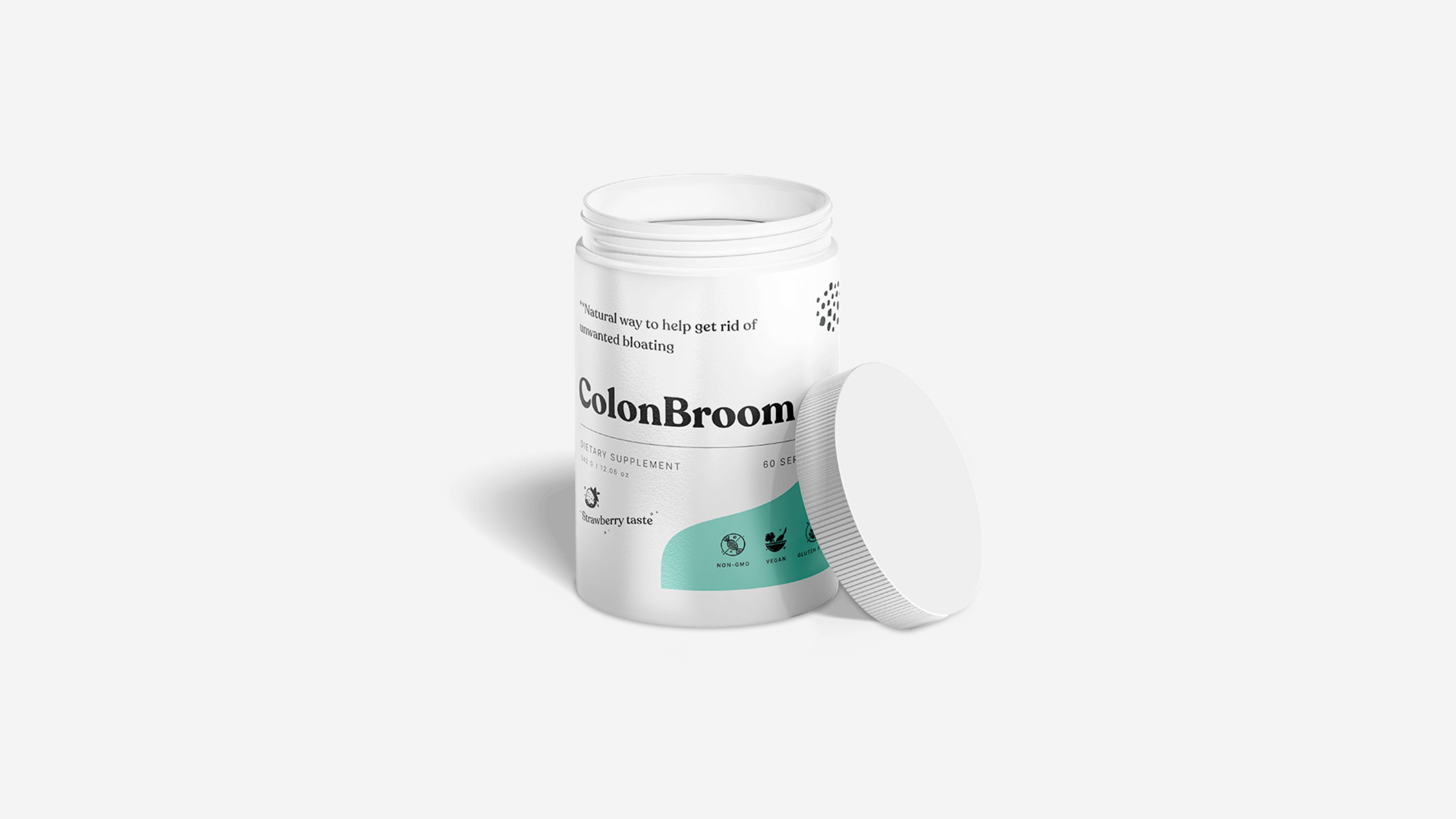
ColonBroom is a sugar-free fiber supplement. ColonBroom is a sugar-free fiber supplement. ColonBroom/Max Nutrition UAB
ColonBroom is a dietary supplement that provides a safe and effective way to relieve constipation. It claims to promote lightness in the gut, regular bowel movements and protection of the intestine. ColonBroom users also report that it has helped them lose weight, improved their digestive system and boosted their mood and energy.
The main active ingredient in ColonBroom is non-GMO psyllium husk, which could improve the gut microbiota and therefore support the digestive system. Psyllium husk is a type of fiber that absorbs water and becomes a viscous compound that can benefit constipation, diarrhea, blood pressure and weight loss, according to Healthline.
Combined with a healthy gut diet, ColonBroom may help reduce bloating symptoms, according to the company.
How to Get ColonBroom

Visit the ColonBroom website for more information. Visit the ColonBroom website for more information. Tima Miroschnichenko/Pexels.com
To order ColonBroom, first take an online quiz. The company asks prospective customers to answer a few short questions so they can get a personalized solution.
Upon receiving the product, customers should combine one scoop of the powder with a glass of water, mix it and drink.
What Customers Say

ColonBroom claims its users say it has helped their digestive system. ColonBroom claims its users say it has helped their digestive system. ColonBroom/Max Nutrition UAB
ColonBroom cautions that results may vary from person to person. According to research by the company, 95 percent of its consumers have noticed more frequent and regular bowel movements.
One verified buyer wrote: "It relieved my constipation in 16 hours! I don't feel bloated anymore." Said another: "I feel so light and not bloated anymore! ColonBroom along with their diet really helped me to heal my gut."
Click here to take the quiz and get your order of ColonBroom.
Newsweek may earn a commission from links on this page, but we only recommend products we back. We participate in various affiliate marketing programs, which means we may get paid commissions on editorially chosen products purchased through our links to retailer sites.


U.S.WorldScienceHealthRankingsOpinionEntertainmentFact CheckMy TurnEducationEventsSportsPodcastsBetter PlanetBetter WorkplacesMightierAutosNewslettersUnconventionalVantageExpertsLeadershipDev Pragad
Trending
Israel at War Vladimir Putin Russia-Ukraine War Donald Trump
Subscriptions
Membership Monthly $4.99 Membership Yearly $49.00 Membership+Print Monthly $9.99 Membership+Print Yearly $99
Newsletters in your inbox See all
The Bulletin (Daily)See Sample
The Gist of It (Daily)
Geoscape (Twice a Week)
The 1600 (Daily)
Inside Trump Policy (Weekly)
Newsweek AI (Weekly)
Sports Daily (Daily)
The Josh Hammer Report (Weekly)See Sample
For The Culture (Three Times a Week)See Sample
Discoveries (3 Times a Week)
Like & Subscribe (Daily)
Breaking News (As it Breaks)
The Debate (Twice a Week)
Pawsitively (Daily)
Better Planet (Weekly)
The Good Life (Weekly)
Newsweek Pulse (2x3 Times a Month)
Sign up now
You can unsubscribe at any time. By signing up you are agreeing to our Terms of Service and Privacy Policy
In The Magazine  September 19
2025 Issue
Company
About UsMastheadDiversityAnnouncementsArchivePolicies and StandardsMission StatementLeadershipNewslettersPress Center
Editions:
Contact
AdvertiseCareersContact UsCorrections
Terms of Use
Cookie PolicyCopyrightPrivacy PolicyTerms & ConditionsTerms of Sale Privacy Settings
© 2026 NEWSWEEK DIGITAL LLC