...

By Claire Dodds
Life & Trends Reporter
0
Share
Newsweek is a Trust Project member
See more of our trusted coverage when you search.Prefer Newsweek on Googleto see more of our trusted coverage when you search.
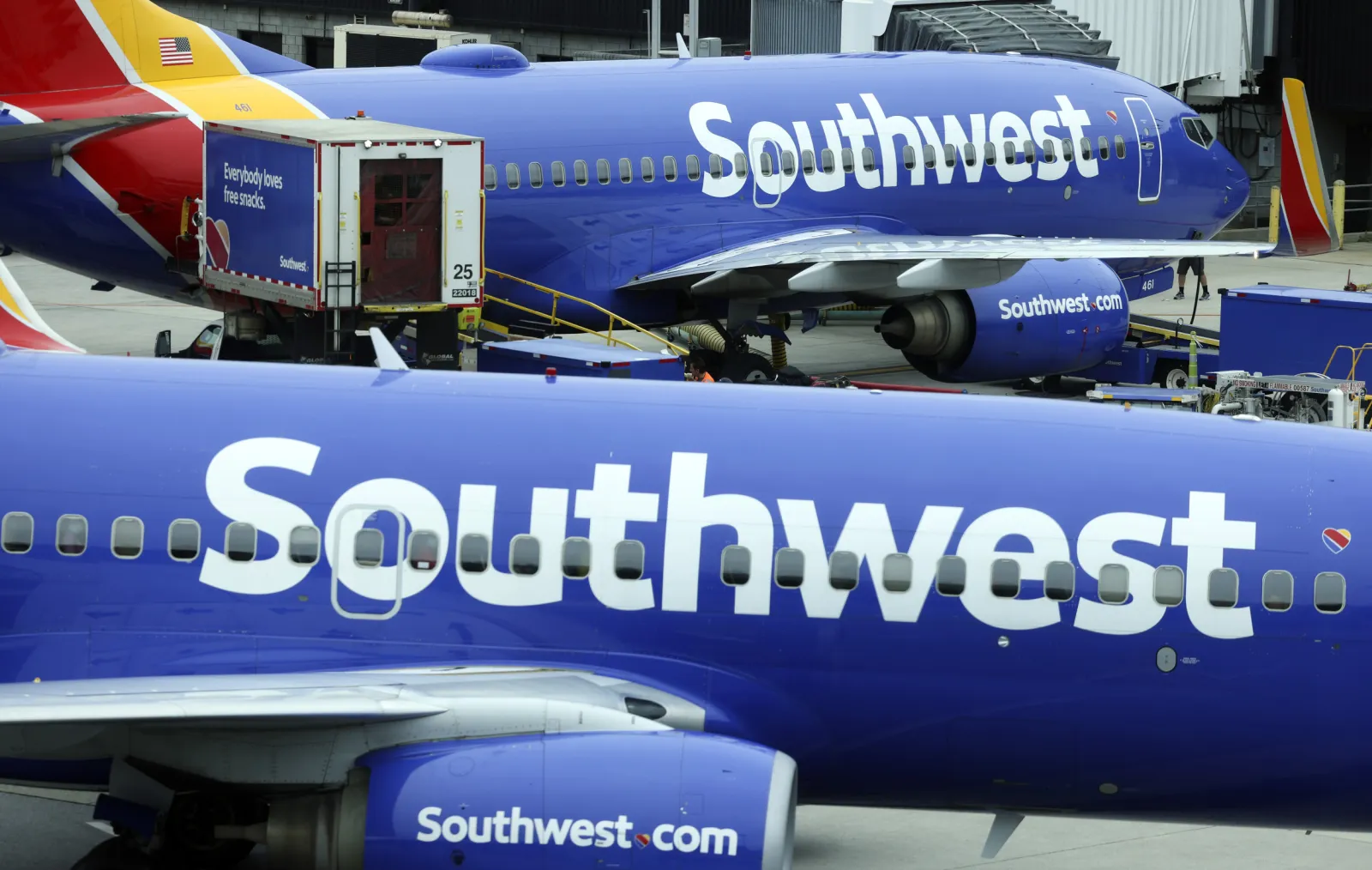
Southwest Airlines’ decision to scrap its decades-old open seating policy had a turbulent debut, with some passengers praising the change while others questioned whether the shift marked the end of what made the airline distinct.
On January 27, Southwest passengers boarded flights under the new assigned seating model for the first time, bringing the airline in line with competitors like Delta and United.
The move ends a unique legacy that allowed travelers to choose their own seat upon boarding, based on check-in order.
Read More
Owner Checks Pet Cam—in Tears at What Labrador Does With New Rescue Dog3 min read

Stranger Warns Owner German Shepherds Loose—Then Realizes What’s Behind Him3 min read

Southwest Airlines Faces Backlash After Announcing Major Change to Seating4 min read

But judging by reactions on social media, particularly TikTok, the rollout was anything but seamless.
'Lose me as a customer'
“I think this is where they lose me as a customer,” said TikTok user leslieapproved, who documented her experience flying Southwest under the new policy.
Despite booking her flight a month in advance and being a frequent flyer, she said she was placed on standby and received a middle seat assignment only three hours before departure.
The poster also observed, “lots of people trying to switch seats with others,” likely due to the last-minute seat confirmations and limited options for upgrades.
...
Other flyers posted contrasting experiences. TikTok user bradenwalkr shared a clip of a calm boarding process, calling it “infinitely better.”
Meanwhile, jane20515 filmed rows of empty seats at the front of the plane while the back was packed, saying flight attendants wouldn’t let anyone move up, claiming premium seat buyers, “would get mad.”
Southwest was the last major U.S. airline to offer open seating. The shift to assigned seats marks a strategic pivot as the airline chases revenue and standardization.
“What it shows is that Southwest has basically said if you can’t beat them, join them,” Henry Harteveldt, founder of Atmosphere Research Group, said in an interview with CNBC.
Logistical Hiccups
Southwest’s boarding process now resembles that of its competitors, with eight boarding groups based on fare class, elite status or extras like credit card partnerships.
According to View From the Wing, early reports noted logistical hiccups. Some passengers queued prematurely to secure bin space for carry-ons, effectively recreating the urgency that open seating once imposed.
“Seats may now be assigned, but the gate process still forces early queuing,” the reviewer wrote.
“Carry-on bin space turns the aisle into a traffic jam, with passengers backtracking to stow bags.”
Opinions on Reddit echoed the split seen on TikTok.
One fan declared, “It was incredibly smooth and the FAs were wonderful. I know this isn’t everyone’s experience, but I thought I would share.”
But others expressed concern that the change strips Southwest of its identity.
“If you want nickel-and-dime cr**—Spirit Air is there. If you want first class, SWA is a joke. They can’t compete with either product,” a critic on Reddit argued.
Another claimed, “They've traded growth for profitability. These changes will quickly improve profitability, but will also make the airline relatively undifferentiated in terms of service and price.”
Betting on Profit Growth
Southwest executives are betting that assigned seats—and new fees for baggage and extra legroom—will help grow profits.
On Thursday, the company forecast that earnings would more than quadruple this year. But in a statement to CNBC, CEO Bob Jordan acknowledged that 2026’s performance, “would be difficult to duplicate in 2027,” without further policy changes or upgrades.
As the airline transitions into this new model, flyers may face additional adjustments and this may be an early signal of the challenges ahead.
Newsweek has reached out to leslieapproved, bradenwalkr and jane20515 for comment via TikTok. We could not verify the details of the case.
To read how Newsweek uses AI as a newsroom tool, click here.
View 0 Comments
Submit Correction
View Editorial & AI Guidelines