...

By Gabe Whisnant
News Editor
0
Share
Newsweek is a Trust Project member
See more of our trusted coverage when you search.Prefer Newsweek on Googleto see more of our trusted coverage when you search.
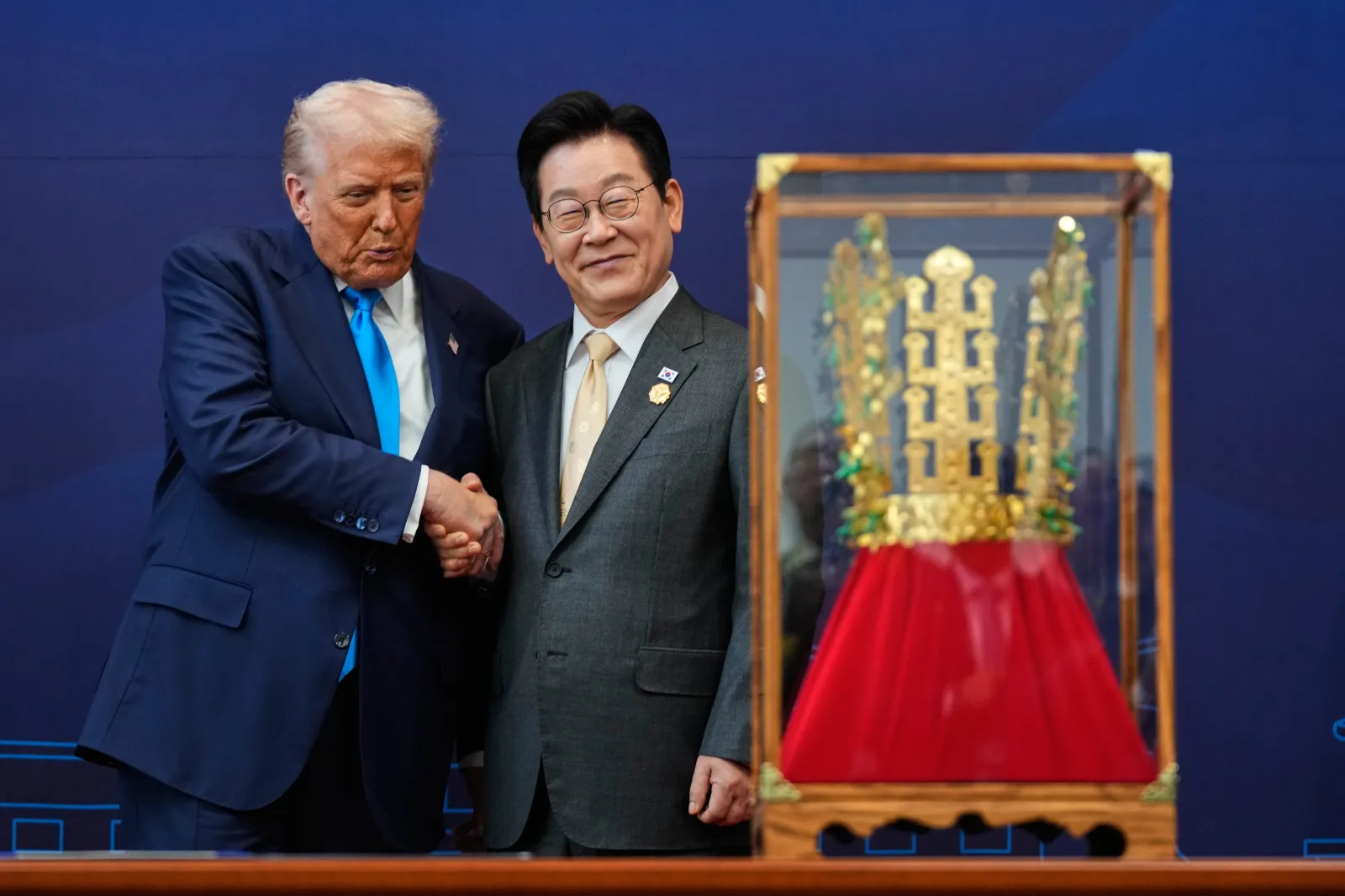
President Donald Trump said Monday he is increasing tariffs on South Korean imports, citing the country’s failure to secure legislative approval for a trade framework announced last year.
In a post on social media, Trump said the United States will raise import taxes on South Korean autos, lumber and pharmaceutical products, while increasing tariffs on other goods from 15% to 25%. He said the move was necessary after South Korea’s National Assembly did not act on the agreement reached in July and reaffirmed during his visit to the country in October.
“Our trade deals are very important to America,” Trump wrote. “In each of these deals, we have acted swiftly to reduce our tariffs in line with the transaction agreed to. We, of course, expect our trading partners to do the same.”
Read More on News
Trump has previously imposed tariffs by declaring an economic emergency, allowing him to bypass congressional approval. In South Korea, however, legislative action is required for trade agreements to take effect.
...
Tariffs Signal Continued Trade Pressure
The latest escalation underscores Trump’s continued reliance on tariffs as a negotiating tool, signaling that trade tensions could remain a central feature of his economic agenda this year.
Economists have warned that repeated tariff threats and reversals can inject uncertainty into global markets and complicate long-term investment decisions. Trump, however, has argued that aggressive trade measures are necessary to secure better terms for the United States and force foreign governments to follow through on commitments.
South Korea Ties and Past Friction
Trump has previously linked tariffs on South Korea to pledges by the country to invest roughly $350 billion in the U.S. economy over several years, including investments aimed at reviving American shipbuilding and manufacturing.
Despite those commitments, relations between the two countries have been strained at times. Last year, a federal immigration enforcement raid at a Hyundai manufacturing facility in Georgia resulted in the detention of 475 people, an incident that drew criticism from South Korean officials and business leaders.
Pattern of Tariff Threats Expands
Monday’s announcement fits a broader pattern of tariff threats that have extended well beyond South Korea. Just last week, Trump warned he would impose tariffs on eight European countries unless the United States gained control of Greenland, a demand he later abandoned after meetings at the World Economic Forum in Davos, Switzerland.
Over the weekend, Trump also said he would impose a 100% tariff on Canadian goods if Canada follows through on plans to expand trade with China.
Trade Deals Still Unfinished
Trump has repeatedly touted his trade frameworks as drivers of foreign investment and domestic job growth. However, several of those agreements remain incomplete or unratified. The European Parliament has yet to approve a proposed trade deal that would impose a 15% tariff on most goods produced by the European Union’s 27 member states.
Looking ahead, the United States is expected to renegotiate its amended 2020 trade agreement with Canada and Mexico later this year. Additional uncertainty looms from ongoing Section 232 investigations under the 1962 Trade Expansion Act and a pending Supreme Court decision on whether Trump exceeded his authority by imposing tariffs under the 1977 International Emergency Economic Powers Act.
Updates: 1/26/25, 6:35 p.m. ET: This article was updated with new information.
This article includes reporting by the Associated Press.
In a polarized era, the center is dismissed as bland. At Newsweek, ours is different: The Courageous Center—it's not "both sides," it's sharp, challenging and alive with ideas. We follow facts, not factions. If that sounds like the kind of journalism you want to see thrive, we need you.
When you become a Newsweek Member, you support a mission to keep the center strong and vibrant. Members enjoy: Ad-free browsing, exclusive content and editor conversations. Help keep the center courageous. Join today.


View 0 Comments
Submit Correction
View Editorial & AI Guidelines