...

By Larry Rhoden
0
Share
Newsweek is a Trust Project member
See more of our trusted coverage when you search.Prefer Newsweek on Googleto see more of our trusted coverage when you search.
Our most fundamental duty as citizens is to steward our nation’s resources well.
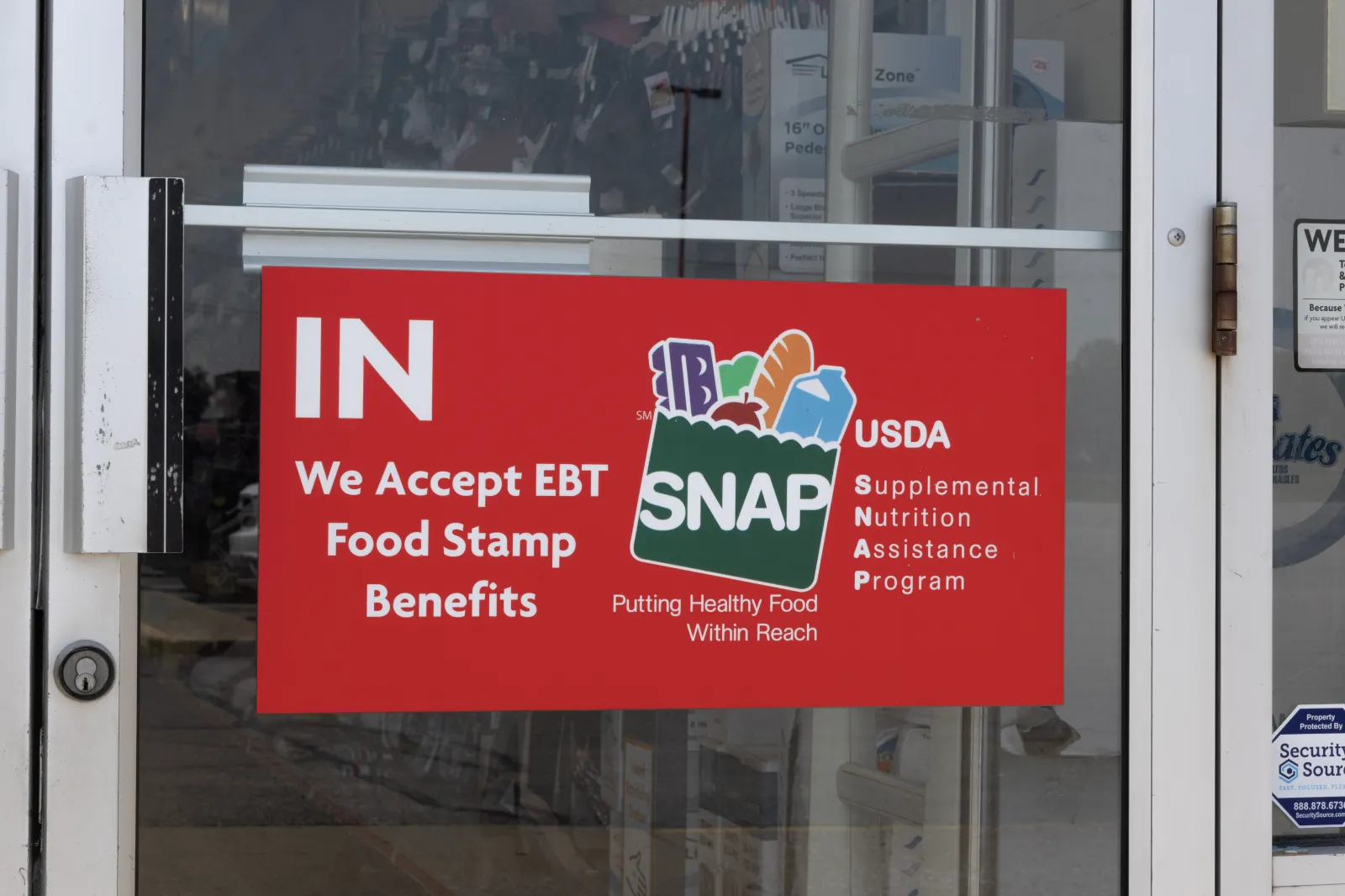
Everything we have is an inheritance from those who came before us, and we are tasked with handing on a national legacy that’s even stronger. One practical example of a resource that should be managed with care is the Supplemental Nutrition Assistance Program (SNAP). For one, it costs taxpayers $100 billion a year. And two, it’s intended to supplement grocery budgets with nutritious foods for families in need. We should take great pride that such a program exists, but that should inspire diligence in its oversight.
As Governor of South Dakota, I am responsible for managing our state. Our state is strong, safe, and free—and it’s my duty to keep it that way. I want our state to be an example to the nation of good governance. So, when U.S. Secretary of Agriculture Brooke Rollins requested states turn over data on how they manage SNAP, every governor had a moral obligation to comply. Taxpayers deserve it and federal law requires it.
Read More on Opinion
But that didn’t happen. A new report by the America First Policy Institute (AFPI) exposes how many states refused to comply and goes into detail about why data sharing is a critical tool for reducing SNAP fraud.
...
SNAP is 100 percent federally funded, but it is administered at the state level. With 50 states and three U.S. territories managing their programs differently, results vary, and levels of fraud do, too.
I can tell you that our results in South Dakota are first in class. We lead the nation with the lowest SNAP payment error rate, which is the clearest measure of strong program administration and responsible stewardship of public dollars. This low error rate is the result of ensuring that those who apply for SNAP actually qualify for it, making informed administrative decisions, and working with accuracy and accountability. And while South Dakota’s low error rate is certainly something that shows our state employees’ commitment to excellence and accountability, it also provides a broader commentary on the oversight of our national public assistance programs.
South Dakota’s error rate, near 3 percent, is something that wasn’t that uncommon nationwide just 10 years ago.
Since 2014, state payment error rates have almost tripled, currently sitting at close to 11 percent on average. This is largely due to massive increases in enrollment that occurred during the COVID years, the suspension of error rate reporting in 2020 and 2021, and because states have opted in to program loopholes that fail to ensure every applicant needs SNAP assistance or that allow lax eligibility standards.
This is a serious problem for our public treasury but also for public trust, particularly between states. States like South Dakota with low error rates offer confidence to federal taxpayers that their tax dollars are being spent appropriately. But states with higher error rates—in the double digits in many cases—warrant attention and accountability to ensure program integrity is upheld nationwide and public trust isn’t misplaced.
The solution starts with bringing greater transparency to the issue.
The United States Department of Agriculture (USDA) is responsible for the integrity of the SNAP program but requires state compliance. Under federal law, all state SNAP records “shall be made available for inspection and audit by the [USDA] Secretary.” An audit by USDA, independent of the states, provides transparency to the public and can help states uncover waste, fraud, and abuse that they might not find on their own. For example, after receiving SNAP data from 29 states, USDA discovered 500,000 people receiving SNAP benefits in multiple states, something an individual state would have no way of knowing.
It is concerning that 22 states have sued to withhold their SNAP data from disclosure.
A functioning state-federal partnership depends on information openness that improves program oversight. Our Union of States is only as strong as the trust between them. To steward our public funds well, we are duty-bound to be transparent and honest. All governors can achieve this transparency and honesty by following the law and answering to their people.
As Governors, we need to be able to look our citizens in the eye and tell them that we are doing everything in our power to safeguard their hard-earned money and trust. One way to do that is by ensuring our administrations comply with federal law. I encourage my fellow governors to do so by making their own SNAP program records available to our federal partners and to close loopholes. The people of America deserve that from us.
Larry Rhoden is a life-long rancher, the 34th Governor of South Dakota, and serves on the America First Policy Institute’s Governor’s Council.
View 0 Comments
Submit Correction
View Editorial & AI Guidelines