10
Loading video...

By Jesus Mesa
Reporter
0
Share
Newsweek is a Trust Project member
See more of our trusted coverage when you search.Prefer Newsweek on Googleto see more of our trusted coverage when you search.
South Carolina is set to execute Brad Sigmon by firing squad on Friday, marking the first use of the controversial method in the United States in 15 years. The execution, taking place at Broad River Correctional Institution, has reignited debates over whether death by gunfire is a more humane alternative to lethal injection or electrocution.
As some states reconsider capital punishment altogether, others are reviving older methods due to drug shortages, with medical experts and judges weighing in on the matter.
Why It Matters
Sigmon, 67, was convicted of murdering his ex-girlfriend's parents in 2001. He chose the firing squad over the electric chair and lethal injection, citing concerns over the latter's history of botched executions.
Read More on U.S.
Autopsies conducted on two inmates executed since South Carolina switched its lethal injection method to massive doses of pentobarbital revealed significant fluid buildup in their lungs. A defense expert testified that the inmates likely felt like they were drowning or slowly suffocating. One of those inmates, Richard Moore, took 23 minutes to die.
The state also offers the electric chair, but Sigmon rejected it, fearing the possibility of being "cooked alive" by the current. Ultimately, Sigmon said the lack of clear information about the alternatives led him to choose death by firing squad.
How the Execution Will Unfold
Sigmon will be strapped to a metal chair, hooded, and a target will be placed over his heart. Three prison employees, standing 15 feet away, will fire simultaneously. Unlike in Utah, where one shooter is given a blank round to ease the moral burden, all three South Carolina officers will fire live ammunition.
South Carolina spent approximately $54,000 retrofitting its execution chamber for firing squad use, installing bullet-resistant glass to separate witnesses—including reporters, family members, and attorneys—from the death chamber. However, some experts have expressed concerns over the safety and design of the indoor setup.
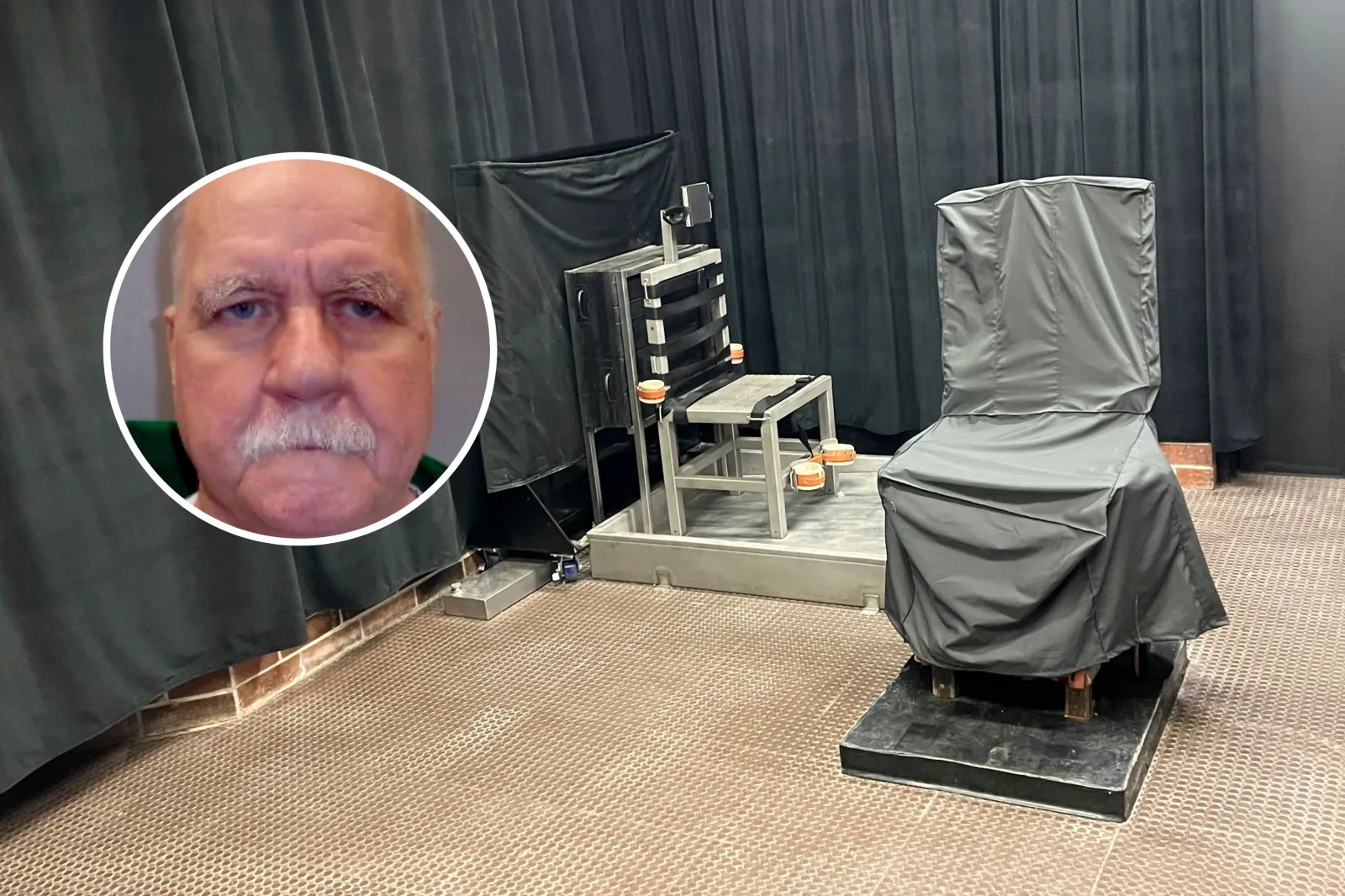
...
"I wouldn't shoot in that space. I wouldn't even be in the room," Drew Swift, a firearms instructor and owner of a training academy in Virginia, told NPR. Craig Baxley, a former South Carolina executioner, also raised concerns about the design, warning that bullets could ricochet in the small, brick-walled chamber.
Modern protocols aim to prevent errors. The bullets used in South Carolina's execution are designed to fragment upon impact, maximizing the injury to the heart and minimizing suffering. But medical experts warn that if the shooters miss their target, the condemned could remain conscious for a prolonged and painful period.
Is the Firing Squad More Humane?
Firing squads have been used in America on and off since colonial times, but their use declined as lethal injection became the dominant execution method. However, lethal injection has been plagued by botched executions and drug shortages, leading some legal experts and even death row inmates to argue that the firing squad is a more humane alternative.
Dr. James Williams, an emergency room physician and expert on gunshot trauma, has testified in multiple death penalty cases that firing squads result in a faster and potentially less painful death.
"There is a lot of evidence that the near-instant loss of blood pressure means no blood gets to the brainstem, and there is a rapid loss of consciousness," Williams told The Marshall Project. He compared the experience to being knocked out in a football tackle, emphasizing that execution by gunfire is "near instant" compared to lethal injection, which can take minutes and sometimes leads to prolonged suffering.
Williams, who was himself shot as a teenager, described the sensation: "At first, it felt like a hard blow to my chest and shoulder area, followed by an unpleasant tingling sensation. I can't say it's completely painless in every case, but I've asked patients since then, and some compare it to a hard tackle in football."
He also highlighted the risks of lethal injection. "I thought the original arguments for lethal injection were sound, drawing on how we euthanize dogs and cats to try to be more humane. But then anti-death penalty activists lobbied companies to stop providing the necessary drugs. As a result, states resorted to less effective drug cocktails," Williams said.
The Firing Squad in Legal Debates
Even U.S. Supreme Court Justice Sonia Sotomayor, one of the most liberal justices on the Court, has suggested that the firing squad may be a more reliable method than lethal injection. In her 2017 dissent in Arthur v. Dunn, a high-profile case in which Alabama death row inmate Thomas Arthur challenged the state's execution method, she wrote:
"The condemned prisoner is conscious but entirely paralyzed, unable to move or scream in agony, as he suffers what may well be the chemical equivalent of being burned at the stake."
While she did not specifically endorse any method, she argued that states should consider returning to alternatives like the firing squad, noting, "In addition to being near instant, death by shooting may also be comparatively painless."
The case arose from the Supreme Court's Glossip v. Gross (2015) decision, which set a precedent requiring death row prisoners to propose a "known and available" alternative execution method if they claimed that the existing method violated the Eighth Amendment's prohibition on cruel and unusual punishment.
However, Alabama law did not explicitly allow firing squads at the time, and the 11th Circuit Court of Appeals ruled that since firing squad executions were not authorized by the state, they could not be considered a "known and available" alternative.
What Happens Next
Sigmon's execution comes amid renewed debates over the death penalty in the U.S.
President Trump has consistently argued in favor of more executions over the years, including expanding capital punishment at the federal level for convicted pedophiles, drug offenders and cop killers.
At the state level, Idaho lawmakers recently pushed to make the firing squad their primary execution method, citing lethal injection's unreliability.
View 0 Comments
Submit Correction
View Editorial & AI Guidelines