...

By Rachael O'Connor
Reporter
0
Share
Newsweek is a Trust Project member
See more of our trusted coverage when you search.Prefer Newsweek on Googleto see more of our trusted coverage when you search.
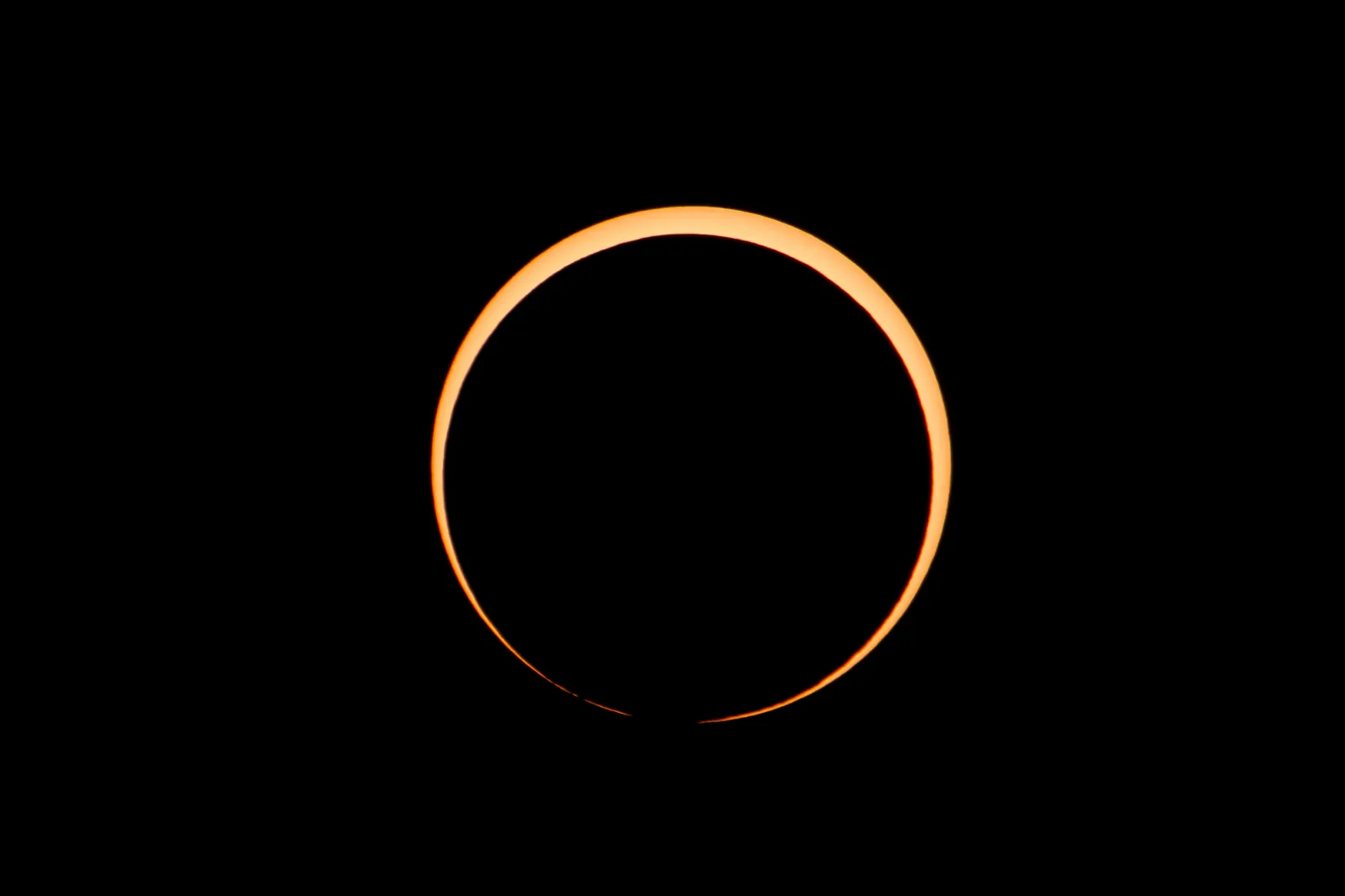
An annular solar eclipse forming a so-called 'ring of fire' is set to grace the southern skies today—although very few people will be lucky enough to get a good view.
According to NASA, the peak eclipse will only be visible in parts of Antarctica, while a partial eclipse will be visible across the rest of Antarctica, as well as the southernmost parts of Africa and South America.
An annular solar eclipse occurs when the moon passes between the sun and the Earth, at a time when the moon is at or near its "apogee", the farthest point from earth.
Read More on Science
Because of this, the moon does not completely obscure the sun, and instead the sun creates what looks like a ring of fire around the moon.
...
Parts of Antarctica will experience the annular eclipse in all its glory, while those under the rest of its path will enounter a partial solar eclipse, where the moon, sun and Earth are not perfectly lined up, and the sun takes on the appearance of a crescent shape.
While Antarctica does not have any permanent residents, anyone working on the brutally cold and freezing continent will get the best view of the solar eclipse--as will "the penguins," astronomer Joe Llama with Lowell Observatory joked in a statement to Phys.org.
Those of us outside of Antarctica may experience what appears to be a bite taken out of the sun, as the moon passes by without perfectly lining up.
According toSpaceWeather.com, the solar eclipse will begin at 11:45 UTC (6:45am EST), and will provide maximum coverage of 96 percent.
As the day goes on and the path changes, thecoverage will decrease, dropping to 80 percent at 12:50 UTC (7:50am EST), and down to 10 percent by 13:50 UTC (8:50am EST).
According to Phys.org, the tips of Chile and Argentina, and parts of southeastern Africa including Madagascar, Lesotho and South Africa, should be able to witness the partial eclipse, as long as there are clear skies to allow the best view.
Do you have a tip on a science story that Newsweek should be covering? Do you have a question about eclipses? Let us know via science@newsweek.com.
View 0 Comments
Submit Correction
View Editorial & AI Guidelines