FLOURISH/FRAC/SNAP error cost map

By Aliss Higham
Reporter
0
Share
Newsweek is a Trust Project member
See more of our trusted coverage when you search.Prefer Newsweek on Googleto see more of our trusted coverage when you search.
The majority of U.S. states will be required to pay a portion of Supplemental Nutrition Assistance Program (SNAP) benefits in the coming years.
Under current federal rules, SNAP benefits, which help some 42 million Americans across the country, are paid by the federal government but administered at the state level. All states pay half of the cost of this administration.
But the One Big Beautiful Bill Act is set to change things. Beginning in 2028, the bill will require states to cover a portion of SNAP benefits if error payments are above 6 percent, and all must pay for an additional share of program administration costs.
Read More on News
Why It Matters
This will be the first time that states have had to shoulder the responsibility of paying SNAP benefits, and numerous lawmakers, poverty experts and advocacy groups have warned against the policy.
How Does The Cost Share Work?
Erroneous payments are when too much or too little is paid to a SNAP recipient. States will have to pay a certain percentage based on thresholds set by the bill:
- Error rate below 6 percent: No cost-sharing required
- 6 to 8 percent error rate: 5 percent cost-sharing
- 8 to 10 percent error rate: 10 percent cost-sharing
- Over 10 percent error rate: 15 percent cost-sharing
Which States Will Pay The Most?
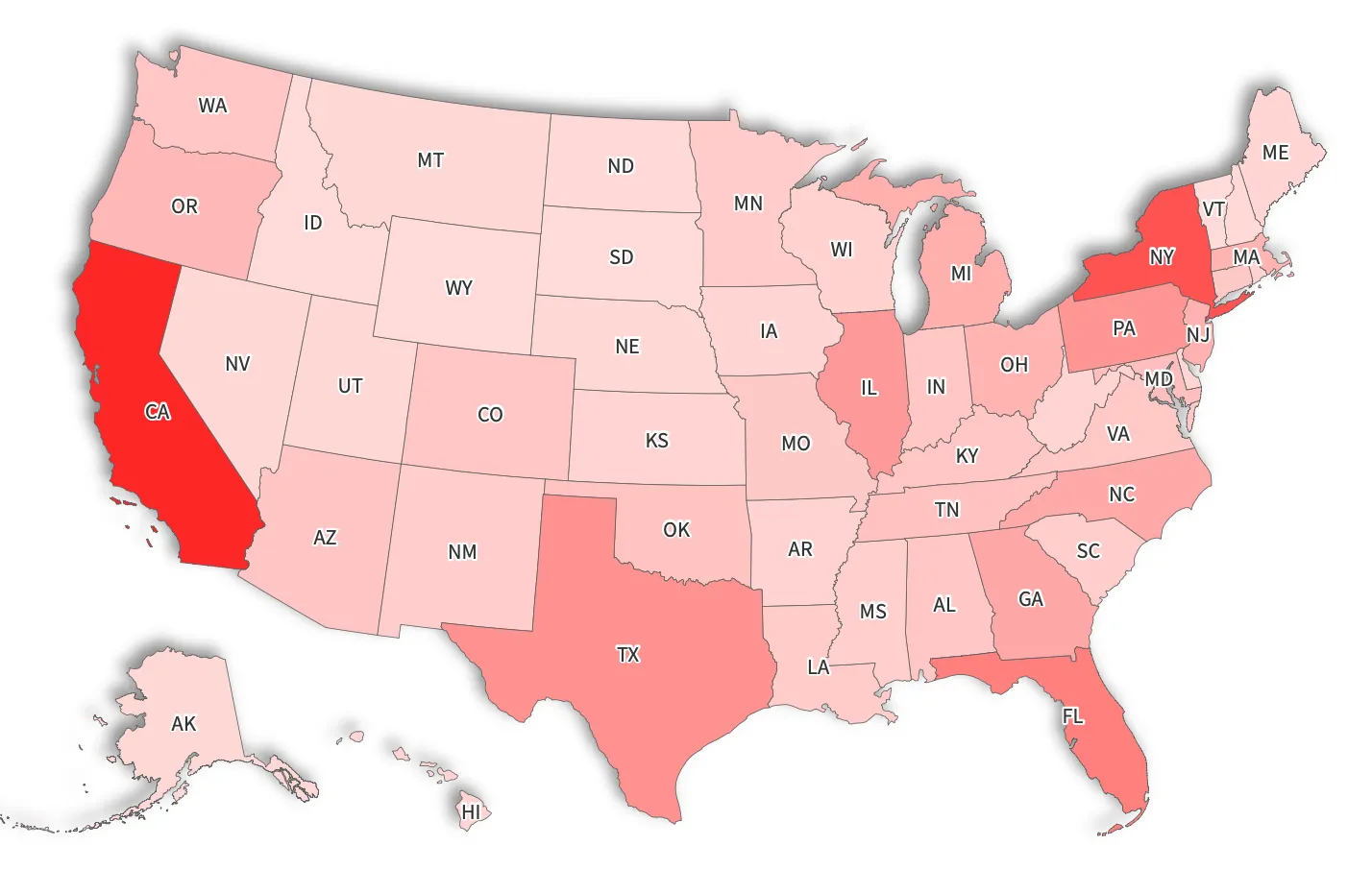
Based on fiscal year 2024 data, 43 states will be expected to pay up for a portion of SNAP benefits when the new rules begin in 2028, according to data compiled by the Food Action Research Center (FRAC).
California is poised to pay the most of all 50 states if its error rate doesn't come down. With a 15 percent requirement based on an error rate of 11 percent, the Golden State will be expected to pay an estimated $1.9 billion in benefit costs and $661 million in administrative costs, bringing its total to just shy of $2.6 billion if its error rate does not drop.
Other top payers will be New York ($1.9 billion), Florida ($1.3 billion), Texas ($1 billion) and Pennsylvania ($982 million), according to FRAC's analysis.
Which States Will Pay The Least?
Based on 2024 error rates, only Idaho, Nebraska, Nevada, South Dakota, Utah, Vermont, Wisconsin, and Wyoming will not have to cough up for a share of the benefits, though they will still be required to bear more of the administrative costs.
Some Exceptions
Senate Republicans added a carve-out to address concerns from Alaska Senator Lisa Murkowski, letting her state delay cost-sharing due to its high SNAP error rates. To follow reconciliation rules, the delay option was extended to any state with a SNAP error rate — when multiplied by 1.5 — that hits 20 percent or more. If a state meets that threshold in FY 2025, it can delay cost-sharing until FY 2029; if it qualifies in FY 2026, it can delay until FY 2030. But states can only use this delay once, based on either year, not both.
Based on FY 2024 data, likely beneficiaries include Alaska, Florida, Georgia, Maryland, Massachusetts, New Jersey, New Mexico, New York, Oregon, and Washington, D.C, according to FRAC.
What People Are Saying
FRAC in its analysis: "Taken together, these provisions represent an unprecedented cost-shift from the federal government to the states, one that forces local leaders to make painful tradeoffs between essential services and rising administrative demands. As states grapple with tighter budgets, reduced federal support, and growing caseload complexity, the core promise of SNAP — as a reliable safeguard against hunger and hardship — is at risk. The Trump- and Republican-passed budget reconciliation bill, OBBBA, not only weakens a cornerstone anti-poverty program; it reshapes the relationship between federal and state governments in ways that could prove devastating for millions of families, workers, and communities across the country."
Jennifer Greenfield, associate professor at the University of Denver who specializes in the intersection of health and wealth disparities, told Newsweek: "The proposed federal 'savings' are not savings at all—it's a shift of the costs to our already cash-strapped states and families. The net result will be to increase hunger and financial instability among households with children, older adults, people with disabilities, and veterans—while also sending tens of thousands of people into unemployment."
House Speaker Mike Johnson told CBS News Face the Nation with Margaret Brennan in May: "The states are not properly administering this because they don't have enough skin in the game. So what we've done in the bill is add some- just a modest state sharing component, so that they'll pay attention to that, so that we can reduce fraud. Why? Again, so that it is preserved for the people that need it the most."
What Happens Next
Cost-sharing requirements will begin in 2028. How much each state will have to pay will depend on its future error rates.
View 0 Comments
Submit Correction
View Editorial & AI Guidelines