...

By Billal Rahman
Immigration Reporter
0
Share
Newsweek is a Trust Project member
See more of our trusted coverage when you search.Prefer Newsweek on Googleto see more of our trusted coverage when you search.
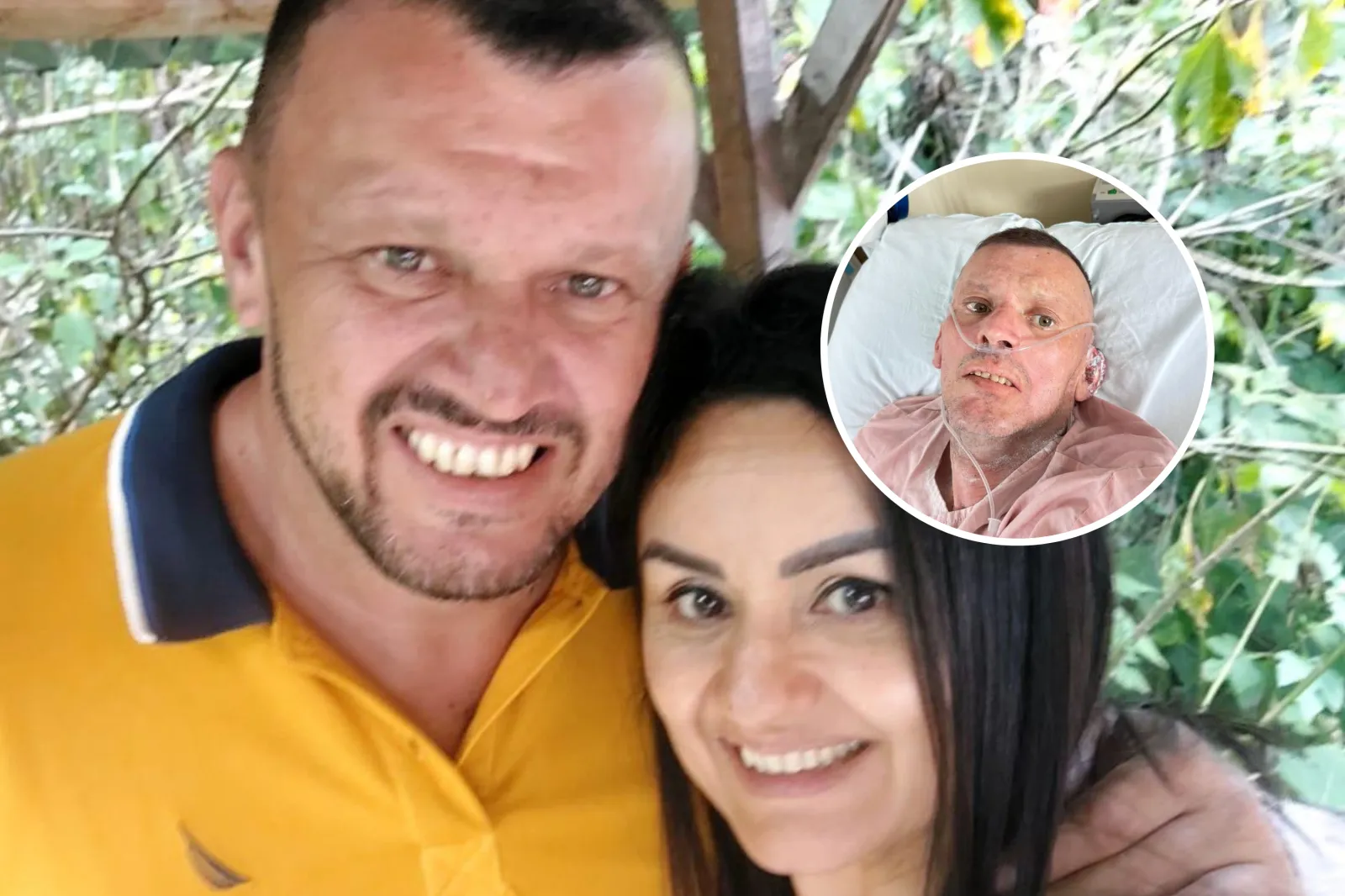
A man detained by U.S. immigration officials and removed to Costa Rica via air ambulance when critically ill and able only to blink, died weeks later, his wife has told Newsweek.
Randal Alberto Gamboa-Esquivel was detained in December 2024, days after entering the United States unlawfully, the Department of Homeland Security (DHS) said.
Medics in the U.S. later diagnosed him with “unspecified psychosis” and he was removed on September 3 last year, DHS spokesperson Tricia McLaughlin told Newsweek.
Read More on News
His wife, Adriana Ureña Cordero, said Costa Rican doctors concluded he had suffered brain damage, possibly from overmedication of antipsychotic drugs. He died on October 25 aged 52, she said.
Costa Rica’s Ministry of Foreign Affairs told Newsweek it is working “to clarify the circumstances surrounding his detention and deportation” and has requested additional information from the U.S. government about the case, including medical history.
McLaughlin told Newsweek Gamboa-Esquivel was hospitalized at Valley Baptist Hospital—located a few miles from the U.S.–Mexico border—“so he could get proper mental health and medical care” during his custody. “His death did NOT occur in ICE custody,” she said. ““Ensuring the safety, security, and well-being of individuals in our custody is a top priority at ICE,” McLaughlin added.
...
DHS did not respond to allegations of overmedication or provide details about the removal flight.
Records show he was held at Webb County Detention Center (WCDC) before being transferred to Port Isabel Detention Center (PIDC).
WCDC operators CoreCivic told Newsweek it cannot discuss a specific individual's medical record. A spokesperson said licensed health care professionals at its onsite medical clinics “contractually meet the highest standards of care, as verified by multiple audits and inspections,” and it is “committed to providing access to high-quality medical and mental health care.”
Newsweek contacted PIDC operator Ahtna via email.
Cordero told Newsweek in a phone interview she is speaking out to demand accountability for how her husband was treated. **“**People think these things don’t happen—but they do,” she said. “Strange things happen; this is real, and people should be careful.”
What To Know
Cordero said her husband, who worked as head of asphalt operations in local government,
maintained regularly contact via video calls in the months after he was first detained.
“They started medicating him, saying he had anxiety,” she said. “But in Costa Rica he was very healthy—the only issue he ever had was psoriasis, stress-related. I began noticing he was distracted on calls.
“I told him to speak to them because the medication was affecting him. He said he would. He supposedly signed an authorization [refusing certain meds], but I learned—through others who were with him—that they kept medicating him anyway.”
Medical records, reviewed by Newsweek, from WCDC indicate Gamboa-Esquivel signed a written refusal form in mid-April to decline certain medications due to dizziness and nausea.
Medical notes from June list antipsychotic and other psychotropic drugs, including risperidone and imipramine, as active prescriptions, with new orders issued in June. The notes do not say whether these were repeatedly administered or discontinued.
His condition worsened. “He became so drowsy he slept day and night,” Cordero said. “Once, he told me he fell out of bed and woke up on the floor without knowing when it happened.”

...
Gamboa-Esquivel was hospitalized on June 12, the day of a scheduled immigration hearing, his wife said.
She said the family lost contact with him after that point, until his attorney found him at Valley Baptist Hospital in August. The attorney told her that her husband was unable to move or speak, responsive only by blinking and had experienced severe weight loss, Cordero said.
Cordero said her husband maintained daily video contact with relatives until mid-June, when communications abruptly stopped. When attempting to reach him through ICE, the family were told he was “unable to speak right now” or would contact them if he chose, she said.
“The anxiety was unbearable, so I went to the Costa Rican consulate,” Cordero said. “The consulate tried to open a channel with ICE, but ICE told them Randal didn’t want contact with family or the consulate. I knew that wasn’t true. He adores his mother; he is very affectionate.”
The Consulate General of Costa Rica in Houston began assisting the family “within the framework of international law and local regulations,” Costa Rica’s Ministry of Foreign Affairs said, and provided the name of the hospital he was located
When his attorney found him in August. “She found him in critical condition... with no movement, only his eyes moving—and abandoned. Like an animal, honestly,” Cordero said. “He’d become severely undernourished.”
DHS spokesperson McLaughlin said ICE provides medical care from the moment people enter custody, including health screenings within 12 hours of arrival, a full assessment within 14 days, and access to routine appointments and 24-hour emergency care. “This is the best healthcare that many aliens have received in their entire lives,” she said.
WCDC operators CoreCivic’s spokesperson said: “Our facilities are subject to multiple layers of oversight and are monitored very closely by our government partners to ensure full compliance with policies and procedures, including any applicable detention standards.”
“All detainees have daily access to sign up for medical care, including mental health services,” he added. “CoreCivic also ensures access to offsite care for residents by coordinating with staff, government partners, community physicians, hospitals and ambulatory care providers.”
Arrangements for Gamboa-Esquivel’s September 3 removal began suddenly, Cordero said.
“Then ICE told the lawyer they didn’t want to deal with Randal anymore; they would grant him release and he could stay in the U.S. if someone would take responsibility for him. But who could handle that except family? And at that point, why would he stay?”
“We started arranging to bring him to Costa Rica. Because of his condition, we needed an air ambulance, which is very expensive—around $70,000. We tried to get help from the consulate because it was too much for us. In the end, ICE covered the transport.”
On arrival in Costa Rica, the family said no official U.S. medical documentation accompanied him.
Costa Rican doctors later concluded that he had suffered brain damage, which they believe may be linked to overmedication with antipsychotic drugs, Cordero said. The physicians did not confirm several diagnoses noted in ICE records, including cirrhosis and kidney damage.
The exact cause of Gamboa-Esquivel’s death has not been disclosed, and authorities say they are continuing to investigate. The family said the medical examiner’s report could take months to be released and added that his death appears to involve a neurological issue.
“What we do know: he had brain damage. Doctors here think he was given a lot of Risperidone—a drug used for schizophrenia. In the U.S. records, they treated him as schizophrenic and even asked whether there was a family history. There isn’t,” Cordero said.
“Doctors explained that giving a strong antipsychotic to someone who doesn’t need it can cause severe side effects—delirium, hallucinations, disorganized behavior—which then led staff to increase the medication.”
She added: “He lost an extreme amount of weight very quickly. Stress, malnutrition, heavy medication—together it’s catastrophic.”
“They also said he had bacteremia and gave very strong antibiotics; our doctors don’t believe he ever had a blood infection. We found a new scar on his arm, supposedly from biopsies. We also discovered a swelling/hematoma on his head—he had a “chichota” and a wound,” she said.
The Ministry of Foreign Affairs of Costa Rica told Newsweek it “will continue to make every effort to clarify the circumstances surrounding his detention and deportation to Costa Rica.”
“During the time that Mr. Gamboa remained in the custody of the United States Immigration and Customs Enforcement agency, the Consulate General of Costa Rica in Houston monitored his case and took actions in order to assist him and his family, within the framework of international law and local regulations.”
“The Ministry of Foreign Affairs has also requested additional information from the United States Government regarding the event. Mr. Gamboa´s case and his medical history, but so far no official response has been received.”
DHS said Gamboa-Esquivel had prior convictions for fraud and operating a commercial vehicle without the required license.
Cordero said the family still has unanswered questions about why communication was cut off and why they were not informed of his medical crisis sooner.
“The important part of this story is why the protocol wasn’t activated—why the detention center protocol wasn’t followed. When a person is in a serious health condition, the family must be informed so they can send help.
“He was a good person, an incredibly loving person here in his country,” his wife said.
View 0 Comments
Submit Correction
View Editorial & AI Guidelines