
...

By Ellie Cook
Senior Defense Reporter
0
Share
Newsweek is a Trust Project member
See more of our trusted coverage when you search.Prefer Newsweek on Googleto see more of our trusted coverage when you search.
A ship has been seized near the vital Strait of Hormuz waterway, further complicating U.S. efforts to bring an end to the war with Iran as President Donald Trump visits Beijing, with discussions around the situation in the Middle East high on the agenda.
The United Kingdom Maritime Trade Operations (UKMTO) Centre, which is backed by the British military, said a vessel was "taken" by unauthorized personnel and was headed for Iran's territorial waters. It is not yet known who was responsible for the seizure.
The ship was anchored around 38 nautical miles (44 miles) off the coast of the port at Fujairah, a major hub for the United Arab Emirates (UAE) near the Strait of Hormuz.
Read More on World
The ship has not yet been identified.
Trump Doesn't Need Chinese Help
...
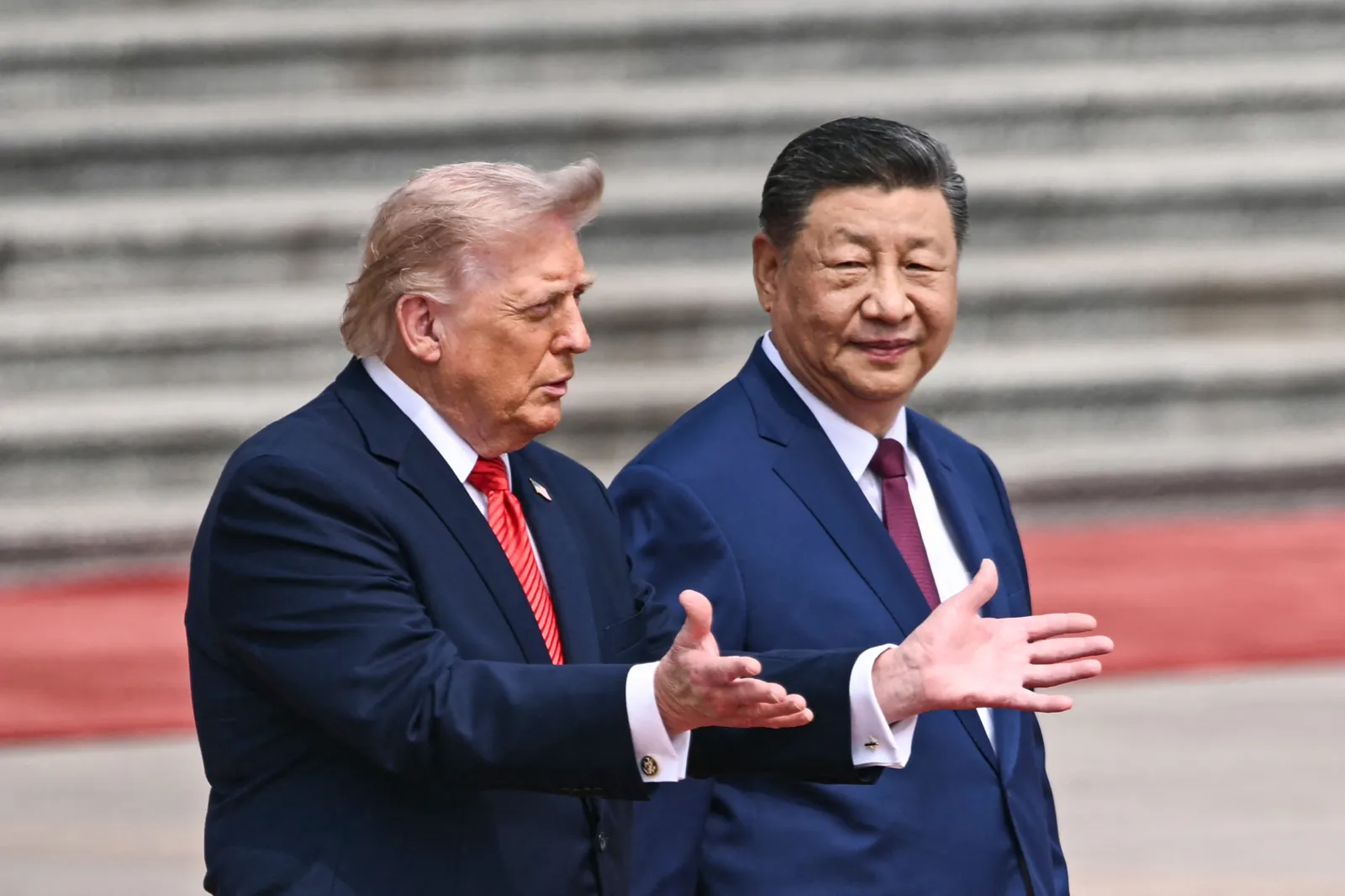
Trump, who arrived in the Chinese capital to a rolled-out red carpet and fanfare on Wednesday, said ahead of leaving for his two-day summit with Chinese premier Xi Jinping the U.S. did not need China's help to bring an end to more than 10 weeks of fighting, which has brought havoc to global markets and sent fuel prices soaring.
According to several U.S. media reports, Trump and Xi Jinping have agreed the strait must remain open, and that Iran can never have a nuclear weapon.
Around a fifth of the world's oil and gas usually passes through the Strait of Hormuz, but maritime traffic through the waterway is still a fraction of its typical levels. Oil prices plunged by around 15% shortly after the announcement of the ceasefire.
The strait is only about 30 miles wide at its entrance and exit, and around 20 miles wide at its narrowest point, but is deep enough for the world's biggest oil and LNG tankers. According to the US Energy Information Administration (EIA), last year just over 20 million barrels of oil and oil products a day passed through the strait, totalling hundred of billions of dollars.
Iran has threatened to attack any ships it sees as unfriendly passing through the strait, while the U.S. has blocked Iranian oil exports from leaving the country's ports.
Heavily Restricted Passage
A Chinese oil tanker passed through the strait en route to Asia on Wednesday, ship tracking data showed, after Iran's foreign minister, Abbas Araghchi, visited Beijing last week. At least three Chinese ships are thought to have made it through the strait.
The few vessels that have transited the strait have sidled close to Iran's coastline.
Iranian state media reported 30 vessels had travelled through the strait since late Wednesday, including several Chinese vessels after negotiations between Beijing and Tehran.
Earlier this month, Iran's military said it had seized a Barbados-flagged oil tanker in the Gulf of Oman, accusing the vessel of attempting to disrupt Iranian oil exports, a key part of its economy.
...
View 0 Comments
Submit Correction
View Editorial & AI Guidelines