...

By Jenni Fink
Senior Editor
0
Share
Newsweek is a Trust Project member
See more of our trusted coverage when you search.Prefer Newsweek on Googleto see more of our trusted coverage when you search.
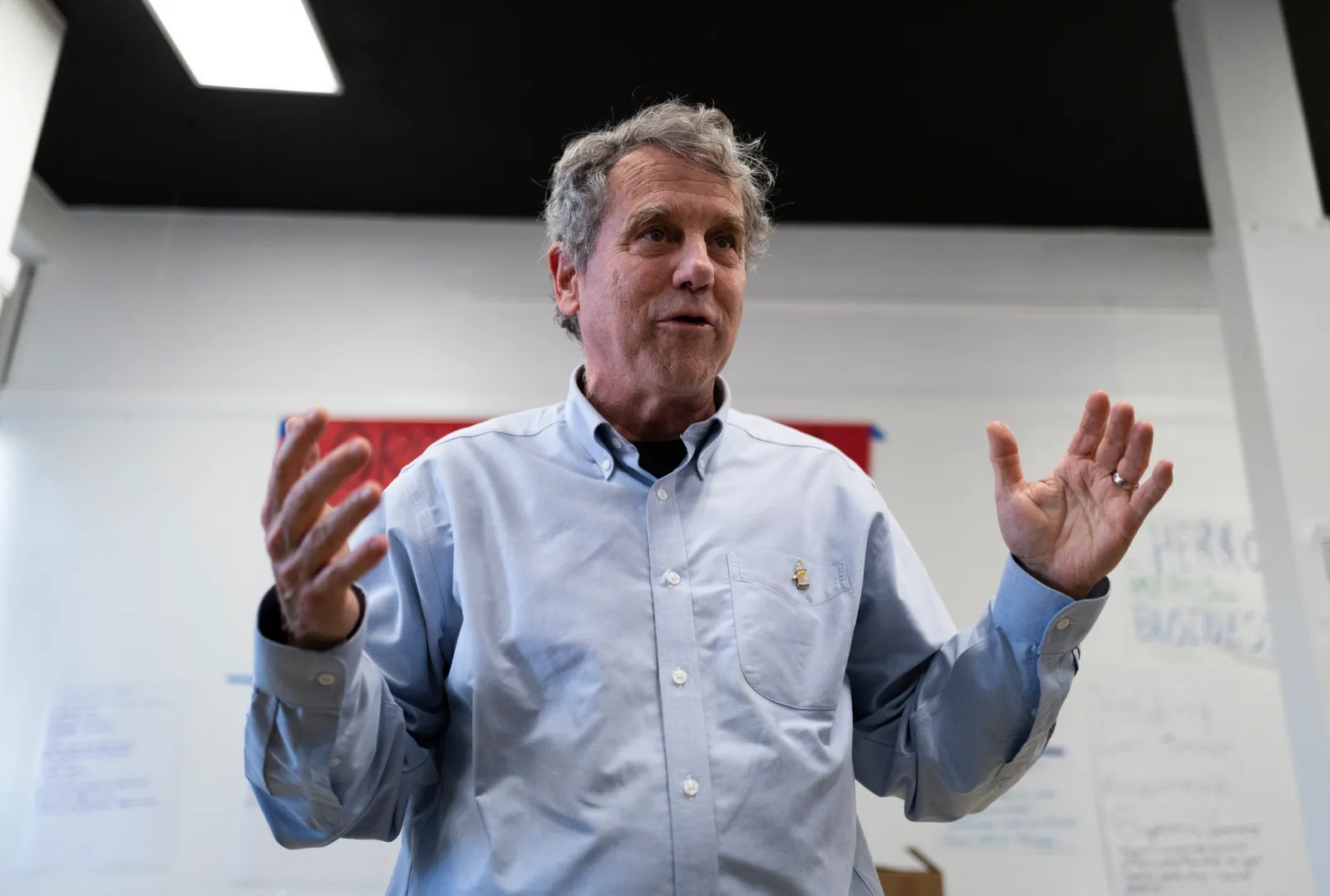
With both parties now settled on their nominees, the stage is set for one of the most closely watched Senate races of the 2026 cycle, which is a November showdown between Democrat Sherrod Brown and Republican Jon Husted in Ohio’s special election for the seat once held by Vice President JD Vance.
Brown, a former three‑term senator, is seeking a comeback after his 2024 loss to Republican Bernie Moreno. He will face Husted, who was appointed to the Senate seat after Vance became vice president.
While Ohio has trended increasingly Republican over the last decade, polling shows it could be a close race. Republicans have a slim majority in the Senate and risk losing their majority if Ohio flips to Democrats, which would make it more difficult for President Donald Trump to follow through on his agenda in the last two years of his presidency.
Read More on News
Brown officially became the Democratic nominee on Tuesday night after capturing roughly 92 percent of the vote in the primary. Husted was running unopposed for the GOP.
...
Brown's Chances of Beating Husted, According to Polls
Recent polling underscores just how narrow the margin is in this election. A March survey by OnMessage Public Strategies of 600 likely voters found Brown narrowly leading Husted, 47 percent to 45 percent, with 8 percent undecided and a margin of error of plus or minus 4 percentage points.
Other polls have shown the race moving within the margin of error in both directions.
According to the polling average compiled by 270toWin, multiple surveys conducted in March and April showed Husted holding small single‑digit leads in some cases, while Brown edged ahead in others. It makes the race a true toss-up, and candidates will have to not only make their case to voters but also make sure they mobilize people to vote.
Inside Elections shifted the contest from “Solid Republican” to “Lean Republican” earlier this year, while the Cook Political Report has described the race as one of the most competitive Senate battles in the country.
Brown has a favorability rating of 37 percent, according to a Bowling State University poll conducted in early April compared to Husted's 26 percent. However, more voters plan to cast their ballot for Husted than Brown. When asked who voters planned to vote for in November, 50 percent said Husted and 47 percent said Brown. A larger portion of voters, 53 percent, think Husted will regardless of who they plan to vote for.
Why Brown Has a Path to Victory
Brown has proved that he can win in Ohio, claiming victory three times between 2006 and 2018. In 2024, when he lost, he still garnered more votes than former Vice President Kamala Harris did in Ohio, indicating that he has broad appeal in the state. Polls show he's appealing to independents, younger voters and women.
“There’s no doubt that having Sherrod Brown at the top of the ticket makes a huge difference for Democrats’ ability to compete this cycle,” state House Democratic Leader Dani Isaacsohn told MS Now.
The absence of Trump from the ballot could also matter. Trump has shown to be a motivator for people to get out and vote, and without him on the ballot, Republicans will have to make sure they convince voters to cast ballots. Brown's team believes the Trump Administration's low approval—which sits in the mid to high thirties—will reflect on Husted.
“Ohioans across the state are fed up with skyrocketing costs and of Jon Husted voting to make things worse,” Patrick Eisenhauer, Brown’s campaign manager, told Newsweek in a statement. “Families are being crushed by rising costs, and now they’re seeing gas prices and inflation spike even further out of control. As we visit towns across Ohio, it's clear that Ohioans are ready to hold Jon Husted accountable for his role in the affordability crisis.”
Husted’s Advantages as Incumbent
For Republicans, Husted begins the general election with advantages of his own. Appointed to the Senate in early 2025 by Governor Mike DeWine, Husted has spent more than a year building name recognition and donor support while avoiding a bruising primary.
Fundraising disclosures show Husted maintaining a viable war chest, and national Republican groups have already signaled they will heavily invest in defending the seat. The GOP Senate super PAC has pledged tens of millions of dollars to protect vulnerable incumbents, with Ohio among its top priorities.
Husted has also benefited from Ohio’s broader rightward shift. No Democrat has won a gubernatorial race in the state in nearly two decades, and Republicans point to consistent GOP victories in presidential and down‑ballot races as evidence that the underlying partisan environment still favors them. Husted's team believes Ohioans are not interested in reviving Brown's expansive political career.
"As voters head to the polls for Ohio’s primary election, Jon Husted is focused on the clear choice that lies ahead this fall,” Drew Thompson, Husted’s campaign manager, said in a statement shared with Newsweek. “Over the next six months, Ohioans will hear a lot from Sherrod Brown about his so-called solutions. The truth is, after 32 years in Washington, he created the very problems he now blames others for.
"His record is indefensible. That’s why he can’t talk about it. Fortunately, Jon Husted is working to reverse Sherrod Brown’s failed policies with a common-sense agenda that lowers costs, secures the border, cuts taxes on tips and overtime, supports law enforcement, and puts Ohio first."
Issues Driving the Race
Healthcare and cost‑of‑living issues are emerging as central themes. The OnMessage poll found that insurance costs—premiums, deductibles and coverage denials—were the top healthcare concerns among Ohio voters, cutting across party lines.
That dynamic plays into Brown’s message. Throughout his campaign, he has emphasized affordability, corporate accountability and what he describes as the erosion of middle‑class economic security. His allies argue that those issues resonate in industrial and rural regions alike.
Husted, meanwhile, has framed the race as a choice between continuity and what Republicans describe as Brown’s “Washington past.” GOP operatives have questioned what new agenda Brown can offer after decades in elected office while emphasizing Husted’s alignment with Ohio’s Republican leadership.
Despite polling, key uncertainties remain. Several surveys show a meaningful share of undecided voters, and polling averages have shifted multiple times over the last six months. Analysts caution that small swings could determine the outcome in a state where margins have narrowed in recent cycles.
Turnout will likely be decisive. A special election without a presidential race introduces volatility, and both parties are betting that their nominee can motivate sporadic voters.
The Ohio contest carries implications beyond state lines. Democrats are trying to take back control of the Senate and flipping Ohio would put them closer to achieving that goal. Whether Brown can overcome Ohio’s Republican tilt, or whether Husted can hold the seat in a volatile environment, remains one of the central questions of the 2026 midterm elections.
Newsweek Politics & Culture Correspondent Alex J. Rouhandeh contributed reporting.
View 0 Comments
Submit Correction
View Editorial & AI Guidelines