10
Loading video...

By Andrew Stanton
Reporter
0
Share
Newsweek is a Trust Project member
See more of our trusted coverage when you search.Prefer Newsweek on Googleto see more of our trusted coverage when you search.
Data centers have emerged as a sticking point between Senator Jon Husted, a Republican, and former Senator Sherrod Brown, a Democrat, in the Ohio Senate race, after Senate Democrats blocked Husted’s bill to regulate data center developers.
Ohio, a former swing state that shifted rightward over the past decade, is a critical battleground in this year’s midterm elections. Polling points to an increasingly close race between Husted and Brown, and Democrats are optimistic about their chances of making a comeback in the Buckeye State this year.
Husted, who was appointed to the seat by Governor Mike DeWine to fill the vacancy left by Vice President JD Vance, fought to pass the Ratepayer Protection Act in the Senate this week, but the bill failed to pass the 60-vote filibuster despite earlier passing the House of Representatives with substantial bipartisan support.
Read More on Politics
The bill brought new attention to data centers in the Ohio Senate race.
Data centers are critical to artificial intelligence (AI) infrastructure, but voters have revolted against their development across the country.

...
Polling data suggests data centers are broadly unpopular with both Democrats and Republicans. Only 20 percent of Americans believe that the construction of data centers is good for the country, according to a poll from YouGov and The Economist of 1,592 adults from August 28-31.
Proponents of data centers view them as an important economic lifeline. They believe embracing their development is important for the economic growth of their state and community. They view data centers as having the potential to bring good jobs, including union jobs, to their communities, and believe opposing data centers could result in their communities being left behind. See Newsweek's AI Policy Scorecard to see how every sitting member of Congress stands on AI policy.
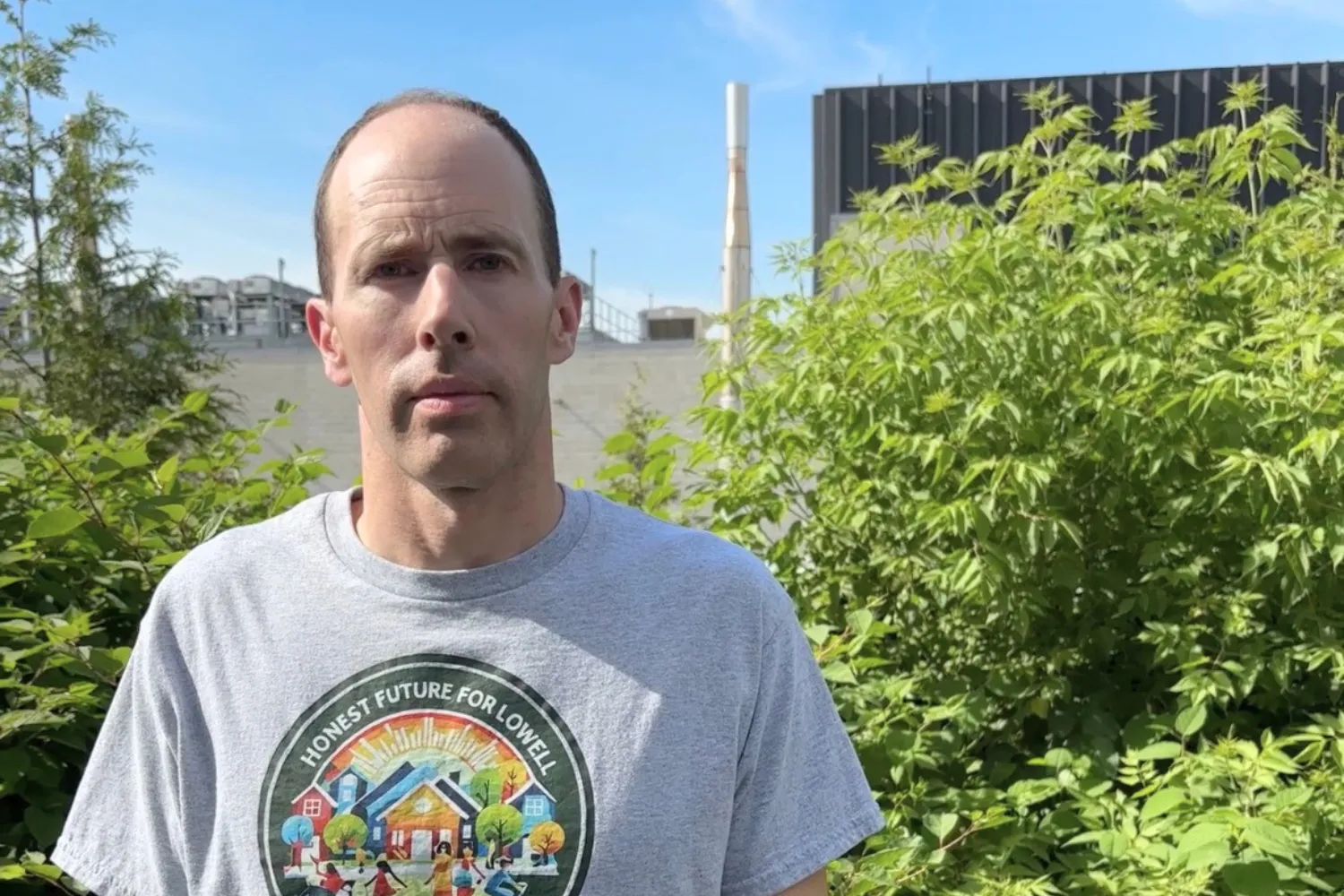
However, critics have raised numerous concerns about the centers—including their impact on the environment, the amount of water they use, their potential to drive up electricity bills and the noise pollution they generate in communities.
Related Story
What It’s Really Like to Live Next to a Data Center
In Ohio, data centers remain an important issue for many voters, and both candidates have responded with their own message in hopes that their proposals will resonate with the state’s electorate ahead of the November 3 election.
Why Ohio Senate Race Matters to 2026 Midterms
The Ohio Senate race is one of a handful of toss-ups that could determine the balance of power in the Senate. Republicans hold a 53-47 majority that is seen as increasingly at risk in November. Democrats must flip four seats to win a majority, as Vice President JD Vance would serve as the tiebreaker in a 50-50 Senate.
Democrats need to flip two seats in states President Donald Trump won by double digits in the 2024 election to secure a majority, and Ohio is viewed as one of those states that could potentially flip back to Democrats this year.
If Democrats win Ohio, their path to winning a Senate majority becomes more feasible. But if Husted wins, that means they would need to win in some of those other states to win control of the chamber.
What Campaigns Are Saying About Ratepayer Protection Act
Amy Natoce, a spokesperson for Husted, told Newsweek that Brown is “resorting to lies instead of facing his abysmal record head-on.”
“The House overwhelmingly passed Sen. Husted’s bipartisan legislation requiring data center companies to pay for the power they use, but Senate Democrats blocked it,” Natoce said. “Sherrod Brown and his friends would rather play politics and stick Ohio families with higher electric bills than pass a commonsense solution. It’s despicable."
She said data centers "are, and should remain, a local decision."
"Every community has different priorities, and local leaders are best equipped to decide what's right for their residents," Natoce added.
Husted lamented Senate Democrats blocking the bill from advancing in a post on X on Thursday.
“So do Chuck Schumer and Senate Democrats really think every representative from Ohio, along with 99% of the House of Representatives, got it wrong? These partisan games are wrong for Ohio and wrong for our country—and they come at the expense of working families, small businesses, and farmers,” he wrote.
Brown campaign spokesperson Lauren Chou criticized Husted’s bill in a statement to Newsweek, writing that the Republican senator and former lieutenant governor “led the charge to bring data centers to Ohio, forcing Ohioans to pay thousands more in higher electric bills and giving giant out-of-state corporations billions of dollars in out-of-control tax breaks.”
“Husted is a ‘chief reason’ Ohio has 226 data centers and is ‘the face of data centers’ in Ohio. Ohioans should get to decide if data centers are built in their communities and should never be forced to subsidize the electricity costs of big corporations,” she said.
Where Does Sherrod Brown Stand on Data Centers?
Brown has cast himself as a data center skeptic, making standing up to Big Tech a cornerstone of his campaign.
“Ohioans are worried about the number of data centers entering our state – I am too. I’m running to take on the big corporations raising our utility bills, defend our resources, and protect our communities,” Brown wrote in a September 19 post on X.
He believes that data centers should be required to pay the full cost of their utilities, and that Ohioans “shouldn’t be forced to subsidize these costs,” according to his campaign website.
Brown told Columbus-based news station WSYX that he believes it is important that there is local input when it comes to data center development, and that he does not support “over-the-top tax breaks for these big tech companies.”
“I start with this, that I have a healthy skepticism of big corporations that come into Ohio and demand tax breaks and then override any local concerns and then try to raise our electric rates,” he told the TV news outlet.
He has repeatedly hit out at Husted’s position on data centers, casting the incumbent senator as being overly supportive of their development in the state.
Where Does Jon Husted Stand on Data Centers?
As lieutenant governor, Husted was more supportive of data center development in the state. According to the Ohio Capital Journal, he did play a role in bringing them into the state and supported tax breaks for past projects.
Still, he has supported some regulations on data centers. His bill would have required states to consider establishing standards for when data centers and other large electricity users connect to the grid, an effort to avert rising electricity prices for consumers.
The bill, however, has faced criticism. Food & Water Watch, an environmental group that has opposed the rapid expansion of data centers, wrote in a June 23 statement that it is the “greatest use of a sly misnomer since the Vikings named Greenland.”
Newsweek's AI Policy Scorecard currently rates Husted as having a “mixed” viewpoint on AI.
He has sponsored the Ratepayer Protection Act and has also attended a roundtable promoting the Ratepayer Protection Pledge. At the same time, he has also said that people have “created the demand” for data centers.
“We use all of these digital products that it processes. If we don’t want them then don’t use them. You can go back to the bunny ear antenna on your TV. You don’t need a data center. But if you’re connected to a wire, then you’re using the data center,” he said during an interview on the Strictly Speaking Unfiltered with Bob Frantz podcast. "When we look in the mirror, we are the problem.”
What Do Ohio Voters Think?
Most Ohio voters do not want to see data centers in their own communities, according to a Bowling Green State University poll released in September.
It found that 75 percent of Ohioans oppose a data center being built in their community, while only 25 percent would be supportive of that. Sixty-three percent said they oppose data centers being built anywhere in Ohio, while 37 percent said they would support their construction in the state.
Ohioans were more split when it comes to whether data centers should be constructed anywhere in the U.S., with 55 percent opposing and 45 percent supporting their construction elsewhere in the country.
Seventy-eight percent said they support a temporary ban on data center construction “until more information can be gathered about their effects,” the poll found.
A candidate’s stance on data centers is important for many voters, with 47 percent saying it would be “extremely” or “very” important, while 35 percent said it is “somewhat” important in the poll.
The poll surveyed 1,000 Ohio likely voters from September 1 to 10, 2026, and had a margin of error of plus or minus 4 percentage points.
Robert Alexander, professor of political science at Bowling Green State University, told Newsweek that data centers have become a key issue for voters in Ohio.
"Ohioans have shown a true disdain for data centers and Democrats have worked hard to tie Republicans in the state to them. They truly have become a flashpoint for lots of issues, from economic concerns to environmental concerns, to concerns over the growth of artificial intelligence more broadly speaking," he said.
Jon Husted vs. Sherrod Brown: Latest Polls
Several recent polls of the Ohio Senate race to a close contest, giving Brown a slim advantage over Husted within the margin of error.
Brown was up a single point, 44 percent to 43 percent, in an InsiderAdvantage poll, which surveyed 1,200 likely voters from September 28 to 29, 2026. It had a margin of error of plus or minus 2.83 percentage points.
He led by 3 points in a Suffolk University poll, 47 percent to 44 percent. It surveyed 500 likely voters from September 23 to 27, 2026, and had a margin of error of plus or minus 4.4 percentage points.
A Marist University poll, meanwhile, showed Brown up 8 points, 51 percent to 43 percent. It surveyed 1,298 registered voters from September 24 to 27, 2026 and had a margin of error of plus or minus 3.8 percentage points.
What Happens Next
The Ohio Senate race remains one of the most competitive of the 2026 midterm elections, with forecasters like the Cook Political Report and Sabato’s Crystal Ball classifying it as a pure toss-up. It’s not clear whether Brown and Husted will face off in a debate before the election.
Newsweek’s reporters and editors used Martyn, our AI assistant, to produce this story. Learn more about Martyn here. Contact Newsweek editors on this story: Jason Lemon and Gray R. Thomas
View 0 Comments
Submit Correction
View Editorial & AI Guidelines