...

By Soo Kim
Reporter
0
Share
Newsweek is a Trust Project member
See more of our trusted coverage when you search.Prefer Newsweek on Googleto see more of our trusted coverage when you search.
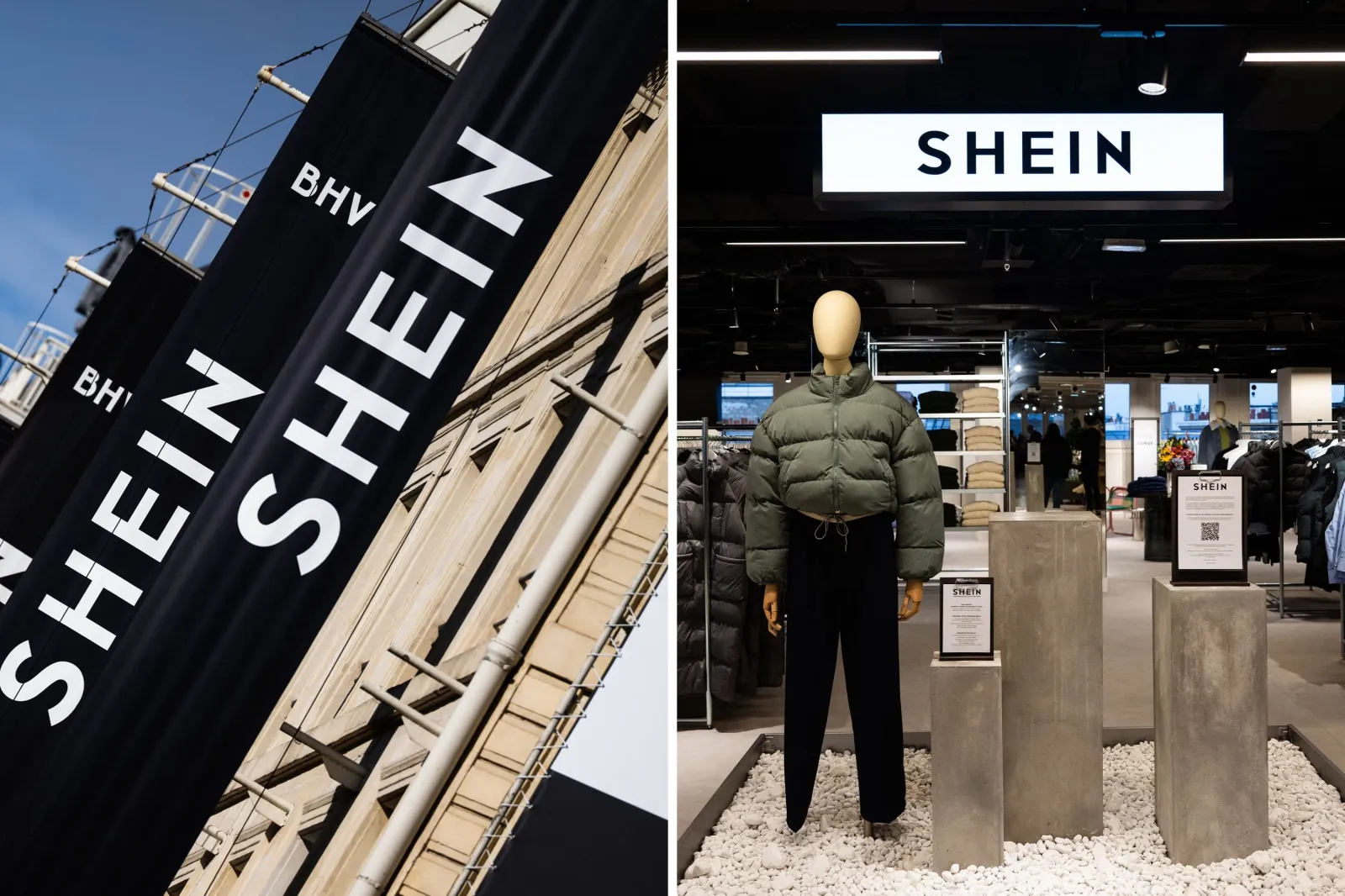
Fast-fashion giant Shein's rumored acquisition of sustainability-focused retailer Everlane for a reported $100 million has raised fresh concerns about environmental values and credibility in the fashion world.
The reports of the potential sale, first reported by Puck, are based on an anonymous source that Newsweek was unable to independently verify. When contacted for comment, a spokesperson for Everlane told Newsweek: “We don’t have more to share at this time,” noting that the company would be in touch. Newsweek has contacted Shein for comment via email and the company’s online contact form.
The reports—which claim that Everlane’s majority owner L Catterton, a private equity firm partnered with LVMH, had agreed to a deal approved by its board—have sent ripples through the retail industry. Newsweek spoke to experts to assess what the potential move could mean for the future of sustainable fashion.
Read More on Business
Experts warn that the reported acquisition risks turning sustainability into a marketing tool rather than an operating principle, while also making it harder for independent ethical brands to compete. As one expert put it, the suggestion that Everlane could be sold to Shein represents a “symbolic blow” to sustainable fashion, highlighting how credibility in the sector can be effectively bought and repurposed.
...
The reported deal lands at a moment when sustainability in fashion is shifting from marketing language to compliance expectations and supply-chain scrutiny. The global fast-fashion market is projected to grow sharply—from $161.9 billion in 2025 to $387.7 billion by 2034, according to an August 2025 report by Global Market Insights, even as environmental concerns and competition are flagged as major challenges.
At the same time, United Nations climate officials have warned that emissions from textiles production already exceed those of international flights and maritime shipping combined and that sector emissions could rise by more than 60 percent by 2030.
‘Buying the Halo’
Several experts told Newsweek that the most important question is whether Everlane changes Shein—or Shein changes Everlane—as a result of the potential deal.
Alicia White, a social entrepreneur/activist who founded Project Petals, a nonprofit focused on climate equity and environmental justice, told Newsweek that the biggest risk was “greenwashing,” arguing that Shein can capitalize on Everlane’s sustainability credibility while continuing its usual model.
Acquisitions tend to prioritize “closing capital margins,” not values or the environment—and she said the possible sale shows sustainability can be treated as “a mere marketable asset,” noting that “credibility is easily bought.”
...
White also noted that the credibility stakes go beyond “greenwashing.” When a fast-fashion company buys a sustainability-focused brand, she warned, “more often than not” the parent company changes what the brand represents—leaving shoppers paying for a brand whose values may no longer match their own.
Chartered financial analyst Mark Pacitti, founder/CEO of private intelligence agency Woozle Research, framed the potential deal as “a symbolic blow for sustainable fashion more than an operational one.”
He called it Shein’s “third legitimacy purchase,” but noted it is “different” from earlier deals because it’s “not about distribution,” but about “acquiring the vocabulary of sustainability itself”—what one analyst described to Woozle as “buying the halo,” Pacitti told Newsweek.
A Credibility Test That Won’t Be Settled by Branding
Maisa Benatti, CEO of fashion tech company AIUTA, told Newsweek that the consumer risk is that sustainability becomes “a marketing asset rather than an operating principle.” If Everlane’s supplier transparency and product discipline are weakened, she warned, the deal could dilute the credibility Shein is trying to access.
Benatti argued that the possible acquisition will be judged by operational change—if Everlane changes Shein, that’s significant; if Shein changes Everlane, it could deepen existing skepticism about sustainability in fashion.
Ken Pucker, a professor of practice in sustainability at Tufts University, told Newsweek that the reported deal is being misread by some as a new “affirmation” of disposable fashion at the expense of sustainable fashion. In his view, that battle was settled long ago.
He noted that the gap between sustainable and “unsustainable” brands is "not all that vast,” and that brands can still differentiate themselves through greater transparency and sustainability.
The Financial Challenges of Sustainable Brands
Amrita Bhasin, the cofounder and CEO of Sotira, a company focused on helping retailers manage unsold inventory, told Newsweek that the potential acquisition also reflects financial pressure facing apparel brands trying to scale.
Sustainable practices—from transparency and ethical sourcing to small-batch production and sustainable materials—add cost and “erode margin,” she said. Even if Everlane customers are willing to pay higher prices, Bhasin noted the products can cost significantly more to produce than fast fashion alternatives.
She warned the reported deal could be a sign that independent sustainable brands will struggle in a consolidating market—especially as consumers curb discretionary spending and may be less responsive to sustainability messaging than a decade ago. In her view, shoppers may be “jaded” by sustainability marketing and by the idea that higher costs are shifted onto consumers.
Belinda Jacobs, CEO of Tech Packs Co., also emphasized that marketing transparency “isn’t enough to survive if your underlying supply chain operations aren’t ruthlessly efficient.”
Jacobs argued that maintaining both transparency and profitability requires “digitized control” over factory-floor data—and that without that infrastructure, margin pressure can push even ethical brands toward fast-fashion giants. She added that independent sustainable brands must build “enterprise-level digital structure” to protect margins and make ethical manufacturing profitable.
...
View 0 Comments
Submit Correction
View Editorial & AI Guidelines