...

By Melissa Fleur Afshar
Reporter
0
Share
Newsweek is a Trust Project member
See more of our trusted coverage when you search.Prefer Newsweek on Googleto see more of our trusted coverage when you search.
Sharks' teeth—some of nature's sharpest and most formidable weapons—may not withstand the effects of future ocean acidification, new research suggests.
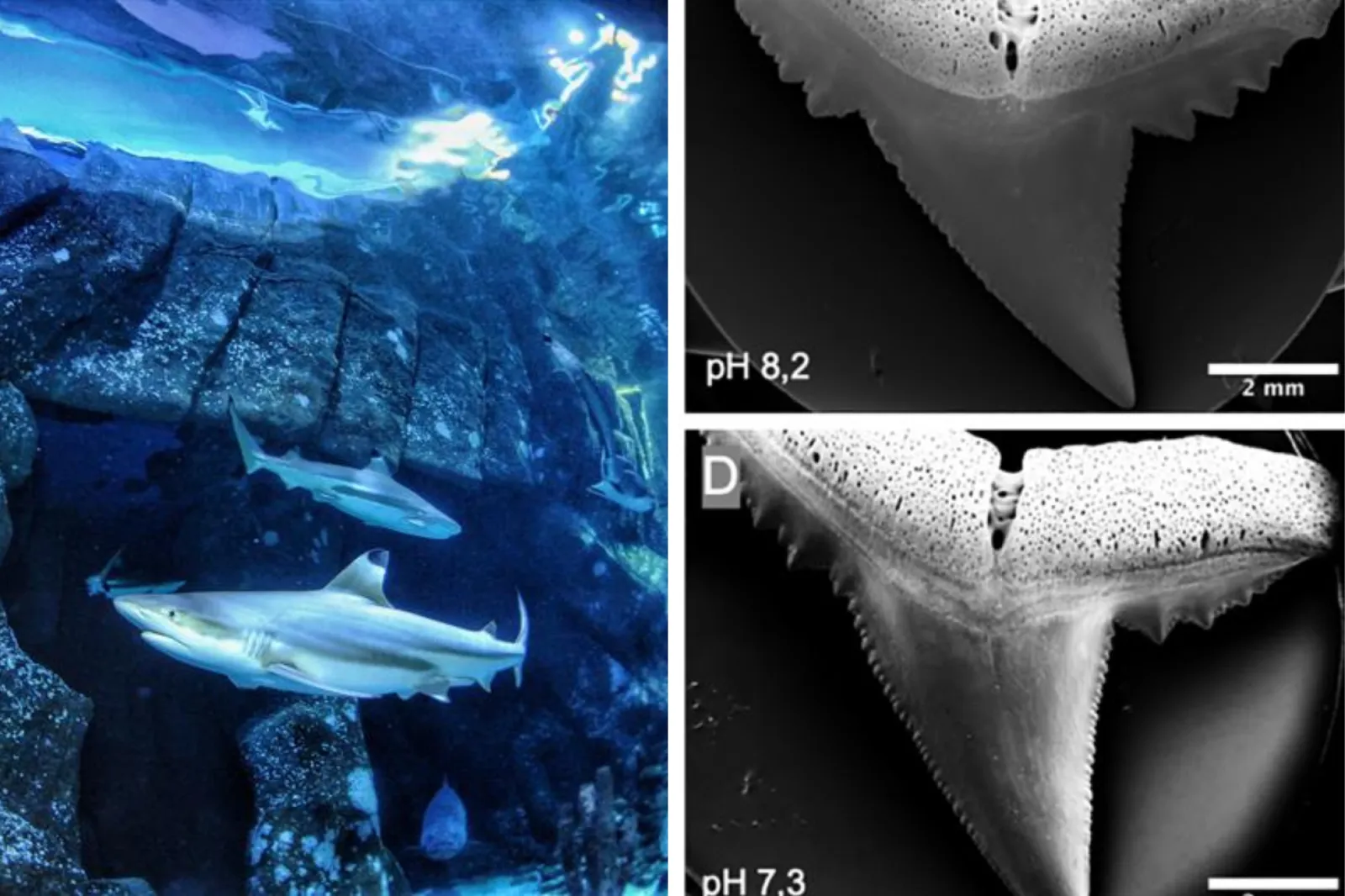
Scientists at the Heinrich Heine University Düsseldorf in Germany found that the teeth of blacktip reef sharks became visibly damaged after being exposed to water with the same acidity expected in the oceans of 2300.
The findings indicate that as carbon dioxide emissions continue to drive ocean acidification, the health of sharks' teeth could be compromised—posing a threat to the survival of even these apex predators.
Read More on Science
Researchers placed 16 discarded and undamaged shark teeth in water with a pH of 8.1—representing today's average ocean conditions—and 7.3, the level that scientists estimate oceans could reach by 2300.
Over an eight-week period, the teeth exposed to the more acidic conditions exhibited increased surface damage including cracks, holes, root corrosion and overall degradation.
"Shark teeth, despite being composed of highly mineralized phosphates, are still vulnerable to corrosion under future ocean acidification scenarios," paper author and biologist Maximilian Baum said in a statement. "They are high developed weapons built for cutting flesh, not resisting ocean acid."
He added: "Our results show just how vulnerable even nature's sharpest weapons can be."
...
To assess the changes wrought by the acidity, scientists measured the circumference of the teeth before and after incubation.
Those placed in the more acidic environment showed an average circumference increase of 0.73 millimeters—nearly double the increase observed in teeth exposed to current ocean conditions. The increased circumference likely reflected enhanced surface irregularities and structural edge degradation, not true growth, the team noted.
Although sharks continuously regrow their teeth throughout their lives, this natural adaptation may not be enough to offset the impact of prolonged exposure to acidic conditions, the researchers warned.
The findings come amid growing concern about how climate change is affecting marine ecosystems.
What Is Ocean Acidification?
Ocean acidification is caused by the ocean absorbing carbon dioxide from the atmosphere, resulting in a long-term decrease in pH.
Since the Industrial Revolution, the average pH of surface ocean waters has fallen by 0.1 units. Projections suggest a further drop to 7.3 by 2300.
Do you have a tip on a science story that Newsweek should be covering? Do you have a question about sharks? Let us know via science@newsweek.com.
Reference
Baum, M., Haussecker, T., Walenciak, O., Köhler, S., Bridges, C. R., & Fraune, S. (2025). Simulated ocean acidification affects shark tooth morphology. Frontiers in Marine Science, 12, 1597592. https://doi.org/10.3389/fmars.2025.1597592
View 0 Comments
Submit Correction
View Editorial & AI Guidelines