...

By Jasmine Laws
Reporter
0
Share
Newsweek is a Trust Project member
See more of our trusted coverage when you search.Prefer Newsweek on Googleto see more of our trusted coverage when you search.
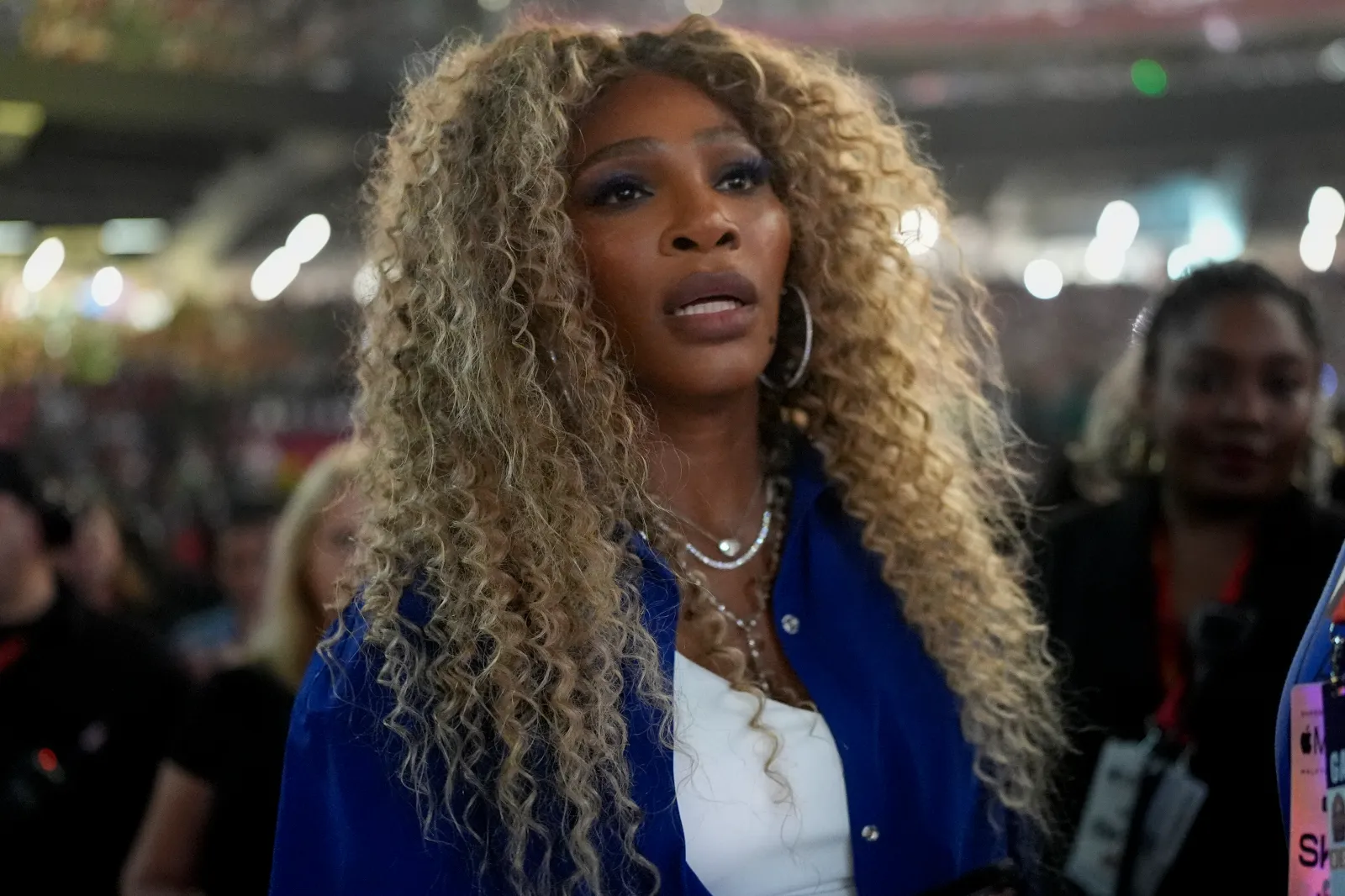
Serena Williams' Super Bowl commercial, which was an ad promoting GLP-1 weight loss drugs and the telehealth company Ro, has been met with criticism online after it aired on Sunday.
Williams said in the ad that weight loss treatment with Ro had resulted in her losing 34 pounds in a year and, consequentially, reduced her knee joint stress and stabilized her blood sugar levels.
She said: "I'm on Ro. 34 pounds down on Ro. Healthier on Ro. Supported by Ro. FDA-approved, GLP-1 options now even in a pill. Weight loss expertise that I trust. I'm moving better on Ro. I'm feeling better on Ro. I'm Serena Williams. This is me on Ro."
Read More on News
Critics took to social media to question the move, with one saying it felt "wrong" that the former tennis pro was "pushing Big Pharma weight loss injections while impressionable children watch."
...
Why It Matters
GLP-1s are gaining in popularity for their notable impact on a person's ability to drop weight, supporting obesity and type-2 diabetes treatments.
According to a 2025 RAND report, almost 12 percent of Americans have used GLP-1 drugs for weight loss, including about one-fifth of women aged 50 to 64. The growing use of the drugs has in part contributed to the drop in obesity rates in the country.
Williams' commercial has proved contentious, with critics questioning why a former professional athlete was choosing to advertise weight loss drugs, with others saying it was inappropriate to air the ad during an event watched by millions of children.
What Is RO?
Ro, also known as Roman Health Ventures Inc., is an American telehealth company, headquartered in New York City, that was set up in 2017 and according to its website, is the only company to offer nationwide telehealth, labs and pharmacy services.
Ro offers treatments for a wide range of conditions for millions of patients, including acne, cold sores, reproductive concerns, hair loss and obesity. It also offers certain hormone testing.
What To Know
The ad campaign comes as Ro has just launched GLP-1 medications as both injections and pills, with "prices lower than ever before—making treatment accessible to more eligible people," the company said.
Williams first partnered with Ro in August 2025, and used Sunday's commercial to share how GLP-1s have helped her reach her health and weight goals.
According to Ro's release on the commercial, her health markers are now "better than they were at the end of her career as a professional athlete."
The telehealth company said in a press release that recent lab results show Williams has lowered her cholesterol by 30 percent since 2021, but that "typically, a patient’s total cholesterol levels improve by 4.8 percent while on GLP-1 medication." The company also said her lifetime risk of heart disease fell by a relative 70 percent, from 27 percent to 8 percent.
"Her experience mirrors that of many Ro patients, who report meaningful non-scale health improvements alongside weight loss," Ro said.
The company also said that Williams' story has "helped reach new audiences by normalizing seeking treatment and empowering people to find out if a GLP-1 might be right for them."
However, critics on social media deemed the ad "ridiculous," given she is a former professional athlete, and questioned why she was advertising weight loss drugs.
One X user said she was "shamelessly" promoting weight loss drugs, and that "nobody should be encouraging people to take weight loss drugs, but especially a role model and icon of sport."
The same user added: "Youngsters watching this ad will think they can simply use this instead of eating healthy, keeping fit and active. For an athlete to promote this is shocking and sends out so many bad messages."
It was also pointed out that Williams’ husband is an investor in Ro and serves on its board—something the company also disclosed in its press release.
"I smell a HUGE conflict of interest," one X user wrote.
What People Are Saying
Serena Williams said: “I feel better now than I have in years. For me, this journey has been about feeling strong, energized, and healthy in my body; I feel like myself again. Being on Ro helped me focus on my health in a way that actually worked for me, and I’m excited to share how great I feel with millions of people during the Super Bowl."
Zach Reitano, co-founder and CEO of Ro said in a statement: "There is no one with more willpower and self-discipline than Serena Williams, which is why she’s the perfect person to help people see that GLP-1s are not a shortcut. Serena’s journey on Ro has been an inspiration to millions of people. We’re excited to continue to work with her to share how Ro and GLP-1s have helped achieve her health goals. This is just the beginning."
Saman Rahmanian, Ro’s co-founder and chief product officer, said during a recent interview, according to Variety: "When an elite athlete likes Serena Williams is having the same weight loss struggles as millions of other patients, then that is clear proof that weight loss was never about willpower. So we decided to take that story a narrative and tell it during the Super Bowl."
Modern Health, an X account with 42,000 followers, wrote on the platform: "Serena Williams appears in a Super Bowl advertisement administering a GLP-1 based weight loss medication, broadcast to millions of viewers. The ad emphasizes how “convenient” access to GLP-1 drugs has become through the Ro platform and even highlights the availability of oral formulations. There was a time when Super Bowl commercials promoted beer, cars, and shared cultural moments. Normalizing prescription weight loss medications during a mass viewed event, especially one watched by impressionable children, raises ethical concerns about pharmaceutical marketing."
View 0 Comments
Submit Correction
View Editorial & AI Guidelines