...

By Soo Kim
Reporter
0
Share
Newsweek is a Trust Project member
See more of our trusted coverage when you search.Prefer Newsweek on Googleto see more of our trusted coverage when you search.
Scientists have been able to get snapshots of Alaska’s changing marine ecosystems, which have been well-preserved in canned salmon for nearly 50 years.
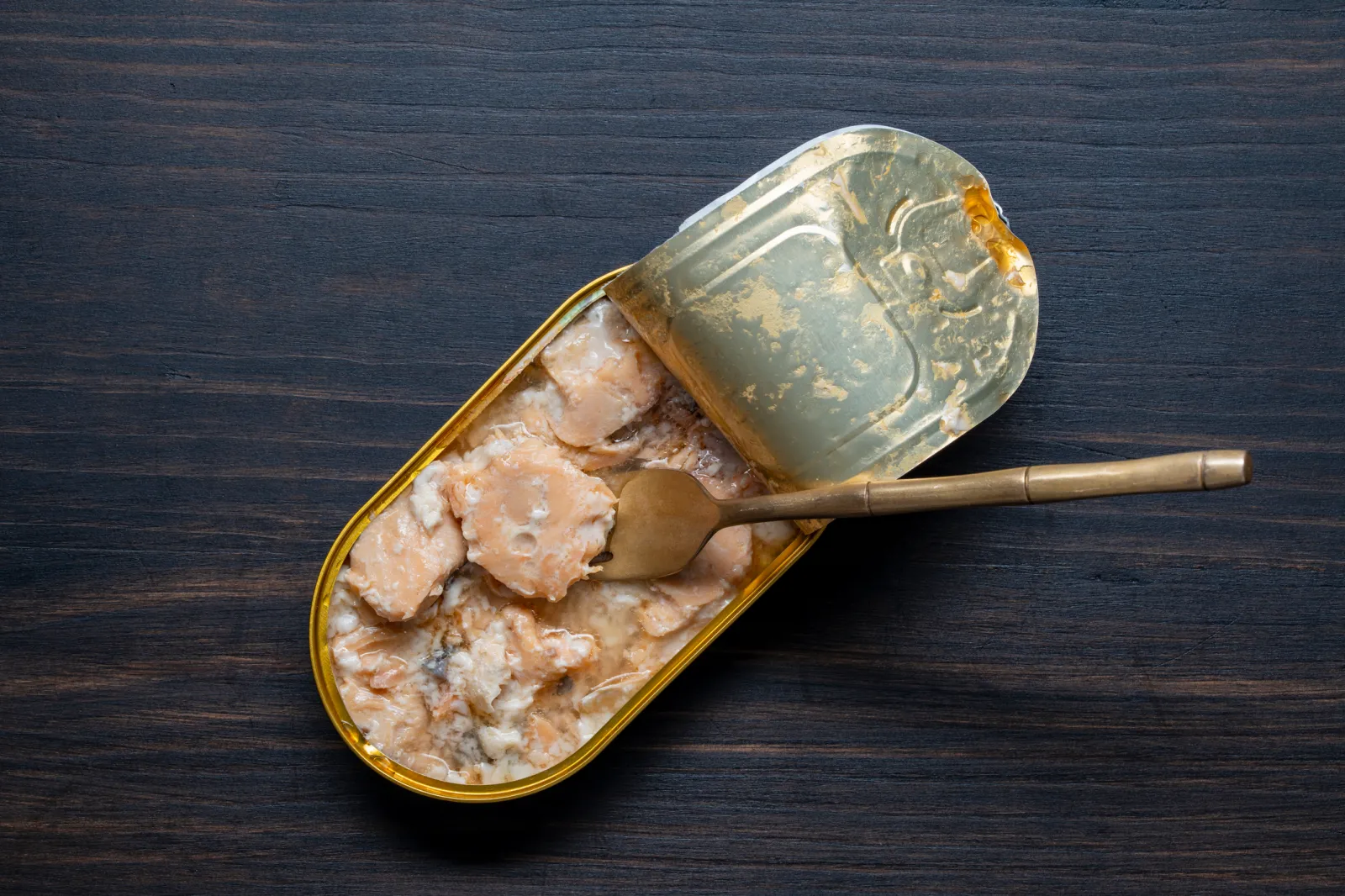
Researchers at the University of Washington (UW) investigated old cans of salmon that contained four salmon species caught over a 42-year period between 1979 and 2021 in the Gulf of Alaska and Bristol Bay.
The team dissected 178 cans that contained fillets from four salmon species and counted the number of anisakid roundworms, a common tiny marine parasite, within the flesh. These parasites had been killed during the canning process and, if eaten, would have posed no danger to humans. However, counting the number of roundworms is one way to determine how well a marine ecosystem is doing.
Read More on Science
The study’s findings, which were published in the journal Ecology and Evolution in April 2024, showed that the roundworms were preserved in the flesh of the salmon, indicating the fish was part of a thriving ecosystem before it later made its way to a can.
"Anisakid burden increased over time in chum and pink salmon, but there was no change in sockeye or coho salmon," the researchers noted in the study.
"Everyone assumes that worms in your salmon is a sign that things have gone awry," Chelsea Wood, one of the study’s co-authors, noted in a UW statement at the time of the study’s release. "But the anisakid life cycle integrates many components of the food web. I see their presence as a signal that the fish on your plate came from a healthy ecosystem."
"Anisakids have a complex life cycle that requires many types of hosts," Natalie Mastick, a lead author of the study, said in the UW statement. "Seeing their numbers rise over time, as we did with pink and chum salmon, indicates that these parasites were able to find all the right hosts and reproduce. That could indicate a stable or recovering ecosystem, with enough of the right hosts for anisakids."
Anisakids enter the food web when they are eaten by small marine invertebrates, such as krill, which are small shrimplike crustaceans. These are later consumed by smaller fish that are then eaten by larger fish, like salmon.
Anisakids reproduce when they end up in the intestine of a marine mammal, and the eggs are excreted back into the ocean to hatch and the cycle begins again.
"If a host is not present—marine mammals, for example—anisakids can't complete their life cycle and their numbers will drop," Wood said.
"Anisakids can only reproduce in the intestines of a marine mammal, so this could be a sign that, over our study period—from 1979 to 2021—anisakid levels were rising because of more opportunities to reproduce," Mastick said in the UW statement.
Warming temperatures or the positive impacts of the Clean Water Act, a U.S. federal law regulating water pollution, may be other possible explanations, Mastick added.
Do you have a tip on a science story that Newsweek should be covering? Do you have a question about marine life? Let us know via science@newsweek.com.
...
View 0 Comments
Submit Correction
View Editorial & AI Guidelines