...

By Amira El-Fekki
Middle East News Reporter
0
Share
Newsweek is a Trust Project member
See more of our trusted coverage when you search.Prefer Newsweek on Googleto see more of our trusted coverage when you search.
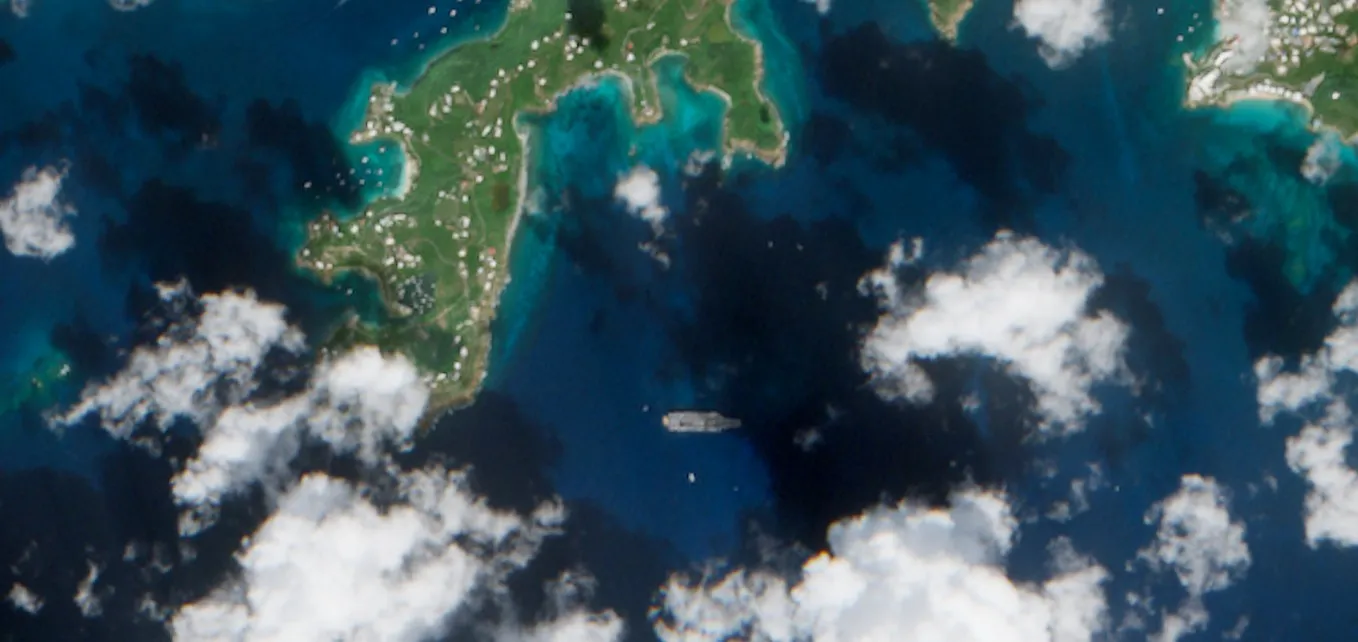
New satellite imagery has emerged showing the USS Gerald R. Ford positioned in Caribbean waters close to the U.S. Virgin Islands. Tensions are rising in the region as U.S. continues to build up its military presence close to Venezuela.
Why It Matters
There is growing concern in Venezuela over the U.S. military build-up in the Caribbean and Caracas has accused Washington of hostile or interventionist intentions, particularly regarding its oil resources.
Read More on U.S.
The U.S. military has carried out multiple strikes on vessels allegedly transporting drugs to the United States from Venezuela, a campaign defended by the White House as lawful and necessary. The attacks, including reported follow-up strikes on survivors, have sparked controversy, with legal experts and lawmakers questioning their legality and humanitarian implications.
Last week, President Donald Trump said that the airspace above and close to Venezuela was to be "closed in its entirety."
...
What To Know
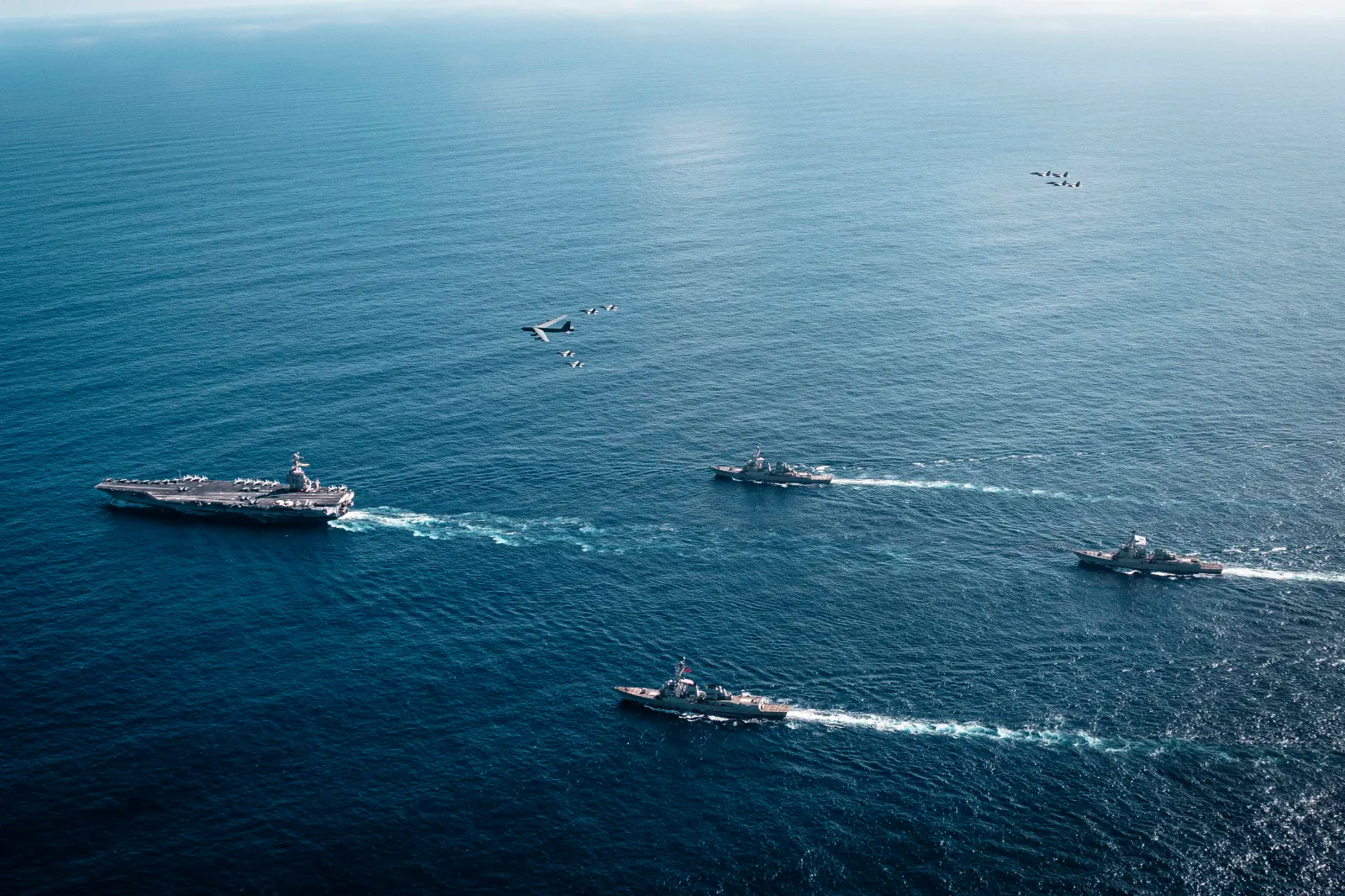
The Gerald R. Ford Carrier Strike Group, including the flagship aircraft carrier USS Gerald R. Ford, its assigned air wing of F/A-18E/F Super Hornets, and the destroyers USS Winston S. Churchill, USS Mahan, and USS Bainbridge, are operating alongside a U.S. Air Force B-52 Stratofortress.
The carrier docked Monday at St. Thomas in the U.S. Virgin Island, for a port visit. After being redeployed by the Pentagon from the Mediterranean, the strike group entered U.S. Southern Command’s (SOUTHCOM) area of responsibility on November 11, shifting its focus to Latin America and the Caribbean.
The carrier group was spotted last week south of Puerto Rico, where José Aponte de la Torre Airport in Ceiba has become a key location for the U.S. military's recent operations and exercises in the Caribbean.
Analysts have noted the unprecedented scale of the military build-up in the Caribbean since September, saying it's the largest since the 1962 Cuban missile crisis. According to the Quincy Institute, by November 6 there were more than a dozen large naval warships, in excess of 10,000 U.S. military personnel, and substantial air assets in the region, but the full scope and objectives of a U.S. military operation in the Caribbean remain unclear.
...
On Monday in Caracas, Venezuelan President Nicolás Maduro dismissed mounting U.S. pressure, pledging "absolute loyalty" to his people during a rally, saying the country would accept neither "a slave’s peace," nor the peace of colonies, according to The Associated Press (AP).
Trump told Maduro in a phone call earlier this week to quit and offered safe passage for him and his family, a deal that expired Friday without Maduro accepting the offer.
According to Reuters, Maduro requested full legal amnesty to leave Venezuela, an end to U.S. sanctions and his case before the International Criminal Court and sanction relief for over 100 Venezuelan officials accused of abuse or corruption. He reportedly wanted his vice president to lead an interim government if he stepped down. Trump rejected the demands.
What People Are Saying
Venezuelan President Nicolás Maduro said Monday, as quoted by Al Jazeera English: We do not want a slave’s peace, nor the peace of colonies. Colony, never. Slaves, never. We have endured 22 weeks of aggression that can be described as psychological terrorism. These 22 weeks have put us to the test, and the people of Venezuela have demonstrated their love for the homeland."
President Donald Trump told reporters abroad the Air Force One Sunday: "We consider Venezuela not to be a very friendly country. They've sent millions of people really, and probably a number in excess of that. And a lot of those people shouldn’t be in our country, from jails, from gangs, from drug dealers…causing a lot of problems and drugs."
Admiral Alvin Holsey, SOUTHCOM's commander said on November 11: "The USS Gerald R. Ford Carrier Strike Group's deployment represents a critical step in reinforcing our resolve to protect the security of the Western Hemisphere and the safety of the American homeland.”
What Happens Next
Trump has yet to announce any further decisions regarding Venezuela. Meanwhile, lawmakers are expected to review the recent boat strikes during upcoming congressional hearings, the AP reported.
View 0 Comments
Submit Correction
View Editorial & AI Guidelines