...

By Micah McCartney
Reporter
0
Share
Newsweek is a Trust Project member
See more of our trusted coverage when you search.Prefer Newsweek on Googleto see more of our trusted coverage when you search.
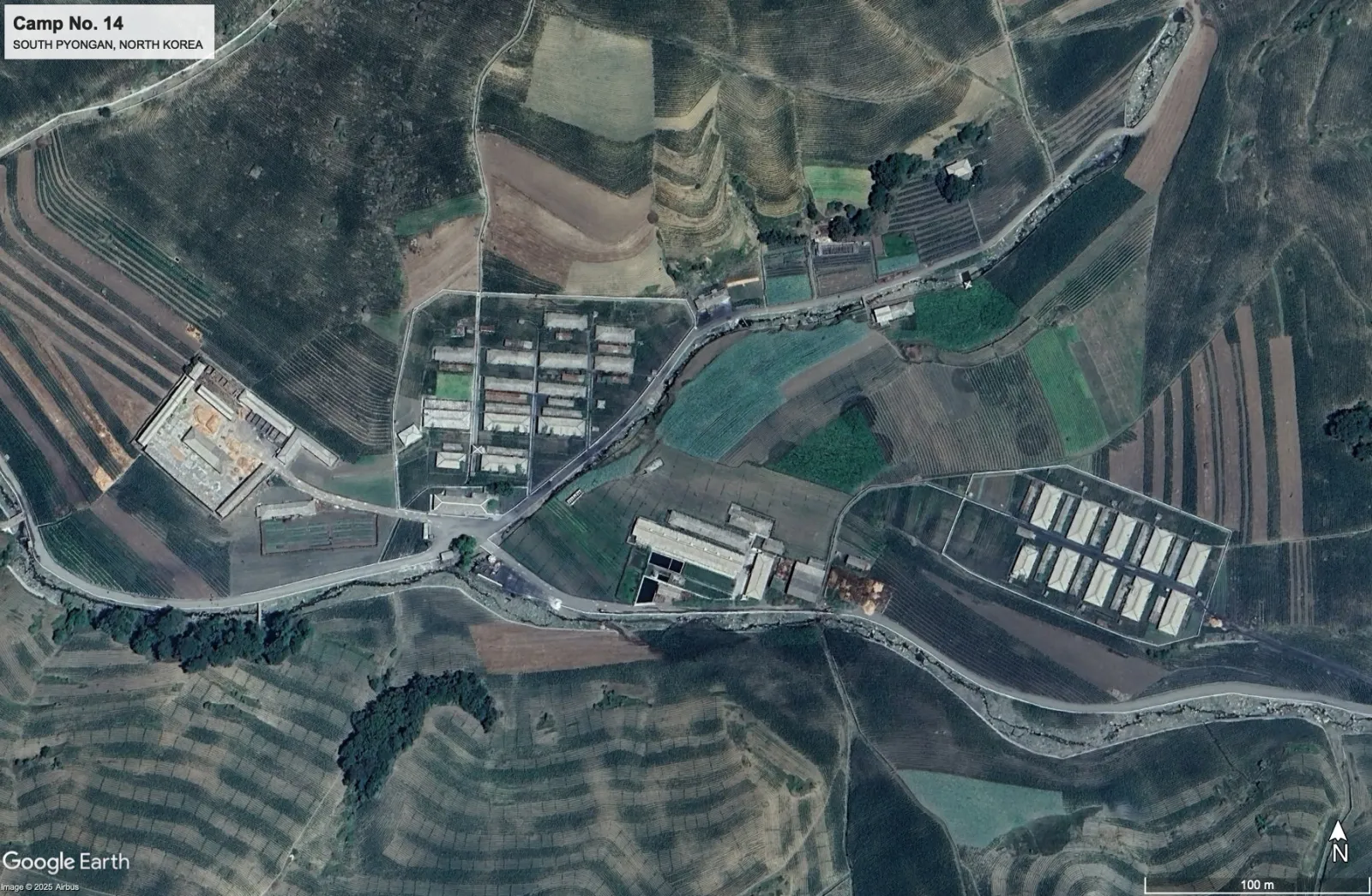
Satellite imagery reviewed by Newsweek shows the continued operation of North Korea's political prison camps, where as many as 65,000 people are believed to be held, according to a new report.
Newsweek contacted the North Korean Embassy in Beijing for comment via email.
Why It Matters
North Korea's totalitarian government is widely considered one of the world's worst violators of human rights.
Read More on World
Among the regime's practices is the imprisonment of individuals—and sometimes their family members—in camps reserved for those accused of "anti-Party, anti-revolutionary, and anti-state" offenses, which include perceived slights against supreme leader Kim Jong Un and possessing foreign media.
North Korean defectors have described the camps as sites of systemic abuse, including torture, starvation, sexual violence, execution and medical neglect. Pyongyang denies the existence of political prison camps, arguing that it operates only reeducation facilities.
...
What To Know
North Korea currently operates four major political prison sites, according to the Korea Institute for National Unification (KINU), a think tank funded by the South Korean government. The report released this month was an update on a study first published over a decade ago.
Run by Pyongyang's feared Ministry of State Security, the sites include three so-called "village" camps—numbered 14, 16 and 18, that also detain family members of prisoners—and one prison-style facility, Camp 25.
KINU's satellite analysis outlines the boundaries of each site and identifies three main components: housing for security personnel and detainees; forced labor zones including mines, fish and livestock farms, and orchards; and an extensive system of guard posts around the perimeter of each camp.
The report estimated that between 53,000-65,000 political prisoners were being held in the four camps, down from the 80,000-120,000 estimated in KINU's 2013 report.
The authors said the drop was not linked to human rights reforms, but to the 2019 closure of Camp 15, the relocation of Camp 18, changes in counting methods, and inmate deaths.

...

...

...
1 of 3
What People Are Saying
The Office of the United Nations High Commissioner for Human Rights wrote in a report published in September: "Political prison camps are the site of severe human right violations, including enforced disappearance, forced labor, summary execution and starvation.
"Family members of those accused of crimes are also incarcerated, through 'guilt by association,' although this practice has reportedly been less rigorously applied in recent years."
What Happens Next
KINU urged expanded efforts to document the camps more accurately, including additional satellite monitoring and interviews with defectors with firsthand knowledge of conditions inside.
The report also called on Seoul to maintain international pressure on North Korea and to work with the United Nations to "develop concrete, actionable recommendations capable of prompting substantive changes in North Korea's stance."
View 0 Comments
Submit Correction
View Editorial & AI Guidelines