...

By Amir Daftari
News Reporter
0
Share
Newsweek is a Trust Project member
See more of our trusted coverage when you search.Prefer Newsweek on Googleto see more of our trusted coverage when you search.
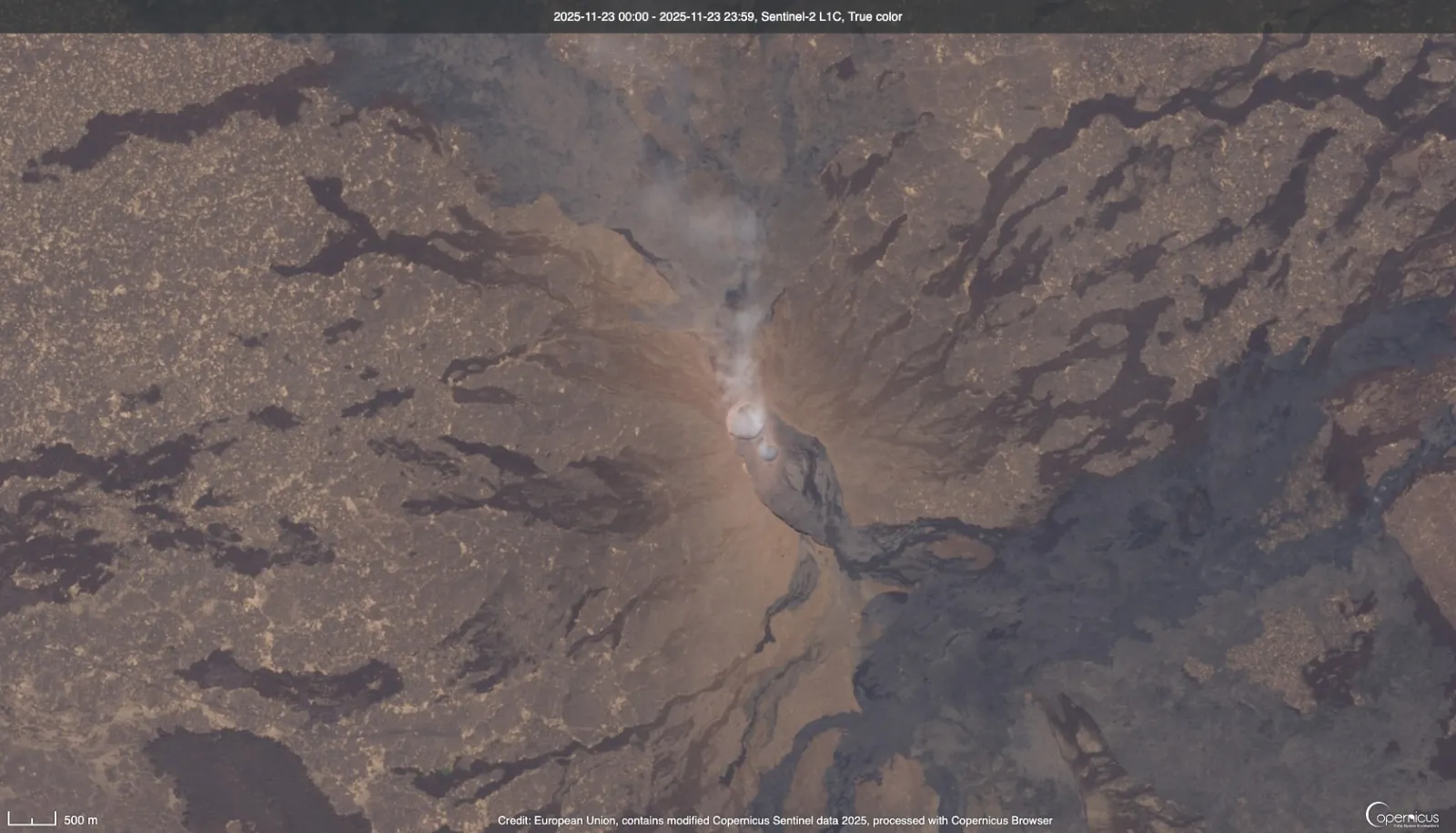
Satellite images have captured a rare volcanic eruption that occurred Sunday at Ethiopia’s Hayli Gubbi volcano, sending towering ash plumes toward Yemen and Oman.
The eruption is the first recorded activity at the volcano in roughly 10,000 years, offering scientists a striking glimpse of a previously dormant geological site.
Newsweek has contacted Ethiopia’s Foreign Ministry for comment.
Read More on News
Why It Matters
The eruption highlights how even long-dormant volcanoes can suddenly awaken, posing potential hazards for aviation, regional air travel and local populations. The Afar Rift, home to Hayli Gubbi, is one of East Africa’s most geologically active regions, making real-time monitoring essential. Satellite imagery allows scientists to track the eruption’s scale and trajectory, providing critical data for disaster preparedness and a better understanding of volcanic activity in the region.
...
What To Know
The Hayli Gubbi volcano erupted at approximately 8:30 a.m. UTC on Sunday, according to the Toulouse Volcanic Ash Advisory Center (VAAC). Explosive activity continued through the morning and early afternoon, sending ash plumes as high as 45,000 feet (13.7 kilometers). The latest European Space Agency’s Sentinel-2 satellite images taken after the eruption revealed the extent of the ash cloud and its movement across the region. By the latest VAAC advisory, the eruption has reportedly stopped, although monitoring continues.
X user DisasterAlert also posted an impressive timelapse purportedly showing the explosion, offering a dramatic visual of the event’s scale.
Detection and Confirmation
Analysts with GeologyHub, an independent volcanic monitoring group, first noticed the rapidly growing ash plume and alerted VAAC. Officials confirmed the eruption shortly afterward. VAAC maps released on Sunday showed lower-level ash drifting toward Djibouti and Yemen. Higher-altitude plumes were forecast to move east over Oman and into the Arabian Sea, with some upper-level ash projected to reach parts of Iran, Pakistan and India.
Geological Context
Hayli Gubbi is situated southeast of the Erta Ale volcanic range within Ethiopia’s Afar Rift, one of East Africa’s most volcanically active areas. Despite frequent regional eruptions, officials noted there is no evidence that Hayli Gubbi has erupted at any point during the Holocene, roughly the last 10,000 years. The eruption provides a rare opportunity to study a volcano that had been dormant for millennia.
X user Volcaholic posted a video that appears to have been recorded around the time of the eruption, though Newsweek has not independently verified the footage.
Monitoring and Potential Impact
So far, no immediate impacts on aviation or nearby communities were reported. VAAC Toulouse emphasized that updates will continue as new satellite and ground-based data become available. Authorities remain vigilant to drifting ash plumes, which can damage aircraft engines and reduce visibility over wide areas.
What Happens Next
Scientists will continue analyzing satellite imagery and other monitoring data to track any renewed activity at Hayli Gubbi. Air traffic advisories may be adjusted based on ash plume movement, while researchers gain valuable insights into the behavior of long-dormant volcanoes in East Africa.
View 0 Comments
Submit Correction
View Editorial & AI Guidelines