...

By Rachael O'Connor
Reporter
0
Share
Newsweek is a Trust Project member
See more of our trusted coverage when you search.Prefer Newsweek on Googleto see more of our trusted coverage when you search.
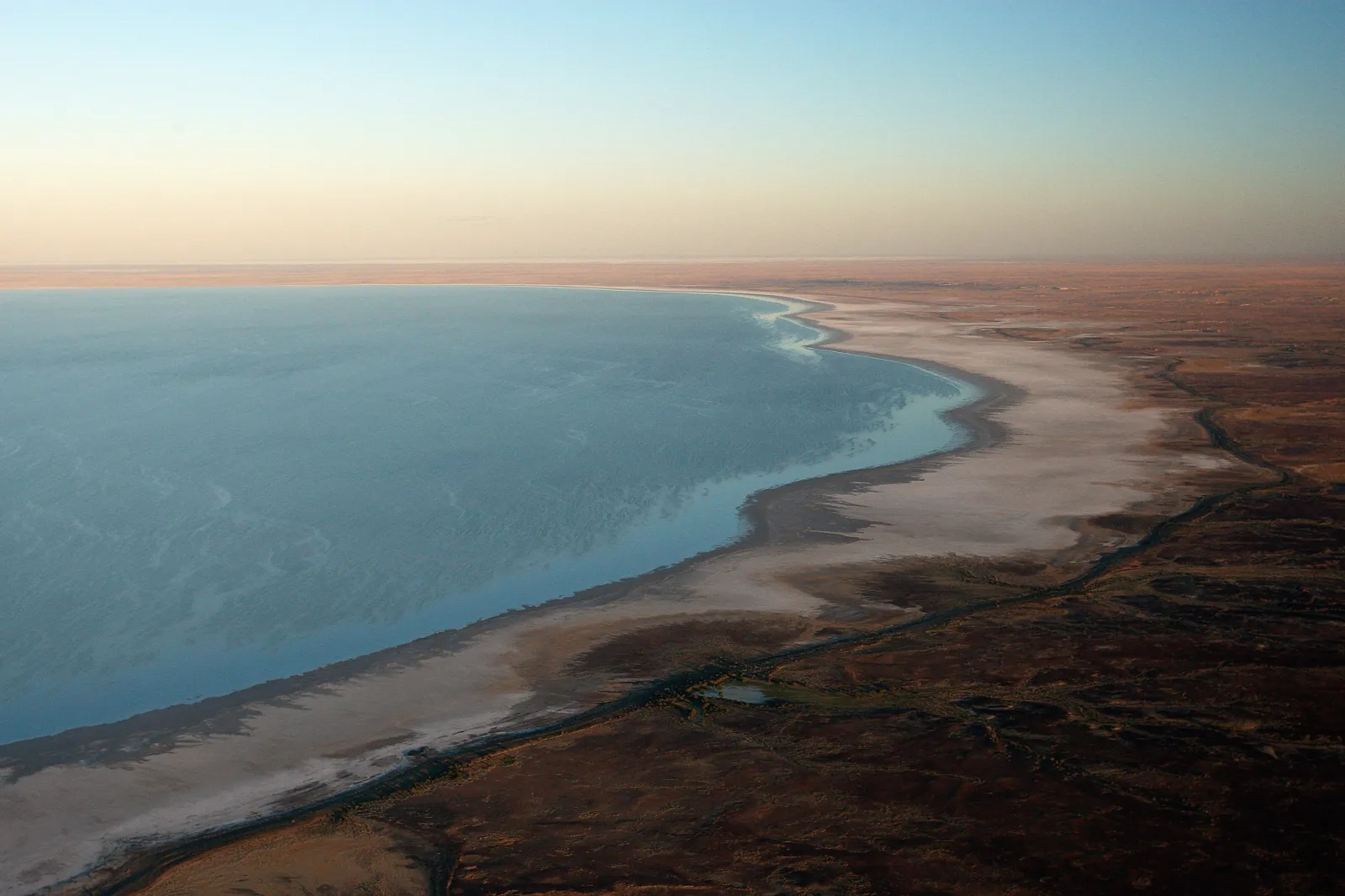
A major lake has undergone a dramatic change as the effects of the weather has transformed it into two distinct colors.
Lake Eyre, also known as Kati Thanda-Lake Eyre, is enormous: covering more than 3,500 square miles, it is the largest ephemeral endorheic lake on the Australian continent.
Situated in South Australia, Lake Eyre is the lowest natural point on the continent, and is often empty, only filling up when flooding occurs.
Read More on Science
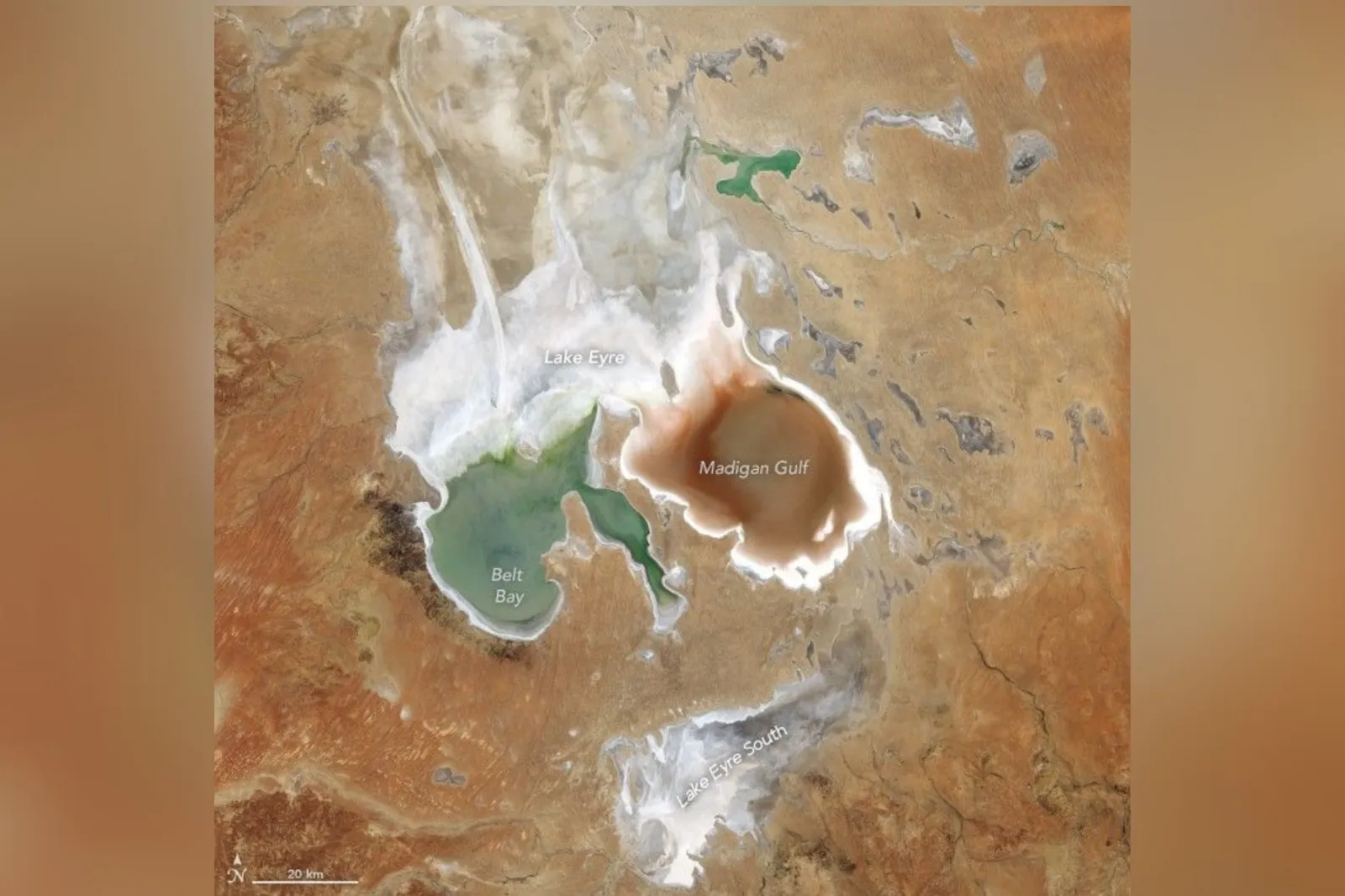
Now, flooding has transformed the lake completely, with satellite imagery from NASA showing how different parts of the lake have completely different colors.
Taken on December 15, the image taken by the Operational Land Imager on Landsat 8 showed the natural colors of the lake, with the two deepest parts**—Belt Bay and Madigan Gulf—**still containing water.
But while Belt Bay's water was a true aquamarine color, flooded with greens and blues, Madigan Gulf was a deep reddish brown. When viewed from a closer vantage point, NASA reports, it can appear pink or orange.
...
According to the new report, torrential rain flooded multiple rivers that drain into the lake in early May, with flooding continuing throughout the southern hemisphere's autumn and winter seasons.
When spring arrived in October, the flooding slowed, and the water in the lake began to evaporate**—**and by the start of December, the rivers had dried up and the water levels of the lake were dropping rapidly.
Different conditions in Belt Bay and Madigan Gulf may cause the differing colorations, such as varied salinity, water depth and microbe populations. Other pink-colored lakes have been found to have the same type of algae as those found in Lake Eyre.
The photographs were taken by the NASA Earth Observatory, using Landsat data from the United States Geological Survey.
Unlike other lakes, Lake Eyre is endorheic, meaning it has no outflow. It also relies on flooding or rain (sparse in this region) to fill up. It is unclear when the water will disappear completely from the lake.
Endorheic lakes are rare: in 2023, Lake Van in Turkey began to dry up, revealing ancient microbialites which, until that point, had lain beneath the surface.
The vertical rocks resemble vast coral reefs, and may have formed after volcanic eruptions led to lava flowing into the rock as long as 800,000 years ago.
Do you have a tip on a science story that Newsweek should be covering? Do you have a question about lakes? Let us know via science@newsweek.com.
View 0 Comments
Submit Correction
View Editorial & AI Guidelines