...

By Alexis Kayser
Healthcare Editor
0
Share
Newsweek is a Trust Project member
See more of our trusted coverage when you search.Prefer Newsweek on Googleto see more of our trusted coverage when you search.
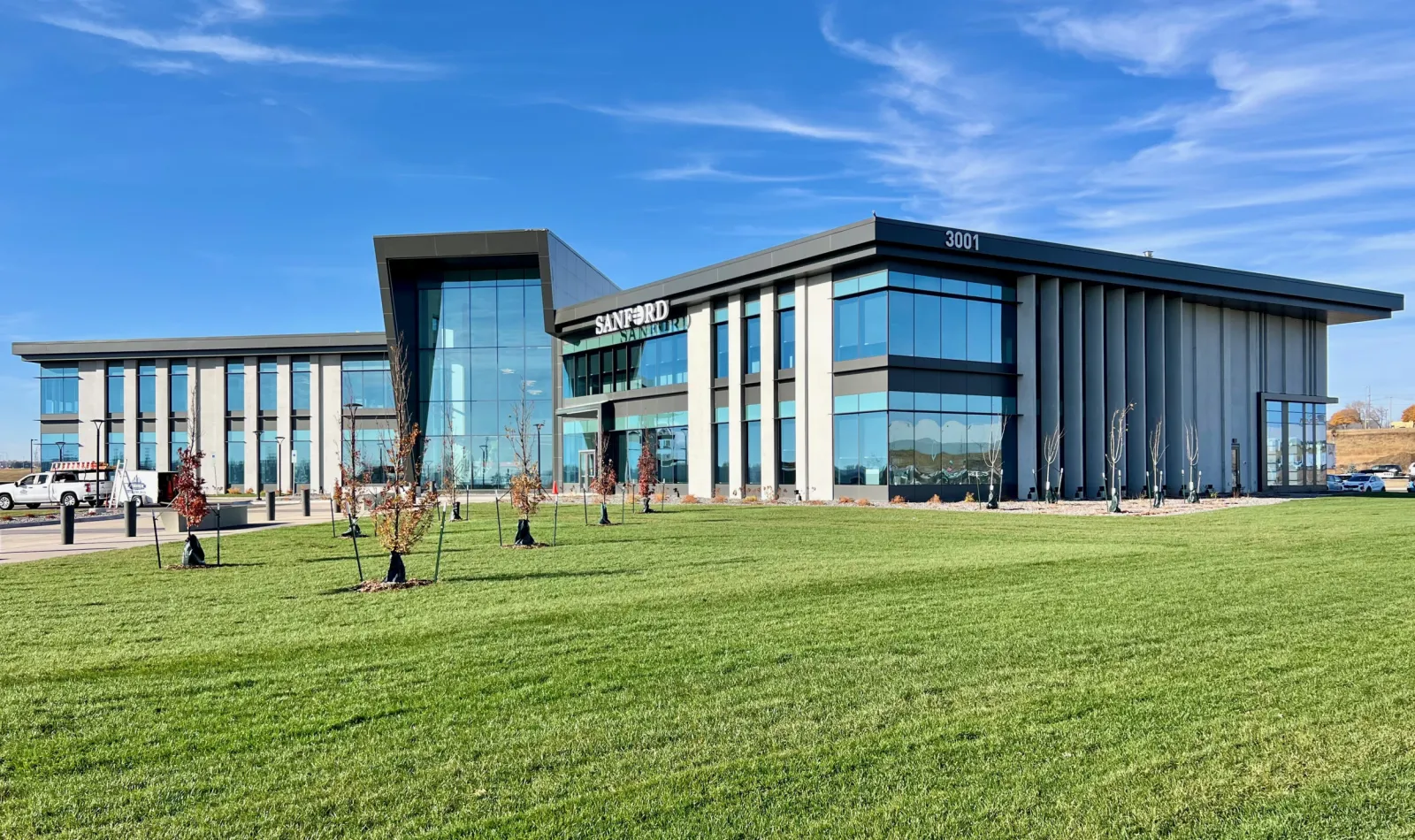
Sanford Health, the largest rural health system in the U.S., is cutting the ribbon on its 60,000-square-foot Virtual Care Center this afternoon.
The Sioux Falls, South Dakota–based center has been in the works since 2021. A $350 million gift from Denny Sanford—businessman, philanthropist and the health system's namesake—funded the initiative to transform care delivery in rural America.
Sanford Health was an early adopter of telehealth, according to Susan Berry, its vice president of operations for virtual care. While COVID-19 sparked new interest in virtual care delivery, Sanford was investing in the space more than a decade ago. It's a necessity for patients who can't access certain services without crossing state lines. On average, rural areas have 30 physician specialists per 100,000 people while urban areas have 263 specialists per 100,000 people, the National Rural Health Association reports.
Read More
Hospitals Are Reporting More Insurance Denials. Is AI Driving Them?15 min read

Big Pharma Stocks Drop After RFK Jr. Announced as Health Secretary4 min read

As Hurricanes Amplify Chronic Conditions, Telehealth Extends a Lifeline6 min read

Over the last 10 years, the health system has provided more than 800,000 virtual visits and saved its patients more than 40 million miles of travel, Berry told Newsweek. Across the system's footprint, 72 specialties offer virtual care, reaching patients in remote parts of South Dakota, North Dakota, Minnesota, Montana and Iowa.
...
As virtual care gains popularity, a dedicated center will help Sanford refine its methods and expand its reach, said Dr. Dave Newman, the system's chief medical officer of virtual care: "It's really a concept more than a building."
The space contains dedicated areas to support innovation, patient experience and provider education. Tech and AI startups can rent one of three "accelerator rooms," partnering with Sanford to scale solutions.
"A lot of AI companies have really great ideas, but they don't know how to operationalize their ideas," Newman said. "They don't have access to patients, they don't have access to staff members—which we can help provide."
Although the center won't host official doctor's appointments, it has a patient and family experience lab to study how patients are using new telehealth tools. Spaces designed as living rooms, kitchens and bedrooms will help the system assess user experience during virtual care visits.
Alternatively, spaces designed like exam rooms will allow providers to examine their own virtual caregiving and help the system improve upon new workflows, like remote nursing.
The center also offers virtual experiences, like VR goggles, to help providers practice for high-pressure scenarios. A nurse can don the goggles and simulate a life-threatening medical emergency like sepsis, risk-free.
Virtual care is advancing rapidly and medical education needs to keep up, according to Newman, who is also a practicing endocrinologist. When he went to medical school roughly 20 years ago, he learned bedside manner (therapeutic touch, how to have difficult discussions with patients).
He believes today's providers should also learn "web-side manner."
"It can be awkward to talk through a screen if you're not taught specific cues," Newman said.

...
But when the doctor gets it right, it can actually aid connection. Newman recalls conducting his first virtual visit with a patient who he hadn't really meshed with in-person. He called out a concert poster on the patient's wall, and shared that he was also a fan—from there, "you could just kind of see their guard go down," Newman said.
"It led us to connect in a way that I never could if we were in person," Newman continued. "When you're in person, it is the provider's ground. Virtual care makes the patient feel safe at home."
Virtual visits can also patients stay physically safe, according to Newman. Northern states are prone to severe blizzards that leave roads impassable, but now, many appointments are kept regardless of weather. It's a big win for rural dwellers who may wait six months to a year to see a specialist—and would have to restart that clock if they cancelled their visit.
This yields significant cost savings for patients, too. Many of Newman's take off work and drive more than 400 miles to see him. With food and gas along the way, the costs add up quickly.
The same goes for providers, who used to spend hours traveling for outreach visits, according to Berry, Sanford's virtual care operations VP. Now, more are incorporating virtual visits into their regular practice.
Change management is one of the hardest parts of a large-scale virtual care operation, both Berry and Newman have found, but the center's resources can help ease the transition. And providers of all generations are picking up on virtual care, according to Newman. Young hires expect the work-life balance that remote visits can bring. Mid-career employees can see where the industry is headed and don't want to be left behind. Even older providers are using virtual care to extend their careers by working from home a few days a week.
Leaning into that flexibility has helped Sanford weather ongoing workforce shortages, which are historically exacerbated in rural areas. The health system's footprint is roughly the size of Texas, but its patient population might only support two subspecialists. By leveraging virtual care, those two subspecialists can cover the whole system.

...
Plus, the virtual offering has proven to be a great retention tool. Melissa Cook, an integrated health therapist, began working at Sanford in a hybrid role in 2020. About two years ago, she needed to move for her husband's career and raised the idea of a remote schedule.
Cook became the system's first virtual therapist and now leads a team of five to six others, all while continuing to collaborate with primary and specialty care providers in the clinic system. Since making the switch, she reports feeling more connected than ever to both colleagues and patients.
"I find that my work virtually is more impactful for me and for patients," Cook said. "I get a unique window into their lives."
Of course, every provider is different. The Virtual Care Center will also serve as a hub for those who deal with remote operations, but benefit from the collaboration or infrastructure of an in-person workspace: including the system's clinical call center, technical operations and "direct-to-consumer" acute care teams.
Newman vividly remembers his first virtual visit in 2010, thinking, "This is the future." Now, he says, this is the present. But he hopes the center continues to change with the times.
"I truly hope that our Virtual Care Center does not look the same in 10 years as it is today, because the world has changed very, very rapidly," Newman said. "With all the new tech, with all the new AI...I want it to be a space that pivots to where health care is."
View 0 Comments
Submit Correction
View Editorial & AI Guidelines