...

By Andrew Stanton
Reporter
0
Share
Newsweek is a Trust Project member
See more of our trusted coverage when you search.Prefer Newsweek on Googleto see more of our trusted coverage when you search.
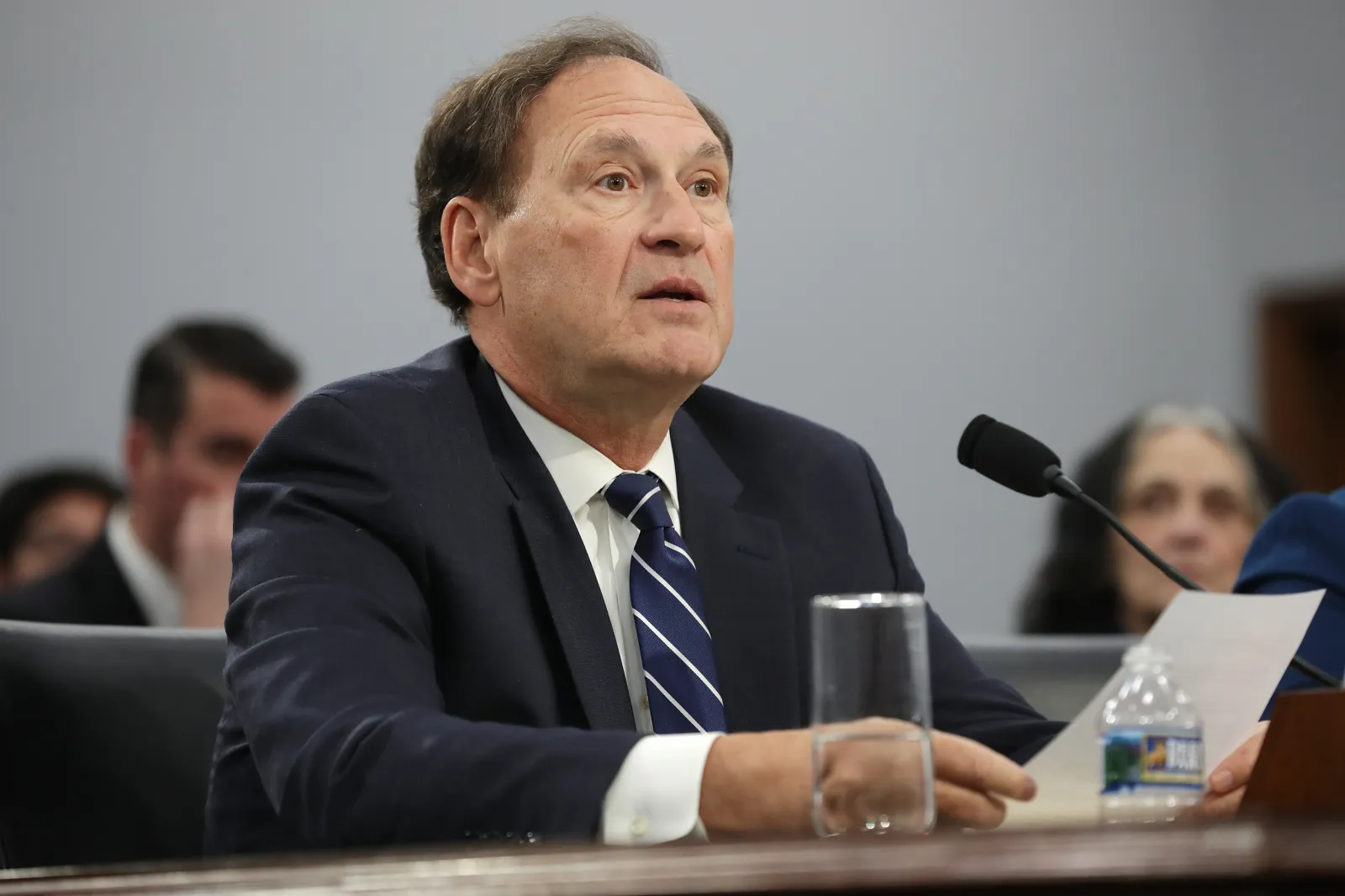
Supreme Court Justice Samuel Alito raised concerns about “seriously undermined” confidence in election results during oral arguments of Watson vs. Republican National Committee, a critical case for mail-in voting, on Monday.
The RNC's election integrity communications director Ally Triolo told Newsweek the case is "about a simple principle: ballots must be received by election day.
"This prevents elections from dragging on for days and weeks after voters have cast their ballots, causing confusion and undermining our elections—83 percent of voters agree ballots should be in by Election Day, and 78 percent say it makes elections more secure," she said.
Read More on News
Why It Matters
Conservative justices largely seemed skeptical about a Mississippi law allowing for late-arriving mail-in ballots to be counted in federal elections. States expanded mail-in voting following the COVID-19 pandemic, and a court striking down the law could affect voters in 13 other states and the District of Columbia, which have grace periods for mail-in ballots. An additional 15 states that have more forgiving deadlines for ballots from military and overseas voters also could be impacted.
Supreme Court Hears Arguments in Mail-In Ballot Case: What To Know
Republican lawyers are pushing for the Supreme Court to uphold a lower-court ruling striking down Mississippi’s law allowing late-arriving ballots to be counted.
Alito was among those conservative justices who appeared skeptical about the Mississippi law. He pressed the state's Solicitor General, Scott Stewart, about the impact of laws on confidence in election results.
He noted that some briefs in the case have “argued that confidence in election outcomes can be seriously undermined if the apparent outcome of the election" the day after the polls closed is "radically flipped by the acceptance later of a big stash of ballots that flip the election.”
“You’ve got ballots that are delivered by somebody, by, you know, by a neighbor. And, they're received a month after the election and they don't have postmarks,” he said.
...
Stewart said the government has “not cited a single example of fraud” from post-election day ballots despite leaning into anti-fraud themes.
During the 2020 election, early results suggested a Trump victory, but as more results came in, it became clear that Democrat Joe Biden would become the next president. This became the basis of unproven claims that the election was stolen from Trump.
The president has argued that mail-in voting fuels voter fraud despite a lack of strong evidence. Proponents of mail-in voting believe it helps make voting, a critical right protected by the Constitution, more accessible to all Americans.
Liberal justices seemed poised to uphold state laws that allow ballots to be counted after election day.
“The people who should decide this issue are not the courts, but Congress, the states and Congress,” Justice Sonia Sotomayor said.
Large states like California, Texas, New York, and Illinois are among those that allow ballots to be counted after election day, so long as they are postmarked earlier. Alaska, a vast state, also allows late-arriving ballots to be counted.
What People Are Saying
Ally Triolo, RNC election integrity communications director, told Newsweek: "When election results drag on for days and the apparent winner changes after election night, it erodes public confidence in the outcome. Americans deserve clear rules and timely results so that election day actually means election day."
The Mississippi Attorney General's office wrote in a court briefing: "The court struck down a state law regulating elections—a matter the Constitution allows states to address—based on stark errors of law. That decision will have sweeping ramifications. The rule the Fifth Circuit adopted would require scrapping election laws in most states."
What Happens Next
A ruling is expected by late June, early enough to govern how ballots are counted during the 2026 midterm elections.
This article uses reporting from The Associated Press.
Update 3/23/26, 1:12 p.m. ET: This article was updated with additional information.
Update 3/25/2026 12:11 p.m. ET: This article has been updated with comment from the RNC's Ally Triolo.
In a polarized era, the center is dismissed as bland. At Newsweek, ours is different: The Courageous Center—it's not "both sides," it's sharp, challenging and alive with ideas. We follow facts, not factions. If that sounds like the kind of journalism you want to see thrive, we need you.
When you become a Newsweek Member, you support a mission to keep the center strong and vibrant. Members enjoy: Ad-free browsing, exclusive content and editor conversations. Help keep the center courageous. Join today.


View 0 Comments
Submit Correction
View Editorial & AI Guidelines