...

By Andrew Stanton
Reporter
0
Share
Newsweek is a Trust Project member
See more of our trusted coverage when you search.Prefer Newsweek on Googleto see more of our trusted coverage when you search.
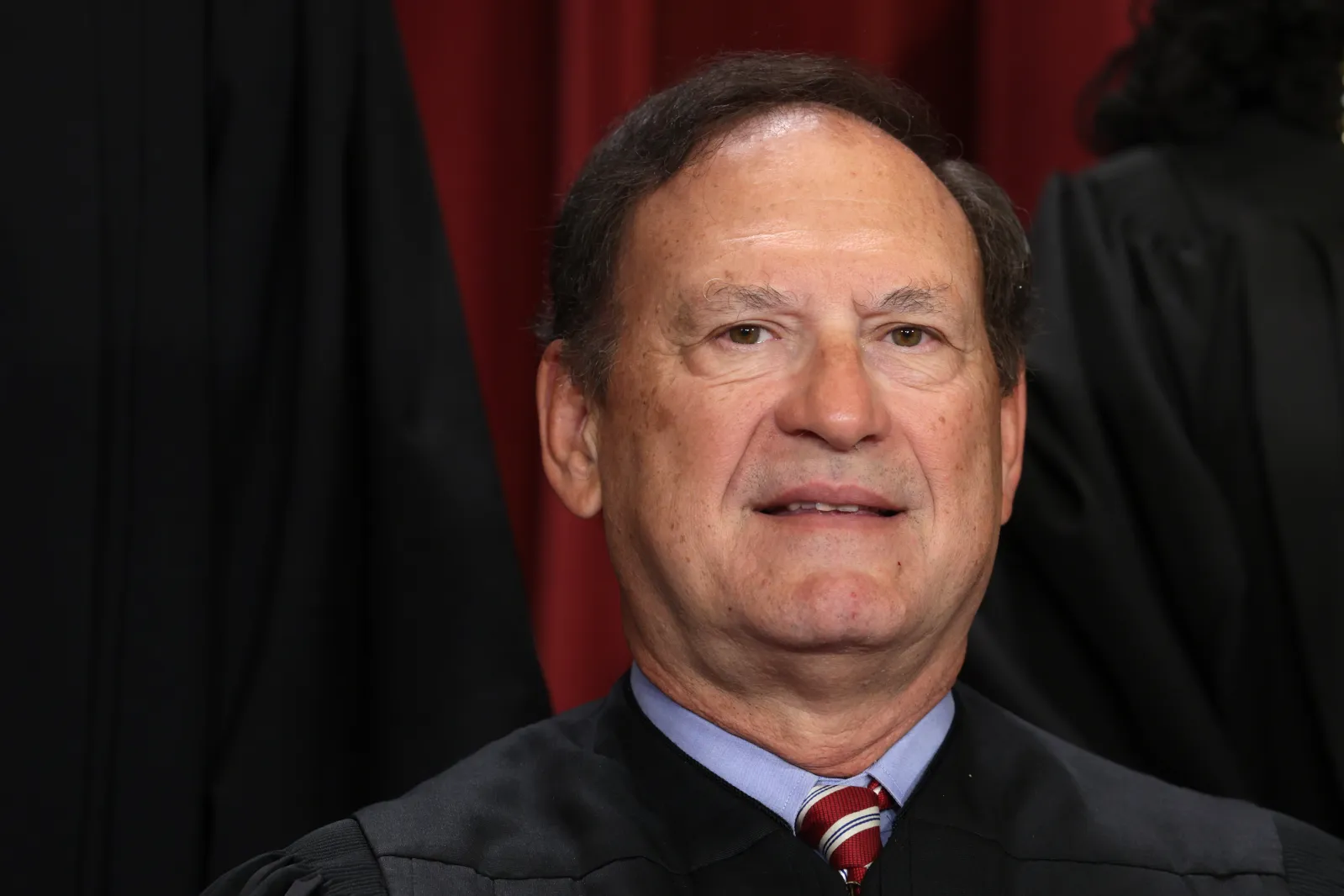
Supreme Court Justice Samuel Alito warned that a unanimous Supreme Court decision was “oversimplified,” though he concurred with the majority overall, in a new ruling pertaining to a U.S. Immigration and Customs Enforcement (ICE) contractor on Wednesday.
Alito issued a concurring opinion in the case The Geo Group, Inc. v. Alejandro Menocal, agreeing with the outcome and most of the otherwise unanimous ruling. But he disagreed with part of the majority opinion in the case, which he emphasized in that opinion. He wrote that while he agreed with the outcome, he believed the majority relied on “oversimplified” analysis.
Why It Matters
The Court’s ruling could have implications for contractors that work with the federal government. It did not make a decision on the allegations against GEO Group, but instead weighed in on jurisdictional matters.
Read More
How a Unanimous Supreme Court Decision Divided Conservative Justices4 min read

ICE Agent Who Fatally Shot Ruben Ray Martinez Identified by Newsweek 7 min read

Don Lemon Scores Legal Win in Church Protest Case5 min read

What to Know
In this case, a former detainee Alejandro Menocal sued GEO Group, which operates private detention facilities across the country. Menocal was held at a facility in Aurora, Colorado. He argued in his lawsuit that the organization’s work policies for detainees violate a prohibition on forced labor and Colorado’s ban on unjust enrichment, according to the court.
GEO Group sought the case’s dismissal, citing a ruling in the case Yearsley v. W. A. Ross Constr. Co., in which the case ruled that a federal contractor cannot be held liable for conduct the government lawfully authorized and directed. But a lower court did not believe its contract ordered them to adopt those policies and that the case would head to trial.
The organization appealed to the 10th Circuit Court of Appeals, which dismissed due to a lack of jurisdiction; it found that an order denying Yearsley protection does not qualify for review on the Cohen collateral-order doctrine, an exception to the rule that only final judgments can be appealed.
The Supreme Court unanimously sided with that ruling. It held that Yearsley provided contractors with a merits defense—not immunity. Justice Elena Kagan wrote the majority opinion.
The case dealt with “whether a contractor may take an immediate appeal of a district court’s pretrial order denying Yearsley protection,” Kagan wrote, adding that the answer is “no” because Yearsley provides a “defense to liability, not an immunity from suit.” An order denying its protection can be effectively reviewed after a final judgment, she wrote.
Justice Samuel Alito’s Breaks From Court in Concurring Opinion
Alito joined the majority for most of the decision, but did break with the court on the part of the ruling. He wrote that he agrees the Yearsley defense does not grant immunity, and therefore that “an order denying a Yearsley defense is not a ‘collateral order’ subject to immediate appeal.”
...
But he wrote that he would “not rest these conclusions solely on the fact that Yearsley’s applicability ‘turn[s] on [the defendant’s] conduct’s legality.”
“Under the collateral-order doctrine, defendants may sometimes appeal the denial of a defense immediately when doing so is necessary to vindicate important constitutional or public-policy interests. And this rule holds true even if the defense at issue turns on the legality of the defendant’s conduct. Thus, I cannot join the opinion of the Court, but I concur in the judgment because deferring appellate review of Yearsley rulings until final judgment does not imperil important constitutional or public-policy interests,” he wrote.
The majority, he wrote, based most of its analysis on the question of whether Yearsley depends on the legality of the defendant’s conduct. Because it does, the "majority concludes that it fails to satisfy the third collateral-order requirement,” which states an order must be “effectively unreviewable on appeal from a final judgment” to be appealable.
Alito said that it is an “oversimplified” analysis.
He said that can “of course” be relevant to the collateral-order analysis, but that the majority’s rule cannot fully explain the court's collateral-order case law.
He pointed to qualified immunity as an immunity that has an applicability that “can and often does turn on whether a defendant violated the law.” The court treats “denials of qualified immunity as collateral orders,” he wrote. The court has also “held that several defenses are not immunities even though they do not turn on the legality of the defendant’s conduct.”
“In short, although the majority’s focus—whether a defense turns on the legality of the defendant’s conduct—can be relevant in the collateral-order analysis, it is not dispositive of whether a defense constitutes an immunity,” he wrote.
What People Are Saying
Justice Elena Kagan wrote in the majority opinion: “Yearsley provides protection to a contractor when it has received a lawful authorization and acted according to its terms—meaning, when the contractor has acted within legal bounds. So in invoking Yearsley, the contractor is making the argument of a merits defense—that it is not liable because it has complied with the law. See supra, at 5. Conversely, Yearsley’s protection runs out when the contractor may have violated the law—when the contractor either acted under an illegal authorization or exceeded the scope of a legal one. By drawing the line there, Yearsley ensures that it will never shield unlawful conduct, in the way that all immunities do.”
Justice Clarence Thomas wrote in a concurring opinion: “Orders rejecting Yearsley defenses are therefore unlike the orders denying immunities that this Court has already held to be immediately appealable. Because no other statute or rule authorized an interlocutory appeal here, the Court correctly affirms the Tenth Circuit’s dismissal. I do not join Part II because “[w]e need not, and in my view should not, further justify our holding by applying” the collateral-order doctrine established by Cohen v. Beneficial Industrial Loan Corp.”
What Happens Next
The court’s ruling means that the Yearsley defense does not provide immunity in this case. Meanwhile, the court is expected to continue releasing rulings over the coming weeks and months.
View 0 Comments
Submit Correction
View Editorial & AI Guidelines