...

By Maya Mehrara
News Reporter
0
Share
Newsweek is a Trust Project member
See more of our trusted coverage when you search.Prefer Newsweek on Googleto see more of our trusted coverage when you search.
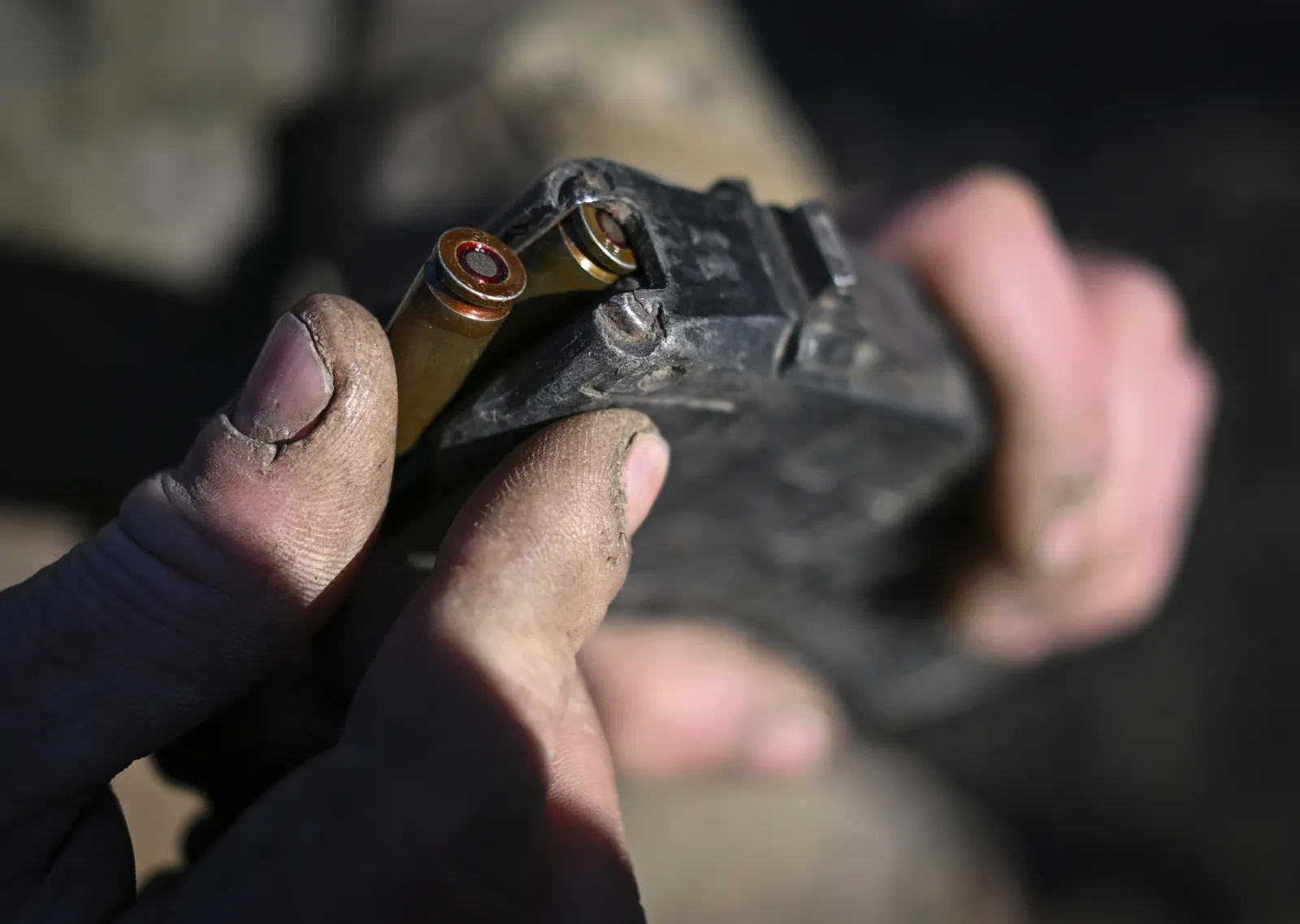
Russia's use of artillery ammunition has been cut in half following an increase in long-range Ukrainian strikes on Moscow's military targets, according to Oleksandr Syrskyi, the commander-in-chief of the Ukrainian armed forces.
In an interview with Ukrainian news program TSN on January 19, he spoke about the Russian army's use of artillery ammunition, and the ramifications of Kyiv's strikes on "industrial enterprises that produce ammunition" and other military supplies.
Newsweek has reached out to the Ministry of Defense of the Russian Federation and the Ministry of Defense of Ukraine for comment via email.
Read More on World
...
Why It Matters
The fact that Russia's artillery ammunition use has decreased by about half is significant because it could signify a shortage in other critically necessary resources, such as weapons and other munitions, which could hamper the ability of Moscow's forces to fight effectively. The reduction in ammunition use could also indicate that the Russian military has changed tactics, which could shift the dynamics of the war in Ukraine. It could also signal that the Russian military is facing internal issues, such as problems with training soldiers to use munitions properly, which could have long-term ramifications.
Russia's decreased use of ammunition could serve as an opportunity for Ukraine to shift tactics and push back Moscow's advances in Kursk or Donetsk Oblast or exploit their weaknesses in counterattacks.
What To Know
Russia's decreasing use of artillery ammunition follows an increase in the number of long-range strikes into Russian territory by Kyiv's armed forces after President Joe Biden authorized Ukraine to utilize U.S.-built long-range weapons.
In recent weeks, Ukraine has increased its strikes on Russian oil depots and refineries, as well as military production sites and chemical plants. From January 10 through 17, Ukraine struck 10 critical infrastructure sites with drones and missiles, including the Bryansk Chemical Plant, which produces gunpowder and ammunition, and manufactures parts for rockets and explosives. In 2024 alone, Ukraine hit 80 Russian oil refineries and depots, crippling one of Moscow's most profitable industries and consequently its ability to fund Vladimir Putin's war in Ukraine.
Although Russia has outgunned Ukraine since the beginning of the war, Kyiv has boosted its weapons production. Ukrainian President Volodymyr Zelensky said on January 15 that the country now produces 33 to 34 percent of its annual weapons needs, while Europe and the U.S. provide more than 60 percent of the country's weapons.
What People Are Saying
As reported by the Kyiv Independent, Syrskyi said: "For several months now, the artillery ammunition expenditure rates in the Russian army have practically halved. If previously the figure reached up to 40,000 rounds per day, it is now significantly lower.
"Industrial enterprises that produce ammunition, missile parts, or dual-use products are targeted for destruction. Along with this, the enemy's oil refining industry facilities are becoming the objects of our destruction."
In September 2024, the Institute for the Study of War noted that Russia has spread out its storage sites after Ukrainian strikes and said: "Russian authorities are likely concerned about how moving ammunition depots and other critical storage facilities further away from the front line and outside the range of Western-provided systems will impact Russian offensive capabilities in Ukraine."
What Happens Next
The exact reason why Russia has decreased its use of ammunition remains unknown, as well as what it means for the continuation of the war.
View 0 Comments
Submit Correction
View Editorial & AI Guidelines