...

By Maya Mehrara
News Reporter
0
Share
Newsweek is a Trust Project member
See more of our trusted coverage when you search.Prefer Newsweek on Googleto see more of our trusted coverage when you search.
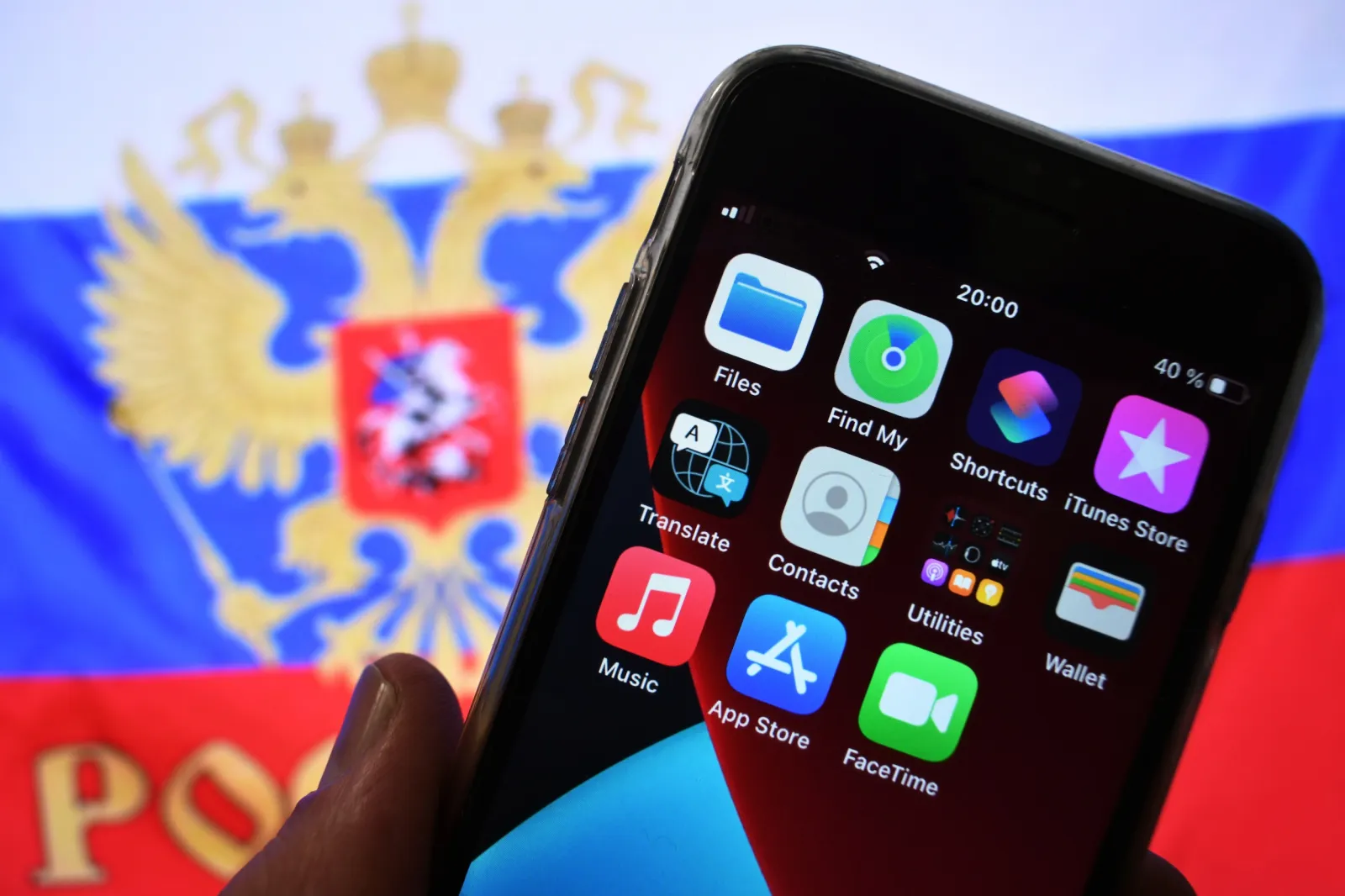
Despite Russian President Vladimir Putin's iPhone ban, government officials have quadrupled iPhone sales in the first nine months of 2024, according to Vedomosti, a Russian business newspaper.
The outlet reported that the sales of Russian iPhones purchased by government officials reached 6,879,899 rubles compared to 1,642,166 for the same period in 2023.
Putin banned government officials from using iPhones in the spring of 2023 because of suspected security concerns and were told to switch to using phones running on the Android operating system, the Russian Aurora system or Chinese software.
Read More on World
Newsweek reached out to the Russian government for comment via a form on its website.
...
The order was issued by Sergei Kiriyenko, first deputy chief of staff of the presidential executive office. Kremlin spokesman Dmitry Peskov neither confirmed nor denied the report at the time, although he said that Russian officials cannot use smartphones for work as they are "too vulnerable to handle classified information."
The government agencies Federal Security Service (FSB) and Federal Protective Service (FSO) imposed the ban after they reportedly uncovered a specific security concern regarding a "U.S. intelligence operation using a virus on Apple mobile devices," and found that several thousand phones were infected.
The investigation also reportedly discovered that the U.S. intelligence operation viruses were not only targeting Russian users but also foreign users who were using SIM cards registered to "diplomatic missions and embassies in Russia."
Government departments and companies that banned the purchase and use of Apple mobile phones included the Ministry of Industry and Trade, Ministry of Finance, Ministry of Health, Ministry of Transport and more, according to Oreanda News.
Although the ban was government-wide, some were reportedly exempt from complying with the rule and had their contracts continued because of "the impossibility of complying with the ban on the admission of software originating from foreign countries for the purpose of procurement for state and municipal needs."
Dr. Jeffrey Mankoff, a senior associate with the Center for Strategic and International Studies (CSIS) Russia and Eurasia Program, told Newsweek that things to note are the availability of iPhones in Russia even though Apple is not selling them there and the Russian government's use of Western technology.
"Apple sells iPhones to a company in Kazakhstan or the UAE or Turkey or somewhere like that," Mankoff said. "Then that company goes on and resells them in Russia. Those countries—Kazakhstan, Turkey, UAE, there are a few others, India—don't have their own sanctions on Russia, and so they're not interfering with that resale.
"Is there more due diligence that Apple could probably do to prevent the resale of their technology through these gray export schemes? Probably. But they haven't really been incentivized to do that."
Mankoff said that the acquisition of iPhones by members of the Russian government is a small issue in the grand scheme of Russia-U.S. relations as "the issues in the relationship are bigger at this point," including the war in Ukraine, "Russian efforts at political destabilization in Europe and here" and the "erosion of arms control agreements."
However, he said, "It could be an issue and has been an issue in terms of U.S. bilateral relations with some of those countries that are facilitating the gray export schemes. There's been an effort to crack down on the resale of various kinds of dual-use technologies through these schemes, and it's been a source of tension with Turkey, with India, with some of these countries that are involved."
Mankoff said that the continued purchase of iPhones by Russian government officials highlights that Russia does not have "great alternatives" and doesn't have its "own smartphone ecosystem that it can use."
He added that it says something about "Russia's continued dependence on the global economy and vulnerability to things that could disrupt its access to the global economy. I think it also points to a lot of the opportunism and cynicism of the Russian government's anti-Western crackdown."
Mankoff noted that the larger issue at hand is the U.S.' export control and said that he believes "there is a lot more that could be done to crack down on parallel imports, not just of things like iPhones, but of real dual-use technologies that can contribute to weapon systems, but it would require having some difficult conversations with allies and partners that we've so far been wary of having or have done in a kind of episodic way."
He continued, "If we're serious about the war and about helping Ukraine win, I think those are conversations that we probably need to have more and more frequently."
Despite the rapid growth in government iPhone sales, it was not the most popular phone purchased and was outranked by South Korean Samsung devices, Chinese Realme and Xiaomi, and Google.
Russian retailers, including M.Video-Eldorado and mobile network operator MTS, have launched pre-sales of the latest model, the iPhone 16, with deliveries beginning next week, according to Reuters.
It follows Apple stopping sales in Russia in 2022 after the start of the Russia-Ukraine war, and services including Apple Pay and Apple Maps were also limited.
Do you have a story we should be covering? Do you have any questions about this article? Contact LiveNews@newsweek.com.
Update 10/31/24, 11:12 a.m. ET: This article was updated with comment from Dr. Jeffrey Mankoff.
View 0 Comments
Submit Correction
View Editorial & AI Guidelines