10
Loading video...

By Shane Croucher
Senior Editor
0
Share
Newsweek is a Trust Project member
See more of our trusted coverage when you search.Prefer Newsweek on Googleto see more of our trusted coverage when you search.
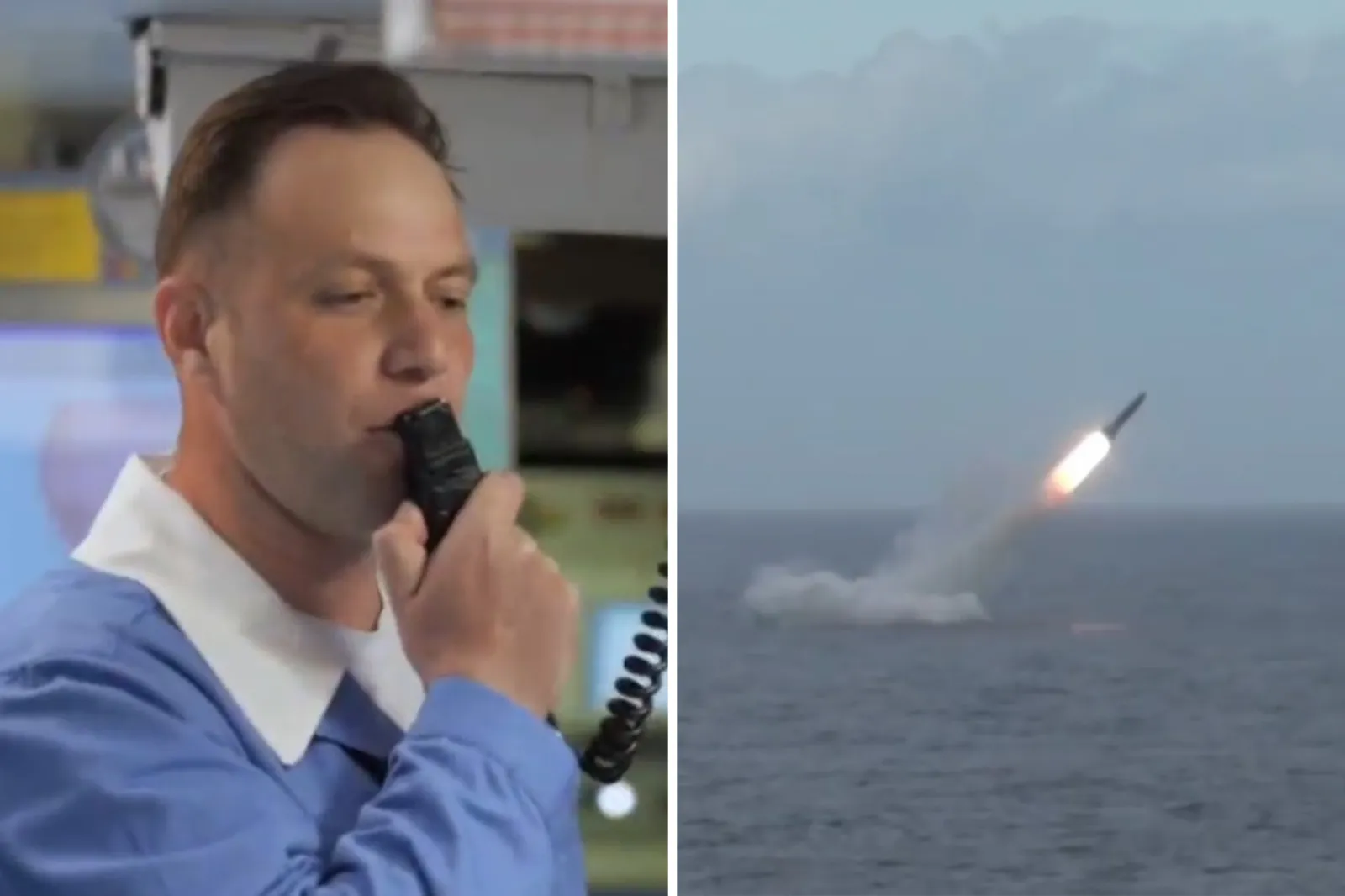
Russia's Pacific Fleet said two of its nuclear-powered submarines had conducted a successful test of supersonic cruise missiles fired from the Sea of Okhotsk, which struck naval targets more than 155 miles away.
The exercise flexes Russia's military muscle in a region shared by the United States and comes as tensions heighten between Moscow and Washington over ending the Russia-Ukraine war that began in February 2022. The Kremlin has described U.S.-led NATO as "at war" with Russia.
The U.S. has also highlighted what it says is the growing threat from Russian and Chinese military cooperation across regions of the Pacific and Arctic. Russia and China recently completed their first joint submarine patrol of the Asia-Pacific.
Read More on World
Russia's North Pacific Combat Exercises
The Russian Krasnoyarsk and Omsk submarines launched "Oniks" and "Granit" cruise missiles at the dummy target, which was an aircraft carrier strike group, the Pacific Fleet said in a post on Telegram on Friday.
"The combat exercises were carried out as part of a command-and-staff exercise with the Joint Command of Forces in the northeast of Russia, aimed at protecting and defending maritime communications in the northern Pacific Ocean, the coast of Kamchatka and Chukotka, as well as the island zone," the post said, originally in Russian.
The P-800 Oniks is a supersonic anti-ship cruise missile. The P-700 Granit is a heavy supersonic long-range anti-ship cruise missile.
Most cruise missiles are subsonic, but Russia is one of a handful of nations to have developed supersonic cruise missiles, which can travel faster than Mach 1, the speed of sound. They are typically used against ships.
Whilst they benefit from greater speed than subsonic missiles, helping to penetrate defenses, their supersonic cousins are typically heavier and so require bigger launch platforms, have a shorter range, and fewer can be carried at a time.
...
Russia Deploys Warships to Far East After Joint China Patrol
At the end of August, Russia deployed warships to the Far East region near Alaska for what it described as a "patriotic" mission, as U.S. and Canadian aircraft and vessels carried out an operation in nearby waters.
The Russian naval deployment was part of the military's effort to highlight what it described as "heroism" during the "special military operation," Moscow's term for its invasion of Ukraine.
Despite the ongoing war in Ukraine, Russia maintains a strong military presence in both the Far East and the Arctic, where it recently conducted a joint naval drill and patrol with China and operates dozens of bases along its long northern coastline bordering the Arctic Ocean.
Updated, 9/19/25, 10:12 a.m. ET: This article was updated with more information.
View 0 Comments
Submit Correction
View Editorial & AI Guidelines