...

By Brendan Cole
Senior Reporter
0
Share
Newsweek is a Trust Project member
See more of our trusted coverage when you search.Prefer Newsweek on Googleto see more of our trusted coverage when you search.
The United States and Canada scrambled multiple aircraft to track Russian military planes flying near Alaska on Wednesday.
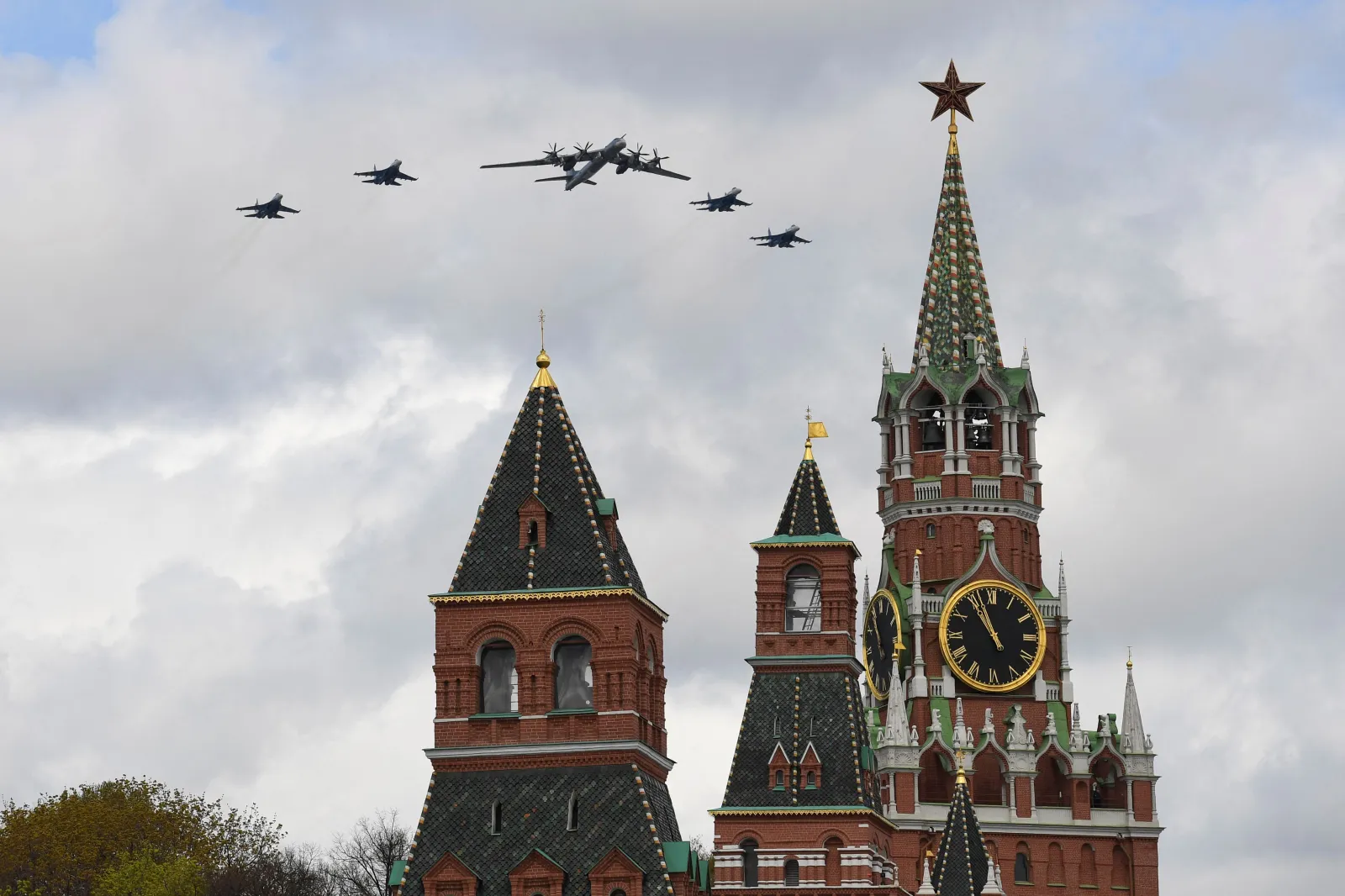
The North American Aerospace Defense Command (NORAD) said that its aircraft tracked two Tupolev Tu-95 four-engine strategic bombers and two Sukhoi Su-35 air defense fighters in the Alaska Air Defense Identification Zone (ADIZ).
NORAD, a joint U.S.-Canadian command, said it dispatched an E-3 Sentry surveillance plane, four F-16 Fighting Falcons and four KC-135 aerial tankers to intercept the Russian aircraft, which remained in international airspace.
Read More on News
It comes days after Estonia said that Russian aircraft had breached the NATO member’s airspace.
Newsweek has contacted NORAD and the Russian defense ministry for comment.

...
Why It Matters
NORAD revealed the intercept days after Estonia said that Russian aircraft had breached the NATO member’s airspace, prompting Tallinn to invoke Article 4 of the alliance’s charter for security talks. Russian military aircraft flying near North America could be interpreted as another move by Moscow to test NATO's resolve during high tensions with the alliance.
What To Know
The ADIZ starts where sovereign airspace ends, usually 12 miles from the coast and all aircraft are expected to identify themselves.
In a statement on Thursday, NORAD said that the previous day, it had intercepted four Russian aircraft which had entered the Alaska ADIZ but remained in international airspace**.**
NORAD said that it deployed an E-3 Sentry surveillance plane, four F-16 Fighting Falcons and four KC-135 aerial tankers to identify and intercept the Russian aircraft which consisted of two Tupolev Tu-95 four-engine strategic bombers and two Su-35 fighters.
NORAD said this kind of Russian activity in the zone happens regularly and is not seen as a threat without giving more information about the route and length of the Russian flights.
Wednesday’s incident was the first time Russian aircraft had appeared in the air defense zone since August 26, when an Ilyushin Il-20 surveillance plane made a two hour, 20-minute flight near the western Aleutian Islands.
During one week in August, there were four flights in the Alaska ADIZ, two flights the previous month and other incidents in April and February. There were 12 such incidents in 2024, NORAD added.
Last week, Estonia said that Russian MiG-31 jets breached its airspace, accusations which Moscow has denied, saying that they followed international regulations en route to Russia’s Kaliningrad region.
On the sidelines of the United Nations General Assembly, President Donald Trump said on Tuesday that NATO countries should be able to shoot down Russian military aircraft that violate their airspace.
What People Are Saying
The North American Aerospace Defense Command (NORAD) said in a statement it had “detected and tracked two Tu-95s and two Su-35s operating in the Alaskan Air Defense Identification Zone (ADIZ) on Sept. 24, 2025.”
What Happens Next
The U.S. and its European allies will remain on high alert following incidents of Russian drones and aircraft breaching NATO airspace.
View 0 Comments
Submit Correction
View Editorial & AI Guidelines