...


By John Feng and Brendan Cole
0
Share
Newsweek is a Trust Project member
See more of our trusted coverage when you search.Prefer Newsweek on Googleto see more of our trusted coverage when you search.
A Russian vessel is being monitored by Norway's Coast Guard after "loitering" around the NATO member's shores for days.
The vessel Yantar is considered by U.S. intelligence as a spy ship, and its presence near the Nordic country coincided with joint American-Norwegian drills involving personnel from a U.S. aircraft carrier. Newsweek has contacted the Russian Defense Ministry for comment.
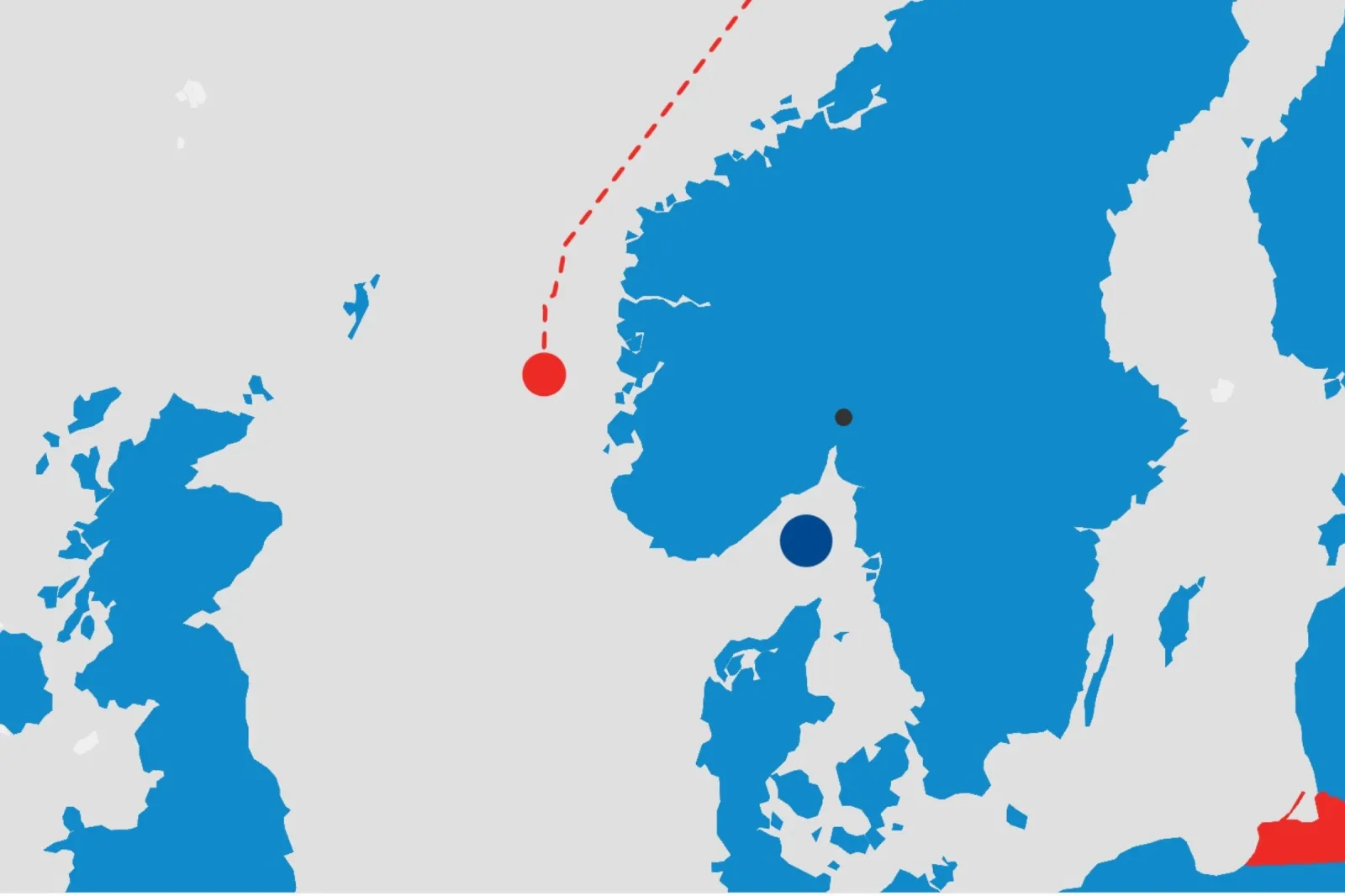
"Russian underwater intelligence/sabotage ship Yantar is steaming south along Norway's coast after loitering off Andøya Space Port a few days," posted open-source intelligence X account Auonsson, which maps sea activity in the Baltic region and beyond.
Read More on World
"No Coast Guard shadow. Possibly related, I think aircraft carrier USS Harry S. Truman left Oslo today?" the post added.
This U.S. aircraft carrier arrived in Oslo Fjord on Friday and left on Wednesday, according to Norwegian news outlet NRK, which reported training between American and Norwegian armed forces.
While there is no evidence that the incidents are linked, Yantar has been in the region at least since the end of last month.
Norwegian Joint Headquarters spokesperson Henrik Omtvedt Jenssen told Newsweek it is "not unusual" for Russian vessels to operate within the Norwegian economic zone. He added that the region's geography means vessels from Russian ports must transit along the Norwegian coast to get access to other waters.
Jenssen said the Norwegian navy and Coast Guard, together with surveillance aircraft from the Norwegian Airforce, were monitoring the vessel. The fact that it "chose to sail with their AIS transponder on is considered by Norwegian Joint Headquarters to be a deliberate act to gain attention for its presence."
Norwegian media have previously reported that the ship has been seen near critical seabed infrastructure such as oil and gas pipelines and cables for internet and telecommunications.
The outlet NRK reported on October 30 that the vessel had followed the Norwegian research ship Kronprins Haakon for 18 hours in September, whose captain, Hallgeir Magne Johansen, described it as a "bit strange."
"I have not experienced similar situations at sea before," Johansen told NRK, according to a translation. He added that scientists aboard his vessel described the scenario as "frightening" and a "provocation."
Yantar is likely to be seeking undersea cables belonging to NATO and its allies, which are seldom publicly revealed by officials because of their classified nature, Steffan Watkins told Newsweek. He is a research consultant who specializes in tracking ships and planes.
"Charted undersea cables for civilian infrastructure are available publicly, or at worse, through corporate espionage," Watkins said. "Truly secret cables for sensors or highly classified information transmission would need more direct effort to find, which I believe, is where Yantar comes in.
"I have no doubt they're searching for things on the seafloor, but exactly what is a topic of debate," he added.
Operated by the Russian Navy's Main Directorate of Underwater Research (GUGI) since 2015, the vessel's home port is Severomorsk, where it is attached to the Northern Fleet.
As an AGOR (Auxiliary General Oceanographic Research) outfitted with submersible ROVs (remotely operated vehicles), Watkins said thatYantar "has a deep reach, so I think they send it anywhere they need to look at something on the bottom; sunken subs, secret infrastructure, whatever the topic du jour is.
"When they return to a spot over multiple years, it makes me wonder what is in that location that they find so interesting."
Update 11/08/24, 9 a.m. ET: This article has been updated with comment from Henrik Omtvedt Jenssen.
View 0 Comments
Submit Correction
View Editorial & AI Guidelines