...

By Amanda Castro
Associate News Editor
0
Share
Newsweek is a Trust Project member
See more of our trusted coverage when you search.Prefer Newsweek on Googleto see more of our trusted coverage when you search.
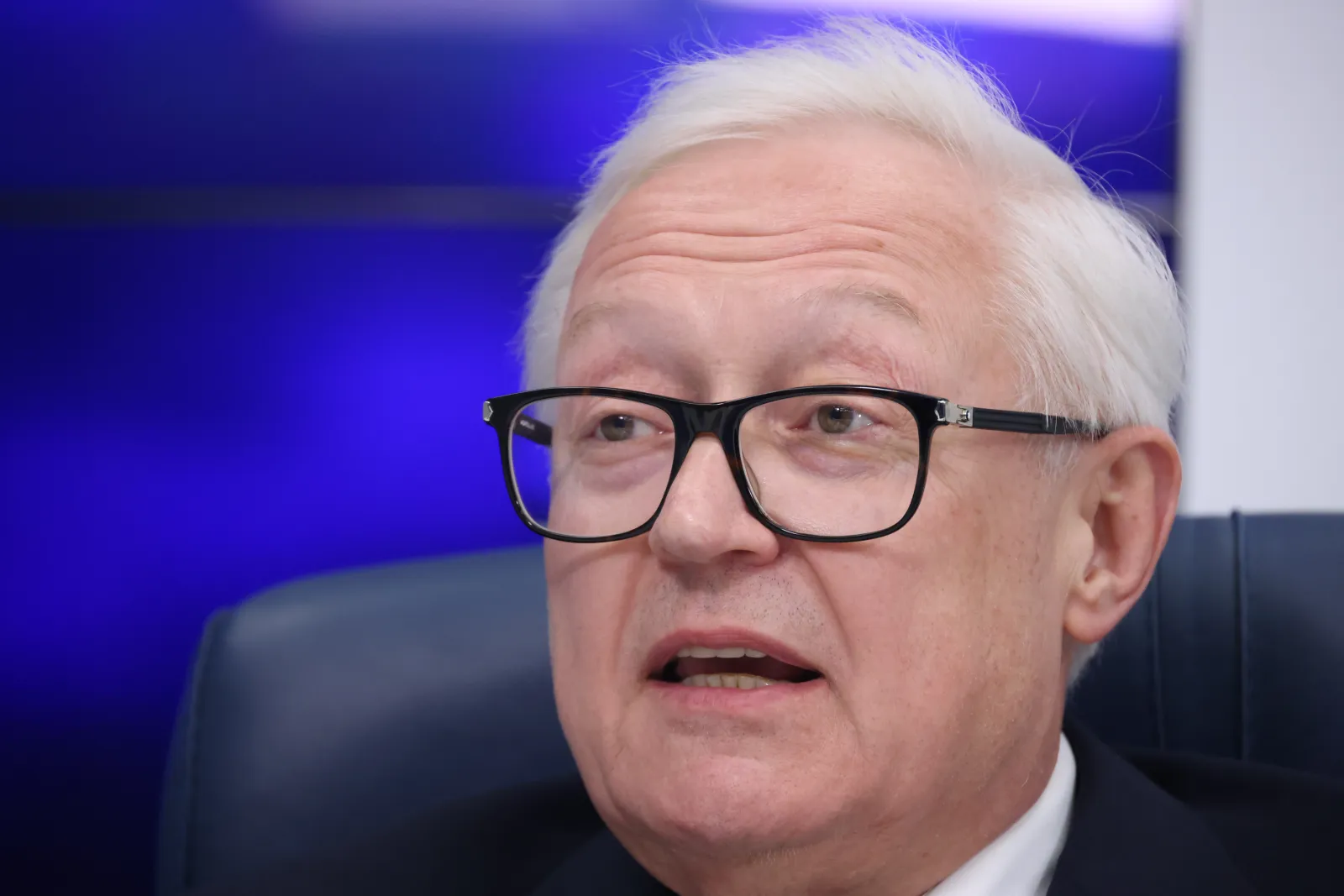
Russian Deputy Foreign Minister Sergei Ryabkov has warned that "the hostile policy of NATO countries" could "lead to a head-on clash between nuclear powers." Speaking during a webinar hosted by the Center for Energy and Security Studies, Ryabkov cited U.S. deployments in Europe, joint nuclear missions, and plans to weaponize space as destabilizing moves that compel Russia to take “compensatory military-technical measures.”
The remarks came as Russian President Vladimir Putin oversaw a major nuclear exercise involving intercontinental ballistic missiles, strategic bombers, and submarine-launched ballistic missiles. The Kremlin released footage of the drills, which followed the abrupt cancellation of a planned summit between Putin and President Donald Trump.
Newsweek has contacted the Russian Ministry of Foreign Affairs for comment.
Read More on News
Why It Matters
Ryabkov’s comments highlight Russia’s growing alarm over NATO’s annual nuclear deterrence drills and the modernization of Western arsenals. His warning coincides with heightened tensions over Ukraine and the collapse of arms control frameworks like the INF Treaty, raising fears of a renewed arms race and strategic miscalculation.
The Kremlin’s nuclear triad demonstration and rejection of Trump’s proposed peace terms for the Ukraine war signal a hardening stance that could complicate diplomatic efforts to end the conflict.
...
What To Know
Ryabkov condemned the U.S.-led development of a global missile defense system and the forward deployment of intermediate-range missiles. He also warned against plans to militarize space, calling it a transformation of the domain into a “combat environment."
Putin’s nuclear drills tested the readiness of Russia’s land, sea, and air-based strategic forces. The Kremlin confirmed successful launches of a Yars ICBM, cruise missiles from Tu-95MS bombers, and a ballistic missile from a submarine in the Barents Sea.
A planned meeting between Trump and Putin in Budapest to discuss the war in Ukraine was canceled amid rising tensions. The White House said no immediate plans exist to reschedule. Trump has publicly called for peace based on the current battle lines, a proposal that Russia has rejected.
Moscow reiterated its demand that Ukraine cede the entire Donbas region, contradicting Trump’s suggestion that the war should end where forces currently stand. Ukrainian President Volodymyr Zelensky reportedly did not agree to territorial concessions during recent talks.
NATO launched its annual Steadfast Noon nuclear deterrence exercise on October 13, involving around 70 aircraft from 14 nations. In a press release the alliance stressed the exercise was not linked to any current world events and that no live weapons would be used.
What People Are Saying
Russian Deputy Foreign Minister Sergei Ryabkov on Wednesday: "Among the relevant negative factors, we highlight the hostile policy of NATO countries, which can lead to a head-on clash between nuclear powers, as well as the development by this self-proclaimed nuclear alliance of schemes and means of the so-called joint nuclear missions, including the expansion of the geography of the U.S. nuclear presence in Europe and the circle of countries to which the delivery of American special munitions to targets is delegated."
He referred to the "build-up of high-precision long-range capabilities by the West for so-called preventive disarming strikes, including the forward deployment of ground-based intermediate-range and shorter-range missiles" and "the plans of the United States and a number of its allies to launch weapons into space with its transformation into a combat environment."
What Happens Next
With Russia signaling a potential withdrawal from remaining arms control treaties and NATO intensifying its deterrence posture, diplomatic channels may become even narrower. The risk of miscalculation or escalation remains high as both sides pursue strategic demonstrations and reject compromise on Ukraine.
View 0 Comments
Submit Correction
View Editorial & AI Guidelines