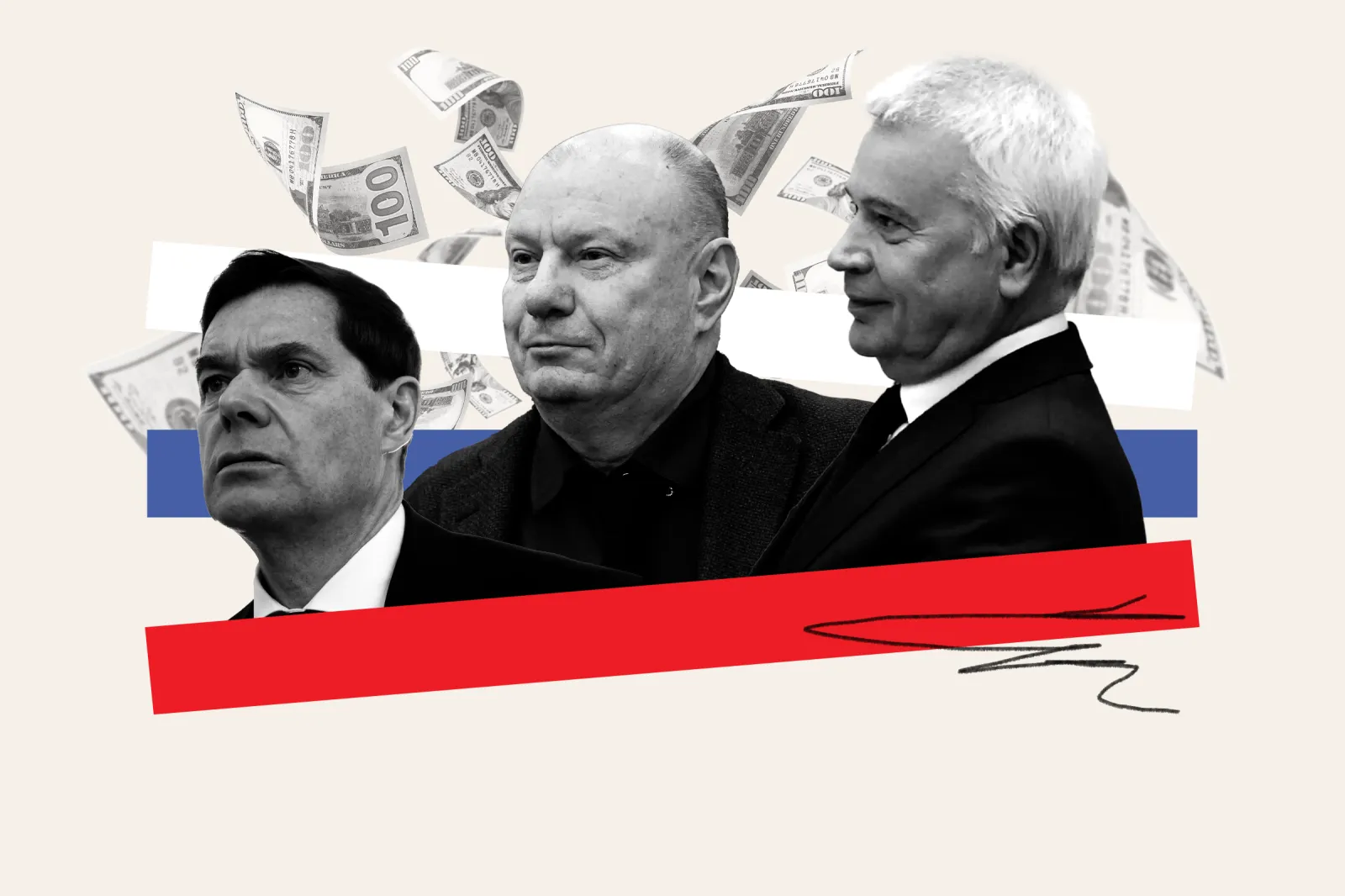
Photo-illustration by Newsweek/Getty/AP Newsroom/Russia's Richest Billionaires Are Getting Wealthier Fast

By Jordan King
Reporter
0
Share
Newsweek is a Trust Project member
See more of our trusted coverage when you search.Prefer Newsweek on Googleto see more of our trusted coverage when you search.
Russia's richest individuals added more than $20 billion to their collective fortunes over the last year, with several sanctioned oligarchs—including Russia's wealthiest billionaire, Vladimir Potanin (net worth $30.6 billion)—leading the gains, according to Bloomberg's Billionaire Index.
Why It Matters
The rapid increase in wealth among Russia's billionaires is significant in the context of ongoing Western sanctions aimed at denting the country's economic power. Sanctions were imposed on dozens of Russian business figures following the 2022 invasion of Ukraine, a move intended to curb President Vladimir Putin's influence and dissuade Moscow's aggression.
Read More on News
...
However, data indicates these measures have not prevented Russia's ultra-rich from growing even richer, raising questions about the effectiveness of the sanctions regime.
This trend is unfolding as the Kremlin touts economic resilience, and some tycoons are regaining assets amid an exodus of Western corporations from Russia.
But Russia may face more sanctions soon, after President Donald Trump promised "severe" secondary tariffs on the country if Putin does not agree to a ceasefire in Ukraine.
What To Know
Russia's richest individuals tracked by the Bloomberg Billionaires Index have seen the following increases to their wealth in the year leading up to August 4:
- Pavel Durov — $3.27 billion
- Alisher Usmanov — $3.23 billion
- Viktor Vekselberg — $3.12 billion
- Suleiman Kerimov — $2.75 billion
- Vladimir Potanin — $2.74 billion
- Alexey Mordashov — $1.89 billion
- Victor Rashnikov — $1.57 billion
- Leonid Mikhelson — $1.38 billion
- Andrey Guryev — $1.30 billion
- Leonid Fedun — $1.25 billion
- Vagit Alekperov — $939 million
- Roman Abramovich — $939 million
- Gennady Timchenko — $835 million
- Mikhail Prokhorov — $528 million
- German Khan — $507 million
- Alexander Abramov — $292 million
- Andrey Melnichenko — $148 million
The latest wealth increases have occurred in spite of international sanctions imposed since 2022.
Key Russian billionaires, such as Potanin, Vagit Alekperov, and Alisher Usmanov, have seen new bans or asset freezes but continued to see their fortunes rise, largely because of sustained high global commodity prices and Russia's relative insulation from some foreign investment shifts.
The main wealth drivers for Russia's billionaires remain the metal, mining, oil, gas, and chemical sectors. Individuals such as Potanin (Norilsk Nickel), Alekperov (Lukoil), and Leonid Mikhelson (Novatek) derive most of their net worth from these extractive and export-centric industries.
Russia has made a total of 847 billion euros in fossil fuel revenue since the war in Ukraine began.

...
What People Are Saying
Kyle Haynes, an assistant professor at Purdue University's Department of Political Science said of Russia's fossil fuel revenue: "Sanctioned states always try to find workarounds using intermediaries, shell companies, smuggling, etc."
President Donald Trump said last week of peace efforts in Ukraine: "We thought we had that settled numerous times, and then President Putin goes out and starts launching rockets into some city, like Kyiv, and kills a lot of people in a nursing home or whatever, you have bodies lying all over the street."
He added: "I'm disappointed in President Putin. Very disappointed in him. So, we're going to have to look, and I'm going to reduce that 50 days that I gave him to a lesser number because I think I already know the answer [to] what's going to happen."
What Happens Next
The sustained growth of Russian billionaires' fortunes is seen as a challenge for Western policymakers seeking to use sanctions to limit Russian economic power.
Analysts and observers expect continued scrutiny of both the sources of this wealth and the ability of international sanctions to restrict it.
View 0 Comments
Submit Correction
View Editorial & AI Guidelines