...

By Brendan Cole
Senior Reporter
0
Share
Newsweek is a Trust Project member
See more of our trusted coverage when you search.Prefer Newsweek on Googleto see more of our trusted coverage when you search.
The construction of an antenna complex in the Russian enclave of Kaliningrad shows Moscow is preparing for a larger and prolonged confrontation with Europe, an open-source analyst group has told Newsweek.
Reports of a large-scale facility being built in the Russian region bordered by NATO members Lithuania and Poland had raised concerns in the defense community over its implications for Europe's security architecture.
Tochnyi, the open-source intelligence (OSINT) project that reports on the war in Ukraine and first revealed the construction, told Newsweek it was something "unprecedented in the Russian military domain."
Read More on World
Newsweek has contacted the Russian Defense Ministry for comment.
...
Why It Matters
Kaliningrad hosts S-400 air defense systems, Iskander ballistic missile units and naval assets of the Baltic Fleet and is expected to be a focal point in the event of hostilities breaking out between Russia and NATO.
Reports of an expanding communications site only miles from the Polish border will add weight to warnings from NATO's eastern flank members about Moscow's military intentions extending beyond its full-scale invasion of Ukraine, though Lithuania has recently played down the threat posed by Russia's construction of a suspected listening station near its border.
What To Know
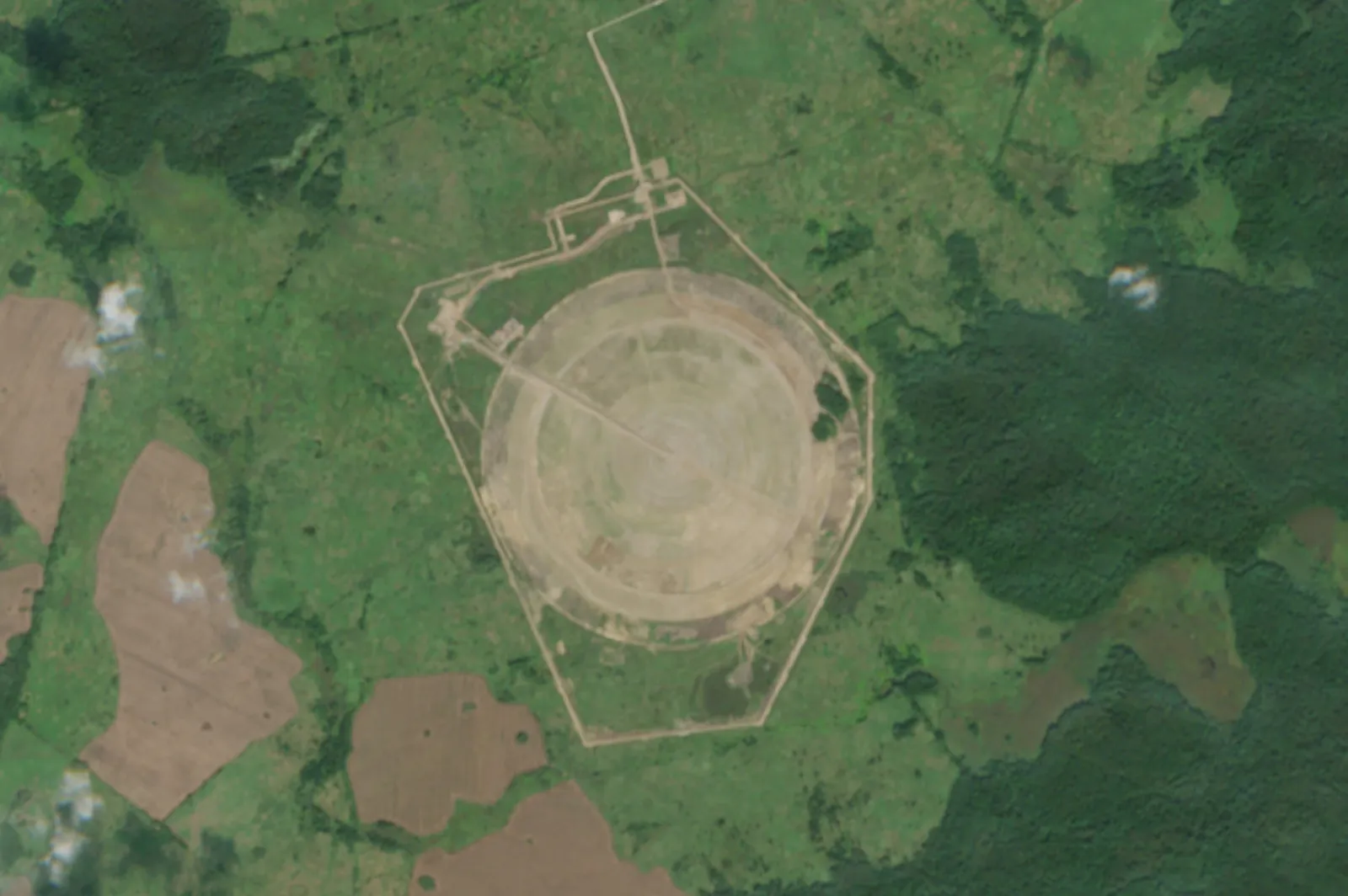
Tochnyi said in August that construction was near completion on the facility in the Chernyakhovsky district of the Kaliningrad region, which had developed into a military-grade antenna array designed for radio intelligence or communication.
Satellite imagery released in August showed the development between March 2023 and August 2025 of the antenna array, which could span up to 1,600 meters (over 5,200 feet) in diameter.
Tochnyi told Newsweek that this Over The Horizon (OTH) radar, known as Container 29B6, was part of a larger radar system across Russia.
This system typically includes both a transmitting site and a receiving site but only the transmission site had been identified in Kaliningrad.
Amid a debate over whether the site's circular shape could be useful for OTH radars, Tochnyi said its design highlighted its uniqueness when compared to all the other known 29B6 installations in other parts of Russia.
Tochnyi said it was challenging to fully define the capabilities of the site in Kaliningrad, but it features eight sets of antenna. Six of these have diameters that align closely with the frequencies of a typical Krug system used for Signals Intelligence (SIGINT) operations.
The larger set of antennas, with a diameter of 1,600 meters and above, seem well-suited for very low-frequency transmission often used for communicating with submarines and can reach nearly everywhere in the world, it said.
However, the bandwidth limitations of this system restrict it to transmitting a small amount of information, such as coordinates or other sensitive data, said Tochnyi.
"We tend to view this not merely as a component of a well-known OTH radar but as something unprecedented in the Russian military domain that warrants further investigation and close monitoring," it added.
Military website Army Recognition said by covering Very Low Frequency and Low Frequency bands, the Kaliningrad site could contact submarines in the Baltic Sea and North Atlantic while intercepting NATO communications across Eastern Europe.
Lithuanian Defense Minister Dovilė Šakalienė appeared to play down concerns, telling the Baltic News Service (BNS) that the Kaliningrad site was "not intended for espionage, but to detect aircraft and missiles in airspace several thousand kilometers away."
But Tochnyi noted that nearly all major defense factories in Russia having been on the verge of significant expansion since mid-2023 and that the installation in the exclave reinforced its view Moscow is not seeking peace but preparing for a larger and prolonged confrontation with Europe and its allies.
What People Are Saying
Tochnyi, the open-source intelligence (OSINT) project said the site was: "something unprecedented in the Russian military domain...[and] reinforces our view that Russia is not seeking peace but rather actively preparing for a larger and prolonged confrontation with Europe and its allies."
What Happens Next
Amid warnings that the Kaliningrad site could signal Moscow's preparations for a broader confrontation and for long-term monitoring and disruption of NATO communications, alliance members are likely to continue to express concerns about the regional threat posed by Russia.
View 0 Comments
Submit Correction
View Editorial & AI Guidelines