...

By Newsweek Editors
0
Share
Newsweek is a Trust Project member
See more of our trusted coverage when you search.Prefer Newsweek on Googleto see more of our trusted coverage when you search.
Marco Rubio’s political arc is one of the more surprising reversals of the Trump era.
Once a bruised rival from the 2016 Republican primaries, derided by President Donald Trump as "Little Marco," the former Florida senator has reemerged as a trusted lieutenant and one of the most visible faces of the administration’s worldview.
Fluent on foreign policy, disciplined on message, and increasingly comfortable in MAGA media ecosystems, Rubio now occupies a space few Republicans manage: Establishment credibility fused with online virality.
Read More on Analysis
As 2028 speculation accelerates, the question is whether the momentum behind the Rubiowave is enough to carry the secretary of state into the primaries, and maybe even the White House itself.
...
Rubio Rising
Rubio’s resurgence has been powered by Trump’s aggressive foreign policy. It chimes with Rubio’s own hawkish instincts and his role as secretary of state has made him a protagonist in the second administration.
Long a China hawk and vocal critic of adversaries like Iran and Russia, he has aligned neatly with Trump’s second-term emphasis on strategic competition and American leverage.
As the son of Cuban immigrants, Latin America is of special interest to Rubio too, and he has been at the forefront of the Trump administration’s push to reshape the politics of the Western Hemisphere, most notably so far in Venezuela.
Unlike some MAGA figures who thrive on provocation, Rubio offers something closer to polish. He has a lawyerly command of detail, cable-news-ready sound bites, and an ability to argue Trumpian priorities in institutional language.
That has made him a go-to emissary on global issues and a reassuring presence for Republicans who want toughness without chaos.
In a party still balancing populist energy with governing credibility, Rubio’s diplomatic portfolio—security, sanctions, alliances—positions him as a bridge between factions rather than a captive of one.
The Memeification of Elections Began With Trump
Trump’s 2016 campaign upended Republican politics and rewired how political energy moves online.
Social media memes became a central form of messaging, mobilization, and identity-building, often faster and stickier than traditional ads or speeches.
Humor, repetition, and irony proved powerful tools for shaping narratives, especially among younger and highly online voters.
- Uncommon Knowledge: The Voter ID Debate Everyone Gets Wrong
- Trump Faces a Reckoning on His Oil Promise to America
Over time, meme culture stopped being a sideshow and became part of the main campaign infrastructure. It’s now something campaigns monitor, encourage, and sometimes quietly seed.
In that sense, electoral politics has learned to speak internet. Candidates who ignore that language risk invisibility. But those who master it can punch far above their weight in attention, even before formal campaigning begins.
If Rubio has grand ambitions, he’s pushing at an open door in the meme campaign.
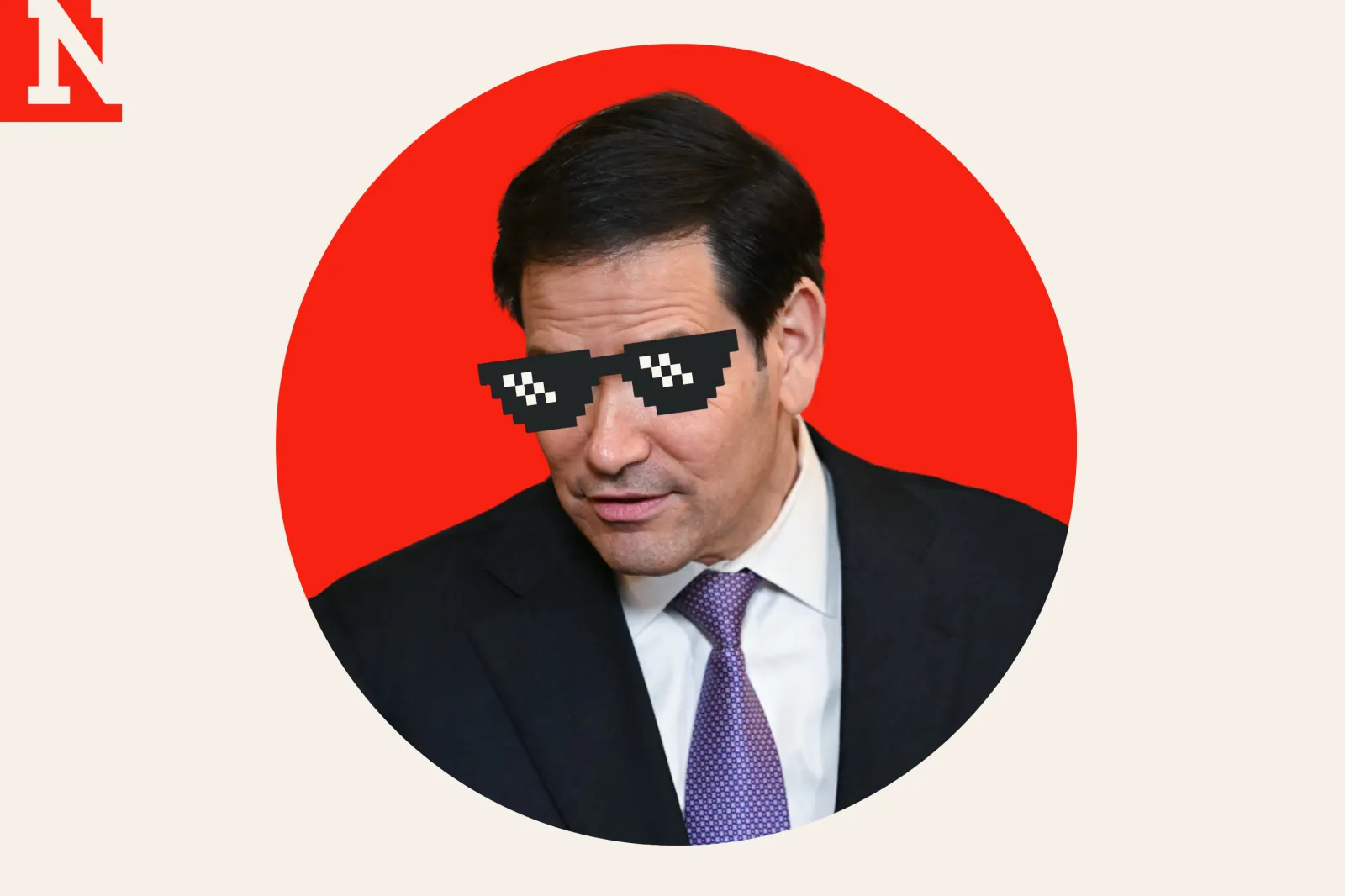
Rubio, the New Star of MAGA Memes
What’s new is that Rubio, once caricatured as stiff and overly scripted, has become a recurring character in pro-MAGA meme culture.
Viral posts from Trump allies and official White House accounts portray him as hyper-competent, loyal, and almost omnipresent. And there’s a playfulness too, cutting against the stiff-suited stereotype of conservative officials.
The tone is often exaggerated to the point of parody, but that’s the point. Memes work by flattening complexity into symbols, and Rubio’s symbol has shifted from 2016 loser to indispensable closer.
The White House shared one meme after the capture of former Venezuelan leader Nicolas Maduro that blended clips of Maduro’s bravado and comments by Rubio that echoed lyrics from the rap song "Juicy" by Notorious B.I.G.
Another clip shared recently by senior White House official Dan Scavino Jr. shows a grinning Rubio miming "Fireball" by Pitbull before video footage of various U.S. strikes against Iranian targets.
And images of Rubio sitting on the Oval Office couch have been mocked up in various ways to show him donning different costumes, reflecting his status as a utility player in the Trump team, someone capable enough to turn his hand to pretty much anything.
The volume matters as much as the content. Repetition builds familiarity, and familiarity breeds plausibility. By the time voters are next asked to imagine a Rubio presidency, many will see the man from the memes. It worked for Trump.
Prediction Markets Signal a Rubio Surge
That online buzz is now echoing in prediction markets. Platforms like Kalshi and Polymarket show a noticeable rise in contracts betting on Rubio winning the 2028 presidential election as he becomes a central star of the Trump show.
These markets are not forecasts, but they are sentiment trackers, reflecting where engaged, information-hungry participants think momentum is building. And they’re putting their money where their mouths are.
Rubio’s sudden surge suggests he is increasingly viewed as more than a hypothetical contender. He has massively closed the gap with Vice President JD Vance in recent days, even briefly overtaking him on Kalshi’s market as the front-runner.
- Pam Bondi Moving Home Marks Dark Turn for US Politics
- The Mystery of Epstein’s Remote New Mexico Zorro Ranch
Importantly, this surge comes well before any formal announcement, indicating that expectations are being shaped by visibility and narrative, not campaign infrastructure.
In modern politics, perception often precedes organization. Markets are registering that Rubio has entered the mental shortlist of plausible successors to Trump.
JD Vance Is the Man to Beat
Still, Rubio’s path is far from clear. If there is a single figure who best captures the emotional core of post-Trump MAGA politics, it is Vance, who has also become a meme, though somewhat less flatteringly: "Fat JD."
As vice president, Vance has proximity, ideological credibility, and a deep connection to the movement’s populist base. His personal story is an all-American success story, rising from blue-collar poverty to the White House.
Where Rubio offers competence and continuity, and a greater depth of experience in navigating the politics of Washington, Vance offers intensity and identity.
There is, of course, the strong chance that one stands aside to allow the other to run without a messy Republican fight. And then the pair, reportedly good friends inside the White House, reunite for the 2028 ticket.
But Rubio’s case to be the top name on that ticket is growing stronger. Perhaps the meme machine will put him there.
Hey gang, Carlo Versano here. I hope you enjoyed this article. As Newsweek's Director of Politics and Culture and editor of the 1600 newsletter, I'm keen to hear what you think. Now, Newsweek is offering a new service to allow you to communicate directly with me in the form of a text message chat. You can sign up and get a direct line to me, as well as the reporters who work for me. You can shape our coverage.
As a Newsweek member, we're offering this service to you for free. You can sign up below, or read more about how it works here. Let's talk!
View 0 Comments
Submit Correction
View Editorial & AI Guidelines