...

By Giulia Carbonaro
Senior Reporter
0
Share
Newsweek is a Trust Project member
See more of our trusted coverage when you search.Prefer Newsweek on Googleto see more of our trusted coverage when you search.
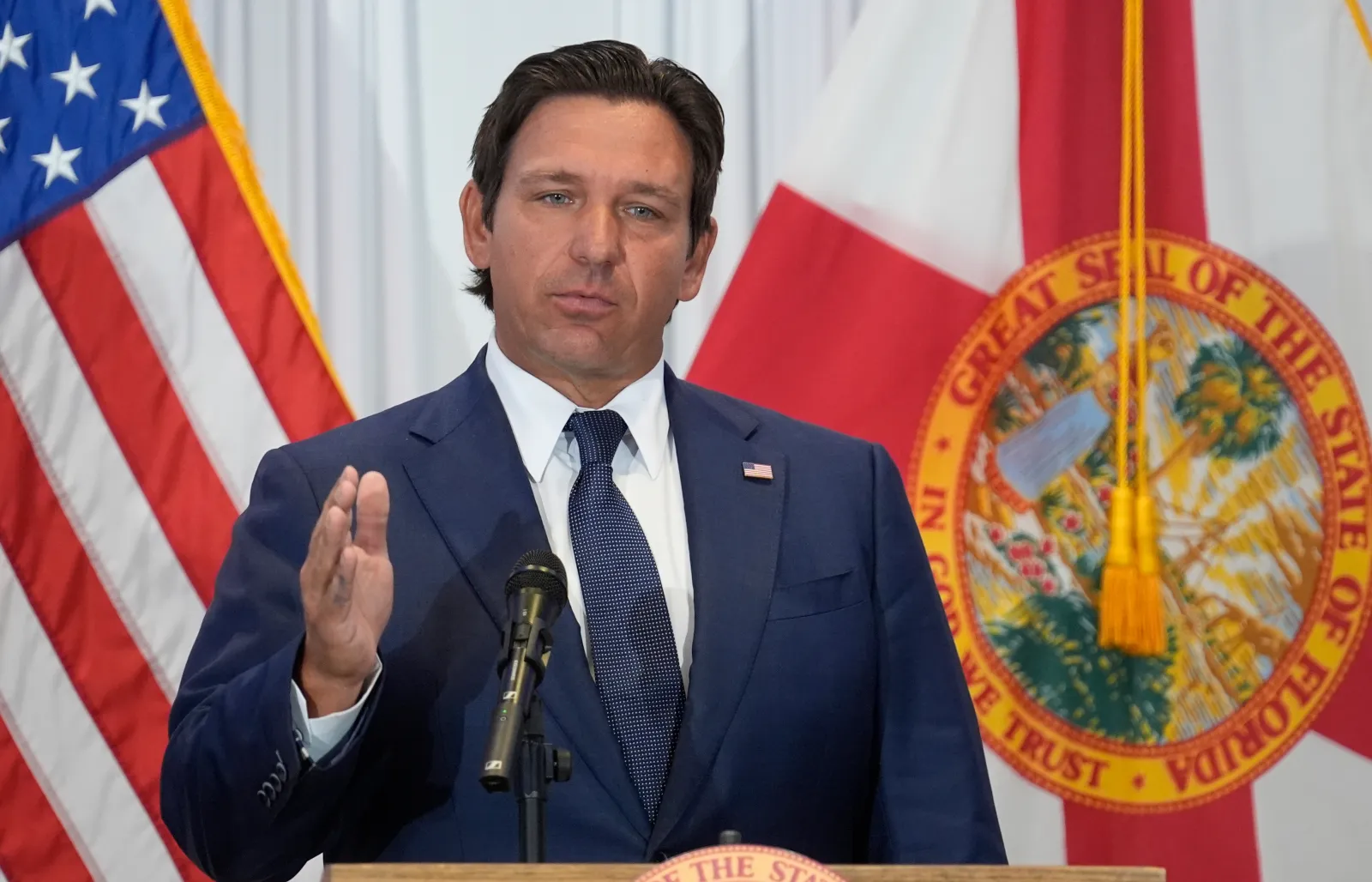
Florida Governor Ron DeSantis has shot down calls for the state's gas tax to be temporarily suspended in the wake of recent hikes fueled by the war in Iran, arguing there is no "simple fix" to the issue.
Why It Matters
Crude oil prices have skyrocketed in the days and weeks following February 28, when the U.S. and Israel launched joint strikes on Iran, killing its supreme leader, Ayatollah Ali Khamenei. The price of Brent crude—the global benchmark—rose to nearly $120 a barrel on March 9, and it has not fallen below $100 since March 13, as Iran is putting a de facto blockade on the crucial Strait of Hormuz.
Read More on News
While the U.S. is the world's largest oil producer, the country has not been shielded by the global spike in energy prices that has followed the start of the conflict. Gas prices have surged in all U.S. states over the past few weeks, with Florida drivers now paying more than a dollar more for a gallon of regular gas than they were a month ago, according to AAA data.
...
What To Know
As of Friday morning, the average price of a gallon of regular gas in Florida was $3.950, up from $3.716 a week earlier, $2.924 a month earlier and $3.020 a year earlier. It was also higher than the national average of $3.912, up from $2.934 a month earlier.
While the statewide average is just shy of $4 but inching closer day after day, drivers in Monroe County were already paying $4.189 per gallon of regular gas on Friday—the highest price in the state.
Patrick De Haan, the head of petroleum analysis at GasBuddy, described the recent gas price hikes in the Sunshine State as "unprecedented," telling Newsweek that Florida was struggling because of its position on the Gulf Coast.
"States along the Gulf Coast or with major ports often see higher prices because fuel there can easily be exported to the global market," he said. "When refiners have the option to sell gasoline or diesel overseas at higher prices, local buyers have to compete with those global buyers. That tends to pull prices in those regions closer to international levels."
Democrats in the state are pushing DeSantis for a temporary suspension of Florida's 23.5-cent per gallon tax on gas, similar to what some California gubernatorial candidates are suggesting in the Golden State. But the governor has rebuffed them, saying the solution to soaring energy prices should be found by the federal government.
What People Are Saying
Florida Senate Democratic Leader Lori Berman of Boca Raton said in a news release after Democrats in Tallahassee called for a temporary suspension of the state's gas tax last week: "In the last 60 days, we haven't done anything to address Florida's affordability crisis. We're sitting on billions of dollars in reserves; the least we can do for Floridians during this time of economic crisis and war is provide relief at the gas pumps."
Governor Ron DeSantis said on Thursday of rising gas prices in Florida, while at Pier 22 in Bradenton: "My answer is just get the cost down internationally, and that means having stable energy markets, making sure we're doing everything to get our stuff to market. But I don't know that there's going to be any simple fix."
What Happens Next
Florida's latest 60-day legislative session closed last week without lawmakers agreeing on a budget for the upcoming fiscal year, and a special session on the budget is expected for mid-April. The new budget is expected to include a tax relief package, though it is unlikely to target higher gas prices.
Experts expect prices at the pump to continue surging until traffic through the Strait of Hormuz returns to normal, but the war in Iran has no clear end in sight.
In a polarized era, the center is dismissed as bland. At Newsweek, ours is different: The Courageous Center—it's not "both sides," it's sharp, challenging and alive with ideas. We follow facts, not factions. If that sounds like the kind of journalism you want to see thrive, we need you.
When you become a Newsweek Member, you support a mission to keep the center strong and vibrant. Members enjoy: Ad-free browsing, exclusive content and editor conversations. Help keep the center courageous. Join today.


View 0 Comments
Submit Correction
View Editorial & AI Guidelines