10
Loading video...

By Anna Skinner
Associate News Editor
0
Share
Newsweek is a Trust Project member
See more of our trusted coverage when you search.Prefer Newsweek on Googleto see more of our trusted coverage when you search.
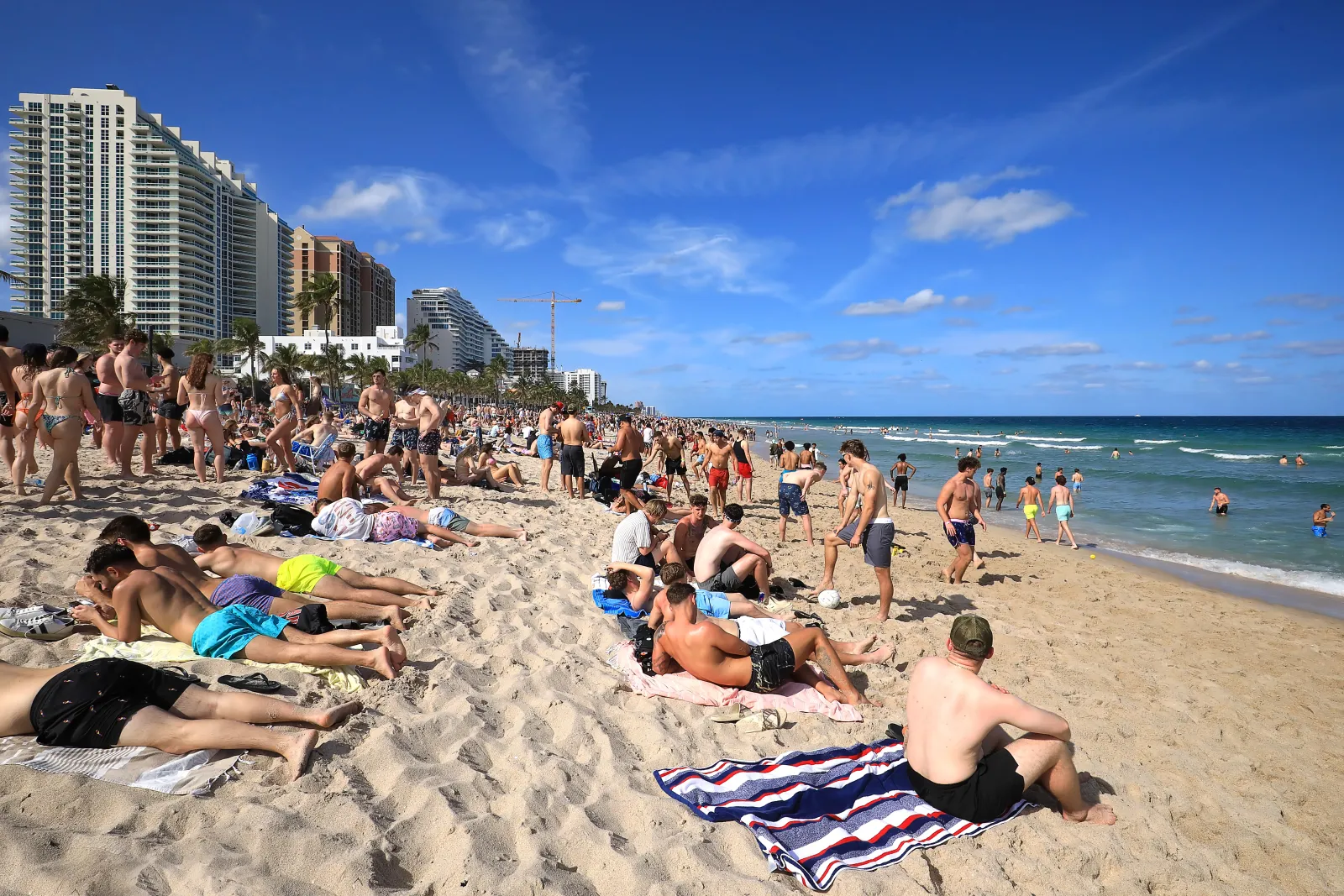
With spring break crowds set to pack beaches from the Caribbean to Florida, forecasters are urging caution as dangerous rip currents continue to impact large stretches of coastline.
Rip currents—fast, powerful channels of water that can pull swimmers away from shore in seconds—are one of the leading causes of beach rescues and fatalities each year. As warmer weather draws more people to the coast, meteorologists and safety officials are warning that changing winds, tides and wave conditions can cause these currents to form quickly and without obvious signs.
Authorities urge swimmers to stay in designated lifeguard areas, know how to spot hazardous water, and remember that escaping a rip current requires staying calm and swimming parallel to the shoreline rather than fighting against the flow.
Read More on Weather
The National Weather Service (NWS) issued multiple high-risk alerts on Wednesday, warning that powerful currents are capable of pulling even the strongest swimmers away from shore. In some cases, beachgoers were advised against entering the ocean altogether.
In a social media post, the NWS cautioned travelers not to underestimate ocean conditions.
“Swimming in a pool is NOT the same as swimming at a surf beach with crashing waves, winds and currents," the post said. "You should be a strong swimmer before you go into the ocean. Learning how to swim is the best defense against drowning.”
High Rip Current Risk in Florida
Nearly the entire eastern coast of Florida is under rip current warnings on Wednesday, with high rip current risk expected through Thursday evening from Daytona Beach south through Miami. Officials warn that the rip currents are strong enough to pull swimmers into deeper water even under otherwise calm, sunny beach conditions.
"Entering the surf is strongly discouraged," NWS Melbourne said in a rip current statement.
Newsweek reached out to the NWS office in Melbourne by phone for comment.
The NWS in Miami advises anyone entering the water to do so near a staffed lifeguard stand and to avoid swimming against a rip current if caught. Instead, swimmers should float, remain calm, and attempt to move parallel to the shoreline.
The NWS emphasizes that the most hazardous areas are near jetties, piers, and breaks in sandbars where rip currents most often form. Beachgoers across all affected regions are urged to heed lifeguard instructions, obey beach flag warnings, and avoid entering the surf entirely where risks are elevated.
High Rip Current Risk in the Caribbean
High rip current risks remain in effect today along the south-central and southwestern coasts of Puerto Rico, including Ponce and nearby beaches, where forecasters warn conditions could become life-threatening through this afternoon. Similar alerts cover the northern, eastern, and southeastern shores of Puerto Rico, as well as Culebra, Vieques, St. Thomas, St. John, and St. Croix, with hazards expected to persist through Thursday afternoon.
Forecasters say the strong currents can quickly sweep swimmers into deep water, making a return to shore difficult. Visitors are urged to follow all posted warnings, stay near lifeguards, and avoid venturing into the surf if they are inexperienced.
...
Hazardous Surf in Guam and the Northern Mariana Islands
In the Pacific, a high rip current risk continues for north- and east-facing reefs of Guam, Rota, Tinian, and Saipan through Friday afternoon. Large waves between 8 and 12 feet are also expected, creating dangerous conditions for swimmers and surfers. Officials warn that even experienced swimmers should avoid entering the water as long-period swells continue to impact the region.
As millions travel for spring break, forecasters say awareness and caution remain essential.
“Rip currents will be life threatening," one rip current statement said. "If caught in a rip current, relax and float. Don`t swim against the current. If able, swim in a direction following the shoreline. If unable to escape, face the shore and call or wave for help."
How to Survive a Rip Current
Survival experts and lifeguards emphasize that the most important step in a rip current is not to panic, because the current doesn’t pull swimmers underwater but carries them away from shore. Fighting against it will quickly lead to exhaustion, so officials advise floating or treading water while letting the current carry you until it weakens. Once out of its narrow channel, swimmers should swim parallel to the shoreline before angling back in. If you can’t escape, signal for help by waving and calling out, as lifeguards are trained to spot these situations and respond quickly.
In a polarized era, the center is dismissed as bland. At Newsweek, ours is different: The Courageous Center—it's not "both sides," it's sharp, challenging and alive with ideas. We follow facts, not factions. If that sounds like the kind of journalism you want to see thrive, we need you.
When you become a Newsweek Member, you support a mission to keep the center strong and vibrant. Members enjoy: Ad-free browsing, exclusive content and editor conversations. Help keep the center courageous. Join today.


View 0 Comments
Submit Correction
View Editorial & AI Guidelines