...

By Gabe Whisnant
News Editor
0
Share
Newsweek is a Trust Project member
See more of our trusted coverage when you search.Prefer Newsweek on Googleto see more of our trusted coverage when you search.
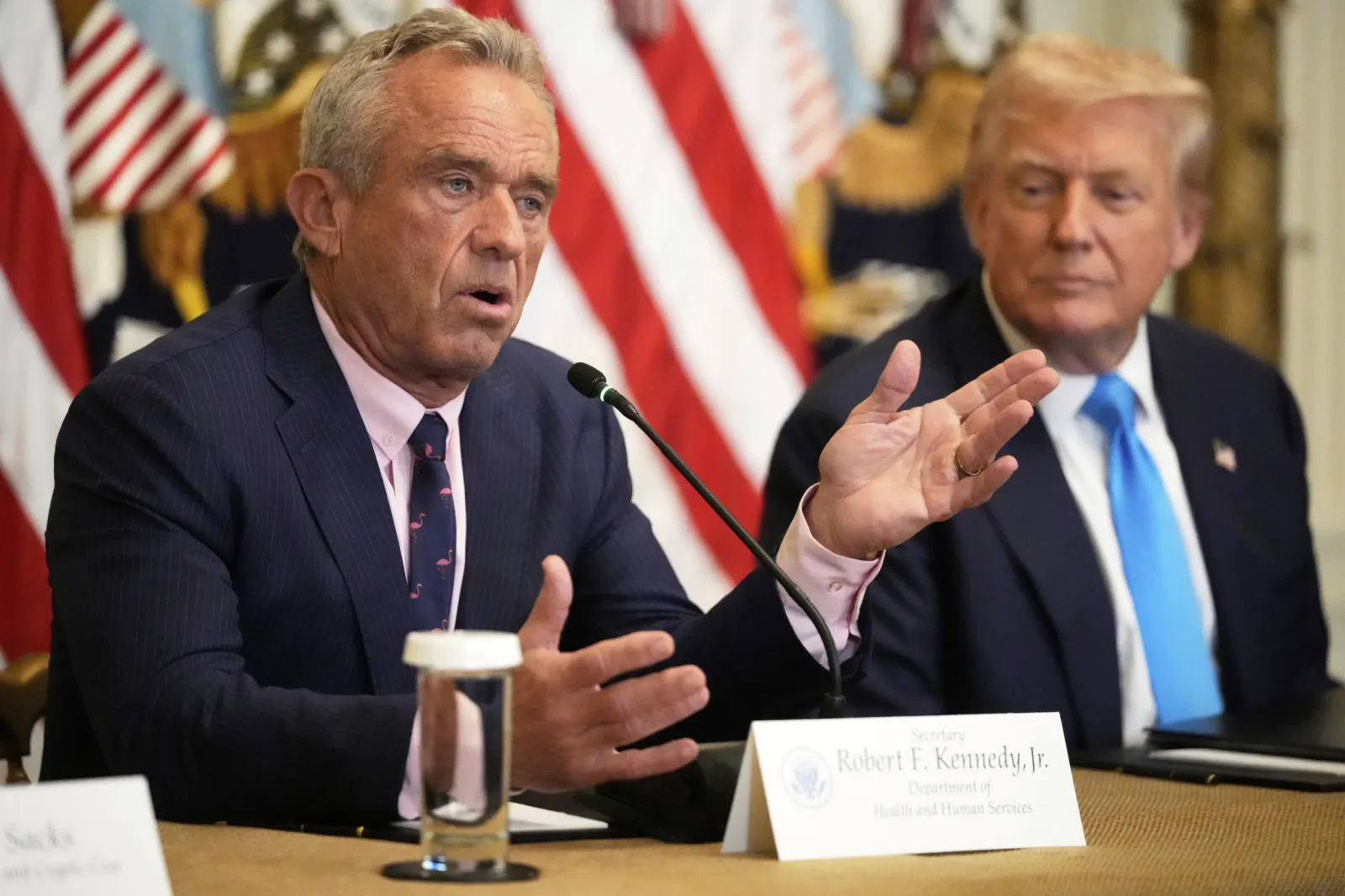
The Trump administration is steering the nation's health agenda in a sharply new direction, urging federal agencies to focus on vaccine safety and the causes of autism under a plan unveiled Tuesday by Health and Human Services Secretary Robert F. Kennedy Jr.
The "Make America Healthy Again" (MAHA) report, a 20-page blueprint centered on children's health, lays out sweeping changes that Kennedy and his allies say will transform how the U.S. combats chronic disease.
On Tuesday evening, Trump took his first step under the MAHA report's recommendations, signing a memorandum to tighten enforcement of pharmaceutical advertising on television, online and social media. Administration officials said on a call that "hundreds" of warning letters will be sent to drug companies accused of running misleading ads.
Read More on Politics
What is the MAHA Commission Report?
At the core of the plan is Kennedy's long-standing push to investigate vaccine injuries and overhaul the nation's childhood immunization schedule. The report argues that government health agencies have failed to adequately address concerns about adverse reactions, and it calls for a new framework to ensure vaccines are both effective and safe.
"They will be welcomed and we will learn everything we can about them so we can improve the safety of these products," Kennedy said of people who report vaccine injuries. He added that doctors are not currently compensated for filling complaints for vaccine injuries.
Kennedy's proposals could further strain relations with the agencies he oversees, many of which have been shaken by resignations, budget cuts, and fierce internal disputes over his policies.
...
Autism also takes a central role in the MAHA blueprint. Kennedy has promised for months to reveal what he calls the true cause of the complex developmental disorder, even pledging to release a report by September identifying the underlying drivers. The MAHA document stops short of offering a definitive answer but directs the National Institutes of Health (NIH) to launch an ambitious research program linking insurance claims, medical records, and wearable-device data to explore possible causes. While most scientists maintain that autism stems from a combination of genetic and environmental factors, Kennedy insists a government-led investigation can settle the question once and for all.
"The NIH will link multiple datasets, such as claims information, electronic health records, and wearables data, into a single integrated dataset for researchers studying the causes of, and developing treatments for, the chronic disease crisis," the report says.
The new report lands at a moment of turmoil inside the federal health establishment. The Centers for Disease Control and Prevention (CDC) has been destabilized by disputes over Kennedy's vaccine agenda, culminating in the firing of its director and the departure of senior staff. On Capitol Hill, senators recently pressed Kennedy over whether his approach is undermining confidence in vaccines at a time when preventable childhood illnesses remain a public health threat.
The MAHA commission that drafted the report—composed of Kennedy and other Trump cabinet officials—said its aim was "radical transparency." Yet critics note the group never held a public meeting before publishing its findings, raising concerns about how evidence was considered. The final draft released Tuesday makes some adjustments from a version leaked in August, notably expanding the role of the NIH in tracking chronic disease and tying those efforts to personal health data.
Beyond vaccines and autism, the MAHA plan casts a wider net, targeting ultraprocessed food, water quality, fluoride exposure, and the use of prescription drugs in children. It urges the Department of Justice and HHS to crack down on marketing by telehealth companies and social media influencers who promote pharmaceuticals to young audiences.
The report also assigns sweeping responsibilities to the NIH—even as the agency faces a proposed 40 percent cut in its budget. That financial squeeze, coupled with mounting turnover inside federal health agencies, has raised doubts about whether Kennedy's vision can be carried out.
"The NIH will link multiple datasets, such as claims information, electronic health records, and wearables data, into a single integrated dataset for researchers studying the causes of, and developing treatments for, the chronic disease crisis," the report says.
Kennedy portrays the report as the beginning of a national reckoning with the country's health priorities. By putting vaccine safety and autism research at the forefront, he is challenging decades of scientific consensus and reshaping the mission of America's public health agencies.
What is the MAHA Movement?
The MAHA movement is a public health initiative launched by Kennedy Jr. under the Trump administration. Framed as a plan to reduce childhood diseases, the movement seeks to redirect federal health agencies toward investigating vaccine safety, autism, prescription drug use, and environmental factors linked to chronic illness.
Supporters describe it as a broad, bipartisan coalition pressing for reforms in nutrition, water quality, and medical oversight. Critics, however, argue the initiative reflects Kennedy's long-standing skepticism of vaccines and has fueled internal turmoil within federal health agencies.
Dr. Susan J. Kressly, the president of the American Academy of Pediatrics, said of the report in a statement: "It lacks details on how the Administration plans to address those issues and omits key drivers that harm children's health, including gun violence and environmental hazards. We also cannot ignore the fact that this report is being published in the context of other recent harmful actions by the Administration and Congress that undermine many of the report's recommendations."
Update: 9/9/25, 3:10 p.m. ET: This article was updated with new information and remarks.
Update: 9/9/25, 7:35 p.m. ET: This article was updated with new information and remarks.
This article includes reporting by the Associated Press.
View 0 Comments
Submit Correction
View Editorial & AI Guidelines