
...

By Soo Kim
Reporter
0
Share
Newsweek is a Trust Project member
See more of our trusted coverage when you search.Prefer Newsweek on Googleto see more of our trusted coverage when you search.
Beaches across the globe are undergoing a process of “crushing,” with rising sea levels and coastal urbanization damaging ecosystems, accelerating erosion and threatening sandy shorelines.
Omar Defeo, a professor at Uruguay’s University of the Republic, said that the issue is both urgent and global. “In my presentation at FAPESP [Fundação de Amparo à Pesquisa do Estado de São Paulo] Day last Thursday, I showed several slides related to our joint work with Brazilian colleagues and collaborators worldwide,” he told Newsweek.
“Almost half of the beaches will disappear by the end of the century,” Defeo warned in his presentation.
Read More on Science
...
In a 2022 study published in Marine Pollution Bulletin, Defeo and other scientists explored how urban development impacts coastal ecosystems. Led by Brazilian researcher Guilherme Corte, the study examined biodiversity at 90 sites across 30 beaches on the northern coast of São Paulo, Brazil.
The researchers discovered that beachgoers had the strongest negative impact on biodiversity. The study found that the number of visitors “correlates negatively with species richness and biomass, especially in submerged areas,” Corte told Newsweek.
Corte, an assistant professor in marine biology at Texas A&M University, noted that the projection that the world’s sandy beaches could vanish by the end of the century is based on earlier research by Michalis I. Vousdoukas and his colleagues, published in Nature Climate Change in 2020.
“In that study, the authors conducted a global analysis of long-term erosive trends on sandy coasts and showed that shoreline retreat is expected to accelerate over time, particularly under high greenhouse gas emission scenarios,” Corte explained.
According to Corte, the 2020 study found that around 13–15 percent of the world’s sandy beaches "could face severe erosion by 2050, a number rising to 35.7—49.5 percent by the end of the century.”
Several countries could face extensive losses, including the Democratic Republic of the Congo, Gambia, Suriname, Comoros, Guinea-Bissau and Pakistan. Many of these nations are “tourism-dependent, with sandy coastlines constituting their major tourist attraction,” the researchers noted in the 2020 study.
When looking at the total length of sandy beaches, as opposed to percentage, Australia faces the largest total loss, with “at least 11,426 km [7,100 miles] of sandy beach coastline threatened by erosion”—the equivalent of around 50 percent of the country’s total sandy coastline. Other heavily affected nations include Argentina, Canada, Chile, China, Mexico, Russia and the U.S., the 2020 study noted.
...
Human Activity Is Already Intensifying Erosion
Defeo told Newsweek that the outlook is not just theoretical. “The statement by Vousdoukas indicates that ambient trends in shoreline dynamics, combined with coastal recession driven by sea-level rise, could lead to the near-extinction of almost half of the world’s sandy beaches by the end of the century.
While “this is a projection,” Defeo said, “we already found that more than one-fifth of the 315 sandy beaches assessed worldwide are experiencing intense, extreme or severe erosion rates, and we highlighted the significant influence of human activities in explaining these erosion trends.”
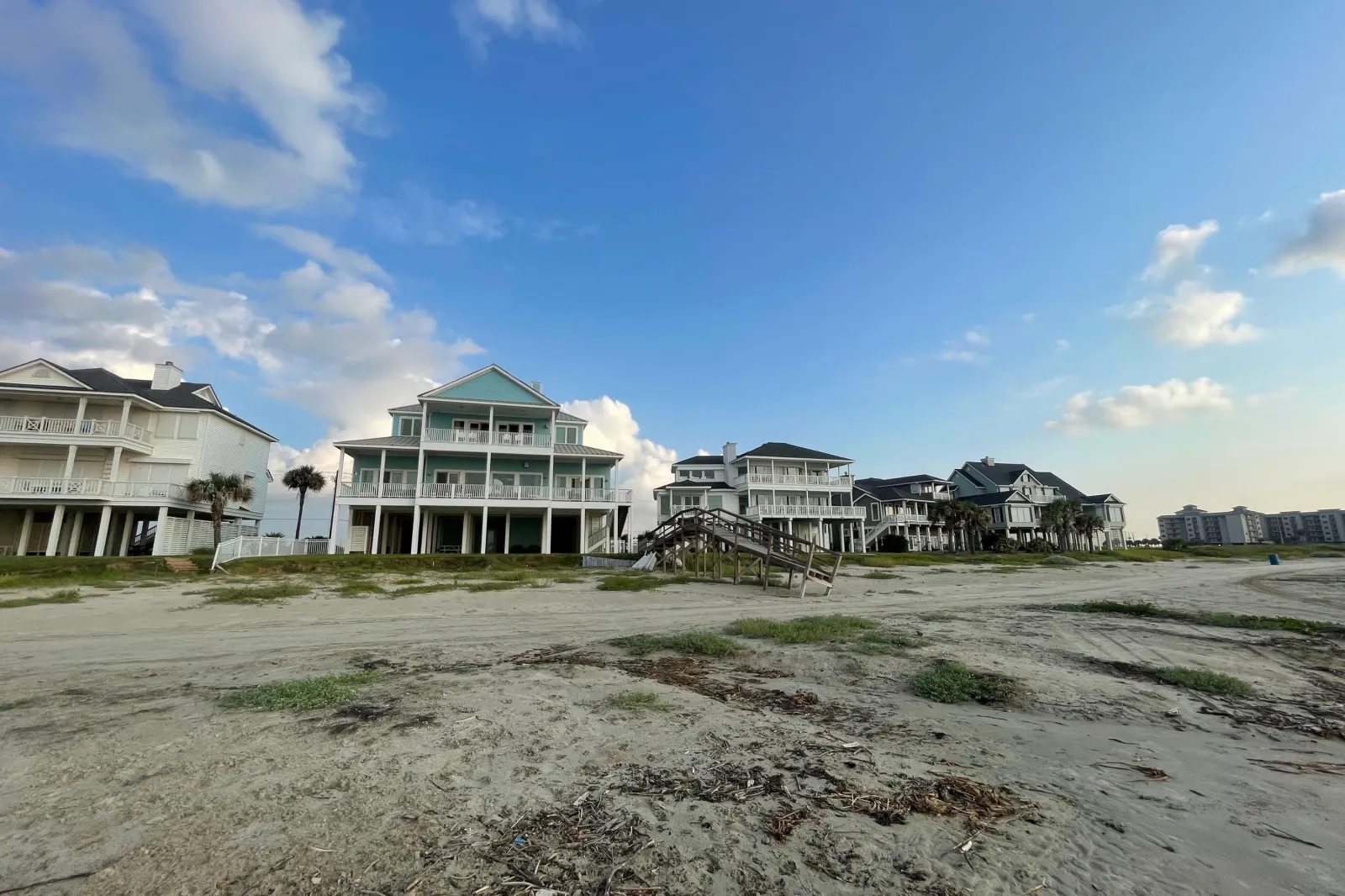
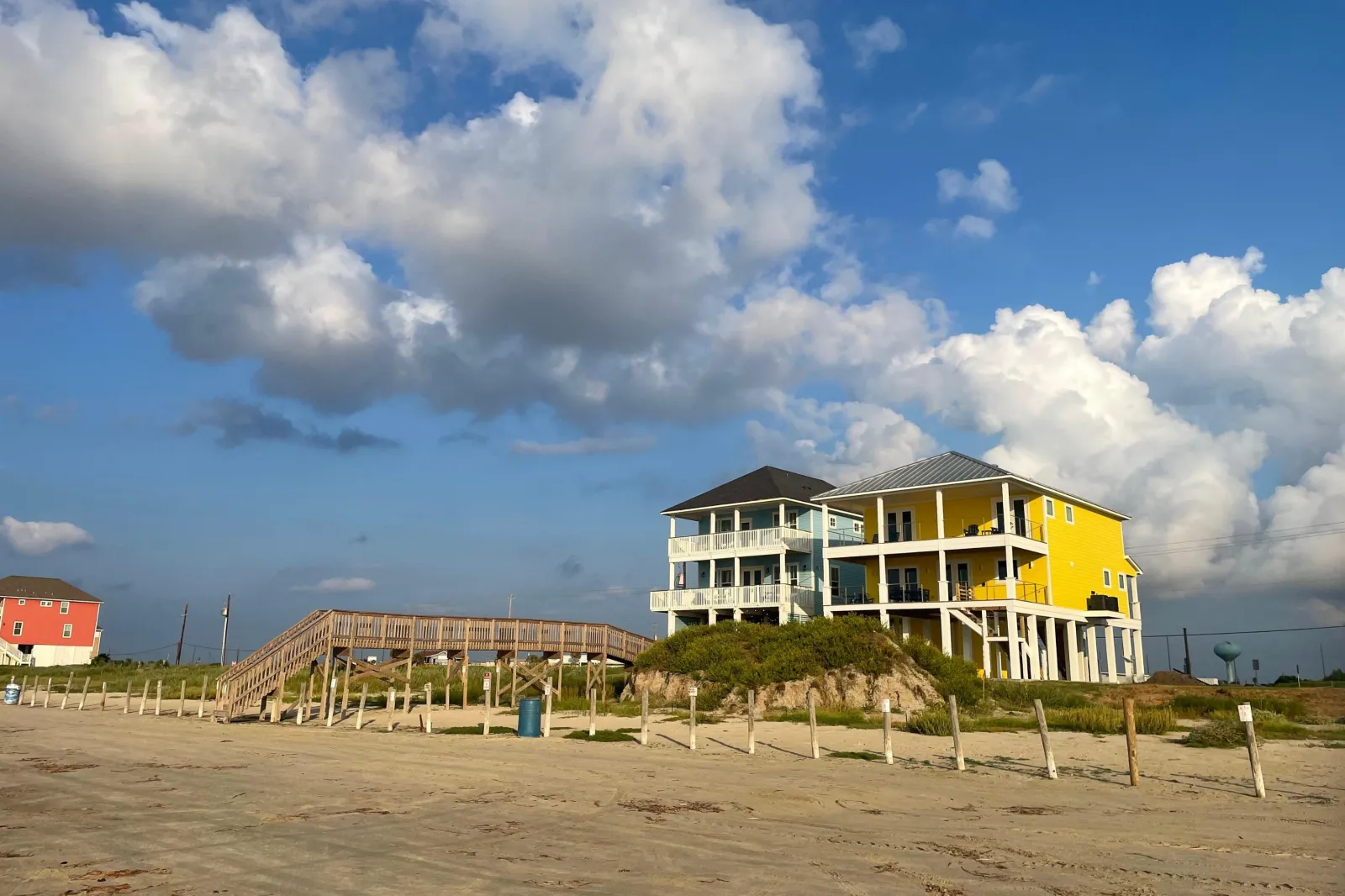
Sharing photos showing coastal erosion along the Texas coast in Galveston, Corte told Newsweek: "The walkways in these images should sit above intact dunes, yet the dunes have completely disappeared."
Corte added that their 2022 research demonstrated how coastal development alters sandy beach ecosystems. “This biodiversity is essential for the proper functioning of sandy beaches and for maintaining the benefits they provide, such as water purification, nutrient cycling, and serving as food sources for many species, including fish, turtles, and shorebirds,” he said.
“Human pressures such as high numbers of visitors, buildings constructed directly on the sand, and mechanical beach cleaning reduce both the biomass and the number of species that inhabit sandy beaches,” Corte noted.
He added: “Above all, the study showed that human impacts aren’t restricted to the place where they occur [on dry sand]. Stressors such as construction and high numbers of visitors on the upper part of the beach negatively affect biodiversity in the lower and submerged areas.”
...
A System Under Threat
Defeo emphasized that effective conservation requires protecting the entire “Littoral Active Zone”—which consists of dunes, beach, and surf zone—"in order to conserve sandy shores from the synergistic pressures.”
Corte added: “Sandy beaches form only the central portion of the Littoral Active Zone—a dynamic land–sea interface where wind and waves continually transport material between land and water.” The dunes lie on the terrestrial side, while the surf zone forms the wave-active marine side. These zones form an integrated system, and this system depends on seasonal balance.
“During storms, stronger waves cause beaches to erode, while during calmer periods, sand is gradually redeposited,” Corte said. “This natural erosion–accretion equilibrium is a key feature of healthy sandy beach ecosystems.”
“These zones form an interconnected coastal ecosystem that’s essential for environmental balance,” Corte added. “The wind carries sand from the dry area to the surf zone…and when the waves advance, they bring the sediment back to the beach. This bidirectional movement… feeds the other. When a storm comes, the dune acts as a buffer."
“Problems arise when this natural balance is disrupted. When we build near the shoreline and remove dunes or backshore vegetation… we break the system. Without this buffer, beaches cannot rebuild naturally, erosion outpaces accretion, and beaches begin to disappear.”
This is not hypothetical. “In many regions of the world,” he said, “homes along the whole coast have been increasingly damaged or lost to rising seas and storms.”
'Coastal Squeeze' and the Failures of Beach Nourishment
Even if left undeveloped, beaches could migrate inland to adapt. If the entire Littoral Active Zon is left intact, "sea level rise will still cause the shoreline to move, but beaches can migrate landward and maintain their ecological functions,” Corte explained.
Once structures such as houses, seawalls or roads are built, he added, the shoreline becomes trapped in “a phenomenon known as coastal squeeze.”
Beach nourishment—pumping in sand artificially—often becomes the last resort. “The United States has carried out nearly 2,000 nourishment projects,” Corte told Newsweek.
But, he cautioned, these interventions “are extremely expensive and often not ecologically effective,” particularly when the imported sand does not match natural sediment. “If its grain size or mineral composition is not suitable, native beach organisms cannot survive.”
According to Corte, “The most effective way to protect beaches is to preserve the dunes and backshore vegetation. In practical terms, this means avoiding the construction of houses, seawalls and roads in these areas.”
Do you have a tip on a science story that Newsweek should be covering? Do you have a question about the effects of climate change? Let us know via science@newsweek.com.
References
Bozzeda, F., Ortega, L., Costa, L. L., Fanini, L., Barboza, C. A. M., McLachlan, A., & Defeo, O. (2023). Global patterns in sandy beach erosion: Unraveling the roles of anthropogenic, climatic and morphodynamic factors. Frontiers in Marine Science, 10. https://doi.org/10.3389/fmars.2023.1270490
Corte, G. N., Checon, H. H., Shah Esmaeili, Y., Defeo, O., & Turra, A. (2022). Evaluation of the effects of urbanization and environmental features on sandy beach macrobenthos highlights the importance of submerged zones. Marine Pollution Bulletin, 182. https://doi.org/10.1016/j.marpolbul.2022.113962
Vousdoukas, M. I., Ranasinghe, R., Mentaschi, L., Plomaritis, T. A., Athanasiou, P., Luijendijk, A., & Feyen, L. (2020). Sandy coastlines under threat of erosion. Nature Climate Change, 10(3), 260–263. https://doi.org/10.1038/s41558-020-0697-0
View 0 Comments
Submit Correction
View Editorial & AI Guidelines