10
Loading video...

By Jenni Fink
Senior Editor
0
Share
Newsweek is a Trust Project member
See more of our trusted coverage when you search.Prefer Newsweek on Googleto see more of our trusted coverage when you search.
Republican lawmakers are pressing Health and Human Services Secretary Robert F. Kennedy Jr. to tighten federal oversight of infant formula, arguing that parents deserve stronger protections against heavy metals and other contaminants found in products fed to millions of babies.
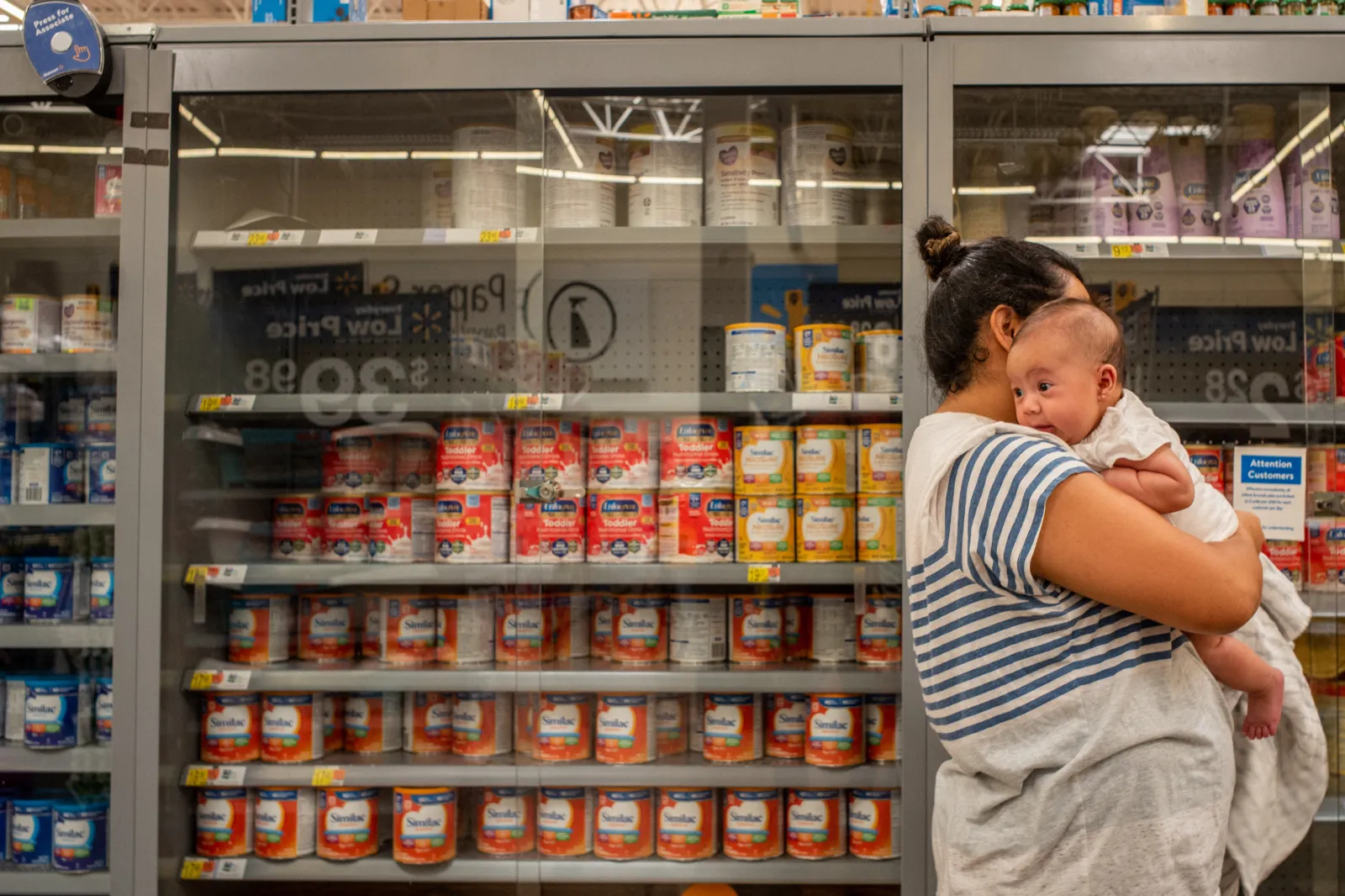
A majority of babies will receive formula during their first year of life, whether that's during the first few days, in conjunction with breast milk or as their exclusive diet. A recent Food and Drug Administration (FDA) study found that the U.S. formula supply is safe, but lawmakers and consumer advocates argue the government should establish formal limits and increase transparency, saying parents deserve stronger assurances about the products they rely on to feed their babies.
The push comes through two recently introduced bills in Congress that would require federal regulators to establish contaminant standards for infant formula and conduct additional research into the health effects of toxic metals, including arsenic, lead, cadmium and mercury. The lawmakers' efforts arrive at a complicated moment in the debate over formula safety.
Read More on News
"Under Secretary Kennedy and President Trump’s leadership, the FDA has undertaken the most extensive U.S. review of contaminants in infant formula to date. The agency has expanded testing and surveillance, worked to reduce contaminant levels, and increased transparency for parents. Infant formula is a critical source of nutrition early in life. Protecting babies and young children remains central to the Department’s Make America Healthy Again mission," an HHS spokesperson told Newsweek.
How Baby Formula Would Change Under New Bills
On July 20, Florida Representative Brian Mast introduced a bill titled the FORMULA Act of 2026 that would amend the Federal Food, Drug, and Cosmetic Act to have Kennedy establish maximum permissible levels for contaminants in infant formulas. The proposed legislation would significantly expand federal oversight of contaminants in formula.
Under the act, Kennedy would set the regulation based on several factors, including:
- Cumulative health impacts of low-level exposure of the contaminant on infant neurodevelopment
- The prevalence of the contaminant in agricultural soil and manufacturing source water
- The bioaccumulative nature of the contaminant in the human body
In setting the goals, Mast's bill also instructs Kennedy to be realistic based on the current technologies available and the cost associated with reducing contaminants.
"The testing shows our formula supply is in good shape, and this bill makes sure it stays that way—putting specific, enforceable limits on the contaminants we don’t want anywhere near our kids, and holding manufacturers accountable for meeting them,” Mast said in a statement.
Kennedy would also have to establish a protocol for manufacturers to test infant formula. Records related to the testing would have to be kept for at least 2 years after the expiration of the formula's shelf life, and the manufacturer would have to make the records available to Kennedy if he requests them. An annual report would also be submitted to Congress each year that would list manufacturers who were in violation of the standards, specific concentrations of the contaminants that were found during testing and a progress update on achieving the goal.
Among the contaminants listed in the bill are polyfluoroalkyl substances, microplastics, phthalates, synthetic pesticides and biological toxins.
...
The bill currently has one cosponsor, Republican Representative Buddy Carter of Georgia, and is waiting for a vote in the House Committee on Energy and Commerce.
“When it comes to baby formula, parents deserve the highest degree of certainty that they are giving their child a safe, nutritious meal. As a health care professional, father of three, and grandfather of eight, I am committed to ensuring our babies have the necessary resources grow up healthy and strong. This bill is a common-sense step towards improving safety standards and ensuring our children have proper care,” Carter said in a statement.
The House Committee on Energy and Commerce also has another bill about baby formula in its queue waiting for a vote. On July 27, Representative Tom Barrett, a Republican from Michigan, introduced the Safe Baby Formula Act of 2026. It would require HHS to conduct a study examining the effects of arsenic, cadmium, lead and mercury in infant formula. The study would have to be completed within a year of the act being enacted.
Along with the study, the bill would require HHS to establish action levels with regard to:
- Arsenic
- Cadmium
- Mercury
- Lead
Kennedy is required to consider the feasibility of complying with the regulation, HHS's capacity to enforce the action, and the impact of the action on domestic food security. In the past, formula shortages have left parents scrambling to find enough supply to properly feed their babies.
“Parents shouldn’t have to worry about what’s in the food they buy for their kids — especially those taking care of a newborn or military families raising kids while one parent is away defending our country,” Barrett said in a statement. “It’s time we enact serious reforms to give Americans transparency and access to real, healthy options. Whether it's a cafeteria, a commissary, or a grocery store, all of our communities deserve policies that put people’s well-being first and make it easier to raise healthy families.”
Is There Arsenic in Baby Formula?
Consumer advocates have argued for years that the United States lacks enforceable limits for many contaminants in infant formula, even as countries including members of the European Union, Canada and Australia have adopted standards. The issue gained renewed attention after independent testing by Consumer Reports found varying levels of heavy metals and other contaminants in some formula products, prompting additional scrutiny from lawmakers and regulators.
Consumer Reports found that half of the 41 types of powdered formula they tested had potentially harmful levels of at least one contaminant. The outlet noted that the problem with arsenic is that it's both naturally occurring and carcinogenic to humans and can contaminate groundwater since it originates in the Earth's crust. Inorganic arsenic, the most toxic kind, was found in several popular infant formulas, including EleCare Hypoallergenic and Similac Alimentum.
At the time, Abbott, which makes Similac, told CBS News that its formulas meet regulations set by the European Commission.
Currently, there are no established limits for arsenic in formula, but the Environmental Protection Agency (EPA) has a limit for drinking water of 10 parts per billion (PPB).
Related Story

Arsenic Found in Baby Formula: List of Products With Higher Levels
In April, the FDA released the results of what it described as the largest and most rigorous testing program ever conducted on infant formula sold in the United States. After analyzing more than 300 samples and generating more than 120,000 data points, the agency concluded that the U.S. formula supply is safe, with most products showing undetectable or very low contaminant levels.
"Most products meet a high safety standard—but even small exposures matter for newborns,” Kennedy said at the time. “We will hold manufacturers accountable, and give parents honest, transparent data they can trust. Protecting our children’s health is nonnegotiable.”
Arsenic was detected in the majority of samples, with only 18 of the 312 having no levels of arsenic. However, in all the samples, the level of arsenic was below 4.7 ppb, and 95 percent of samples had less than 2.0 ppb of arsenic, according to the FDA.
The FDA noted that small amounts of contaminants could be found in baby formula and even breast milk because they occur naturally in the environment.
Best Baby Formula
The FDA's recent analysis offers reassurance that formula products sold in the United States generally meet a high safety standard. Agency officials said there is no evidence that parents should avoid available products and noted that the vast majority of samples tested showed very low contaminant levels.
At the same time, Consumer Reports testing found meaningful differences among products when it came to contaminant levels. The organization reported that some formulas had higher contaminant levels than others while many products ranked among its preferred choices because contaminants were either not detected or were present at very low levels.
About one‑third of liquid formulas and more than half of powdered formulas earned top ratings for having very low or undetectable levels of arsenic, lead and other contaminants.
Among products the organization identified as better choices were several powdered and ready‑to‑feed formulas from well‑known brands, including certain varieties made by Enfamil, Similac, Bobbie and Earth’s Best. Some store‑brand formulas also ranked highly, offering lower‑cost options that performed well in testing:
- Enfamil Infant Formula concentrated
- Enfamil NeuroPro ready-to-feed
- Enfamil Optimum ready-to-feed
- HiPP Organic Whole Milk ready-to-feed
- Kendamil First Infant Milk ready-to-feed
- Similac 360 Total Care ready-to-feed
- Similac Advance concentrated
- Similac Pure Bliss Organic ready-to-feed
Pediatricians generally advise parents to choose a formula that meets their baby's nutritional needs and to consult healthcare providers before making changes. For most families, availability, physician recommendations and infant tolerance remain the most important factors when selecting formula.
What Kind of Water to Use for Baby Formula
While lawmakers focus on contaminants in formula itself, experts note that preparation matters too.
Heavy metals and other contaminants can also be present in water, which is one reason some public health experts encourage families to understand the quality of their local water supply. Consumer Reports noted that exposure to contaminants can come from multiple sources, including water used to prepare formula.
Ready-to-feed formulas, which are often used during the earliest times in a baby's life, are already in a liquid form and shouldn't be mixed with water because it dilutes the formula. Distilled or purified water is safe, according to baby formula manufacturer Bobbie, and is recommended because it removes contaminants.
Some pediatricians recommend boiling tap water and allowing it to cool before giving it to babies to kill potential bacteria and parasites. Parents should follow manufacturer instructions carefully and consult pediatricians if they have questions about water quality or feeding practices.
Contaminants in the water supply have been heavily debated in recent years, but for the lawmakers behind the latest bills, the focus is the formula itself. The FDA's testing results may have reassured many parents, but Republicans argue that federal regulators should go further by establishing formal contaminant limits and increasing transparency. Whether Kennedy embraces those proposals could determine the next phase of the national debate over infant formula safety.
Contact Newsweek editors on this story: Sam Wilson.
View 0 Comments
Submit Correction
View Editorial & AI Guidelines