...

By Jason Lemon
Deputy News Director
0
Share
Newsweek is a Trust Project member
See more of our trusted coverage when you search.Prefer Newsweek on Googleto see more of our trusted coverage when you search.
A bipartisan effort to overturn a major executive order issued by President Donald Trump just got the backing of two prominent Senate Republicans.
Last Thursday, the House of Representatives voted 232 to 194 to advance the Protect America’s Workforce Act, which would repeal Trump’s Executive Order 14251. That vote included 22 House Republicans who broke party lines to vote to repeal the president's move to restrict union rights at federal agencies.
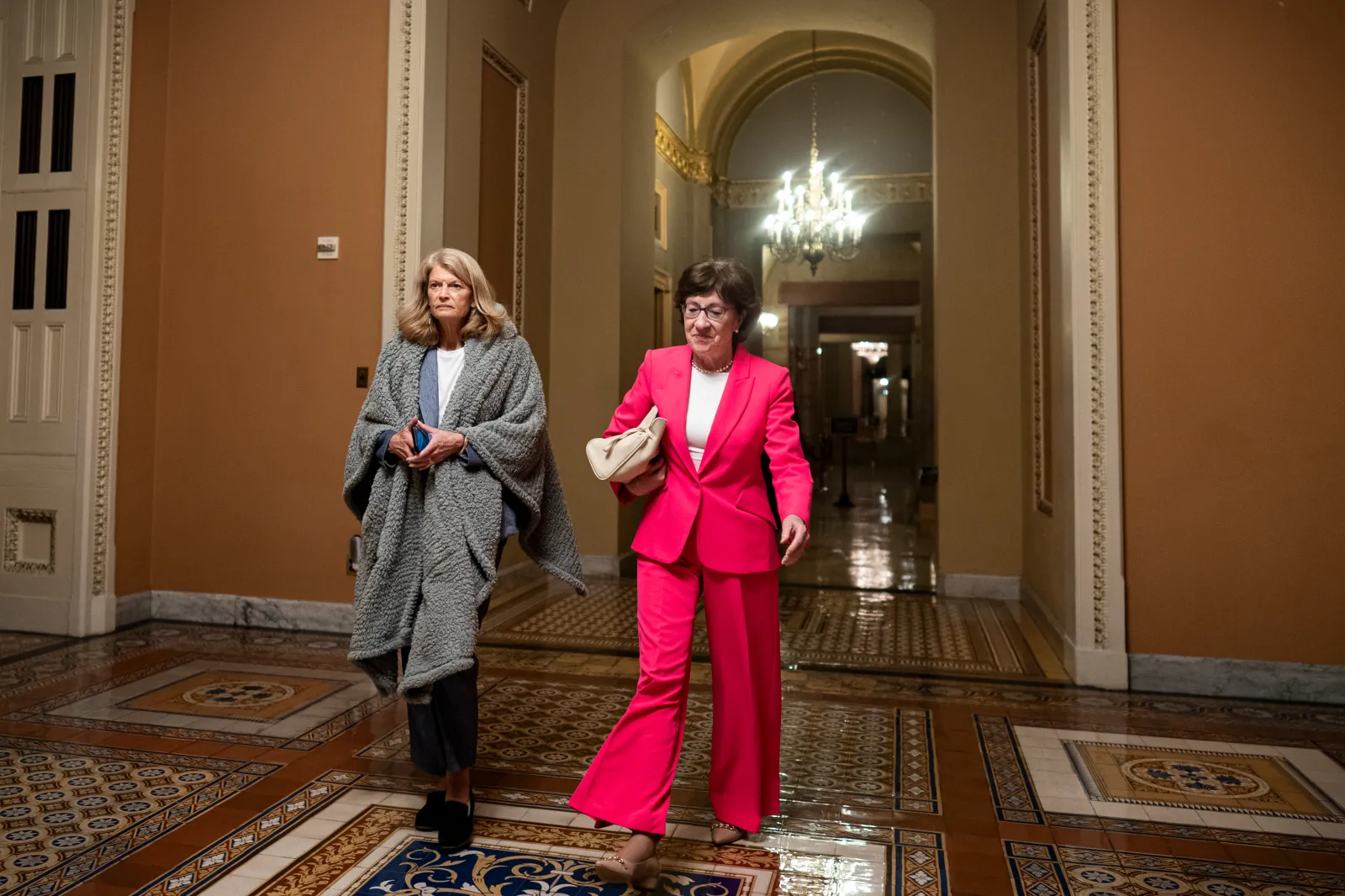
The effort then moved to the upper chamber of Congress and Republican Senators Lisa Murkowski of Alaska and Susan Collins of Maine have signed on, Fox News first reported.
Read More on Politics
"Collective bargaining rights and workplace protections have lifted up federal employees across the United States for decades, protecting them from unsafe working conditions and political retribution," Murkowski said in a statement to Newsweek.
Newsweek reached out to Collins' press representatives for comment on Tuesday afternoon.
Why It Matters
The executive order from the president curbs union bargaining rights and protections, which negotiators say affect working conditions, pay talks and workers’ ability to address grievances. Proponents of the repeal argue these rights are essential for a fair and effective federal workforce, while opponents say that loosening restrictions undermines agency efficiency and national security.
...
What To Know
The Senate version of the legislation that passed the House last week was introduced by Democratic Senator Mark Warner of Virginia back in September. The successful House version was introduced by Representative Jared Golden, a Maine Democrat, who ultimately forced a vote on it by using a mechanism known as a discharge petition. That procedure means lawmakers can force a vote on a piece of legislation against the wishes of the leadership on the condition that it has majority support in the House.
Trump signed Executive Order 14251 in March 2025, excluding select federal agencies and subdivisions from the Federal Service Labor-Management Relations Statute, which generally guarantees collective bargaining rights.
The rationale, as outlined in the order, was national security. Affected agencies included the Departments of State, Defense, Treasury, Justice and others with key national security or intelligence functions.
While the House version passed with double-digit Republican support, it's unclear whether it will be successful in the Senate. Senator Josh Hawley, a Missouri Republican who is generally seen as one of the more pro-union GOP senators, voiced some skepticism in comments to Fox News.
"I don't know," Hawley said. "The public sector unions and private sector unions seem to be two different things."
22 House Republicans Voted to Nullify the Oder
The following House Republicans voted in support of the legislation last week.
- Nebraska Republican Don Bacon
- Colorado Republican Lauren Boebert
- Illinois Republican Mike Bost
- Pennsylvania Republican Ryan Bresnahan
- Pennsylvania Republican Brian Fitzpatrick
- New York Republican Andrew Garbarino
- California Republican Darrell Issa
- Ohio Republican Dave Joyce
- New Jersey Republican Tom Kean
- New York Republican Nick LaLota
- New York Republican Mike Lawler
- Pennsylvania Republican Ryan Mackenzie
- New York Republican Nicole Malliotakis
- Alabama Republican Barry Moore
- Iowa Republican Zach Nunn
- Florida Republican Jimmy Patronis
- New Jersey Republican Chris Smith
- Minnesota Republican Pete Stauber
- Ohio Republican Mike Turner
- California Republican David Valadao
- New Jersey Republican Jeff Van Drew
- Wisconsin Republican Derrick Van Orden
What People Are Saying
Senator Lisa Murkowski in a statement to Newsweek: "Whether our neighbors are working to ensure food safety, respond to forest fires, track hurricanes, or review patents, our nation’s federal employees deserve these protections. I’m proud to stand up for our federal employees, as they work tirelessly for our nation’s benefit."
Representative Jared Golden said in a statement after the House bill’s passage: “Federal workers show up on the job every day to do the people’s work, and their limited collective bargaining rights are critical to protecting them from unfair treatment and political interference. I’m proud of the strong, bipartisan coalition that came together to pass the Protect America’s Workforce Act in the House, and I urge the Senate to quickly take up this bill and join us in standing up for workers.”
What Happens Next
It remains to be seen whether the Senate will have enough support to pass the legislation.
Update, 12/16/25 at 3:30 p.m. ET: Comments from Murkowski and additional information were added.
View 0 Comments
Submit Correction
View Editorial & AI Guidelines