AP Newsroom

By Andrew Stanton
Reporter
0
Share
Newsweek is a Trust Project member
See more of our trusted coverage when you search.Prefer Newsweek on Googleto see more of our trusted coverage when you search.
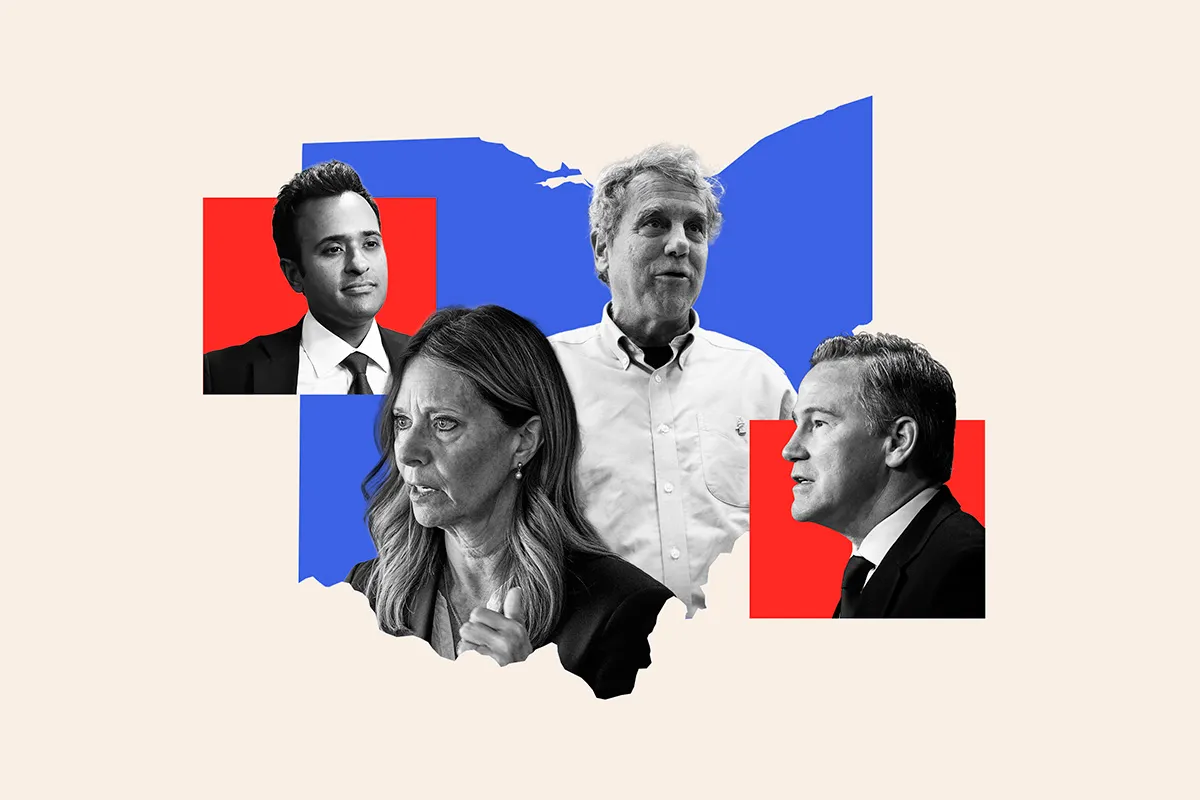
Ohio voters are heading to the polls Tuesday to make their choices in the Senate and gubernatorial primary races, both of which are viewed as competitive in the midterm elections despite the state’s increasingly conservative lean.
Democrats are hopeful about their chances in the Buckeye State this November. Once a major swing state, Ohio has become friendlier to Republicans over the past decade, supporting President Donald Trump in each of his presidential runs. But an unfavorable national environment fueled by his declining approval rating could boost Democrats this year.
The primary elections on Tuesday will set the contours for the general election.
Read More on Politics
Democrats winning one of or both of the major Ohio statewide races in 2026 would be a major blow to the GOP. Historically, the party in the White House loses seats in the midterms, and Trump’s approval has declined since his return to office last year, fueling Democrats’ optimism about their ability to compete in more conservative states like Ohio.
Ohio Senate Race
Senator Jon Husted, a Republican, was appointed by Governor Mike DeWine to fill the rest of Vice President JD Vance’s term in office. Former Senator Sherrod Brown is viewed as the likely Democratic nominee. Brown lost reelection in 2024 but is viewed as a strong candidate due to the race’s close margin and his strong performance in 2018.
The race is viewed by the Cook Political Report as a pure toss-up ahead of November.
Prediction markets favored Democrats on Monday evening, with Kalshi giving Democrats a 60 percent chance and Polymarket giving Democrats a 58 percent chance of winning in November.
What Do Polls Show About Ohio Senate Race?
A Bowling Green State University and YouGov poll, which surveyed 1,000 registered voters from April 7-14, showed Husted with a slight lead over Brown. Fifty percent of respondents said they would vote for Husted, while 47 percent said they would support Brown.
A Quantus Insights poll, which surveyed 784 likely voters from March 13-14, showed Husted up a single point over Brown. Husted received 45.5 percent support, compared to Brown’s 44.4 percent.
AP Newsroom
Ohio Governor Race
DeWine, a popular governor who is viewed as more of a centrist, is unable to run for a third term, leaving the seat open for the midterms. On the Republican side, Vivek Ramaswamy is viewed as the frontrunner to win the party’s nomination. Ramaswamy rose to prominence during his 2024 presidential bid and his criticism of “woke” corporate culture.
Amy Acton, who led the Ohio Department of Health during the COVID-19 pandemic, is viewed as the presumptive Democratic nominee.
Kalshi and Polymarket gave Democrats a 54 percent chance of winning in November as of Monday evening.
What Do Polls Show About Ohio Governor Race?
Polls show a close race in the Ohio gubernatorial election. The BGSU poll showed Ramaswamy leading Acton by a single point. Forty-eight percent of respondents said they would back him, compared to 47 percent supporting Acton in that poll.
A Quantus Insights poll conducted March 13-14 among 809 likely voters found Acton with 46 percent support and Ramaswamy with 45 percent, while 6 percent were undecided and 3 percent favored another candidate. The poll had a margin of error of plus or minus 3.8 percentage points.
An EMC Research poll conducted February 10-22 among 1,343 likely voters showed Acton leading 53 percent to 43 percent, with a margin of error of plus or minus 2.7 percentage points.
Sabato’s Crystal Ball, an elections forecaster, shifted the race from “Likely Republican” to “Leans Republican” earlier this year. Analysts Kyle Kondik and J. Miles Coleman wrote at the time Ramaswamy is well funded and has begun sustained television advertising but the broader political environment this year appears less favorable to Republicans than in recent cycles.
They said Acton faces challenges tied to her visibility during the state’s COVID-19 response, writing she “may just remind voters of a time they do not want to remember.”
“While Acton does have state government experience, this is her first campaign," they wrote. "She likely has appeal to the suburbanites who have left the GOP in the Trump era, but even with a potentially favorable midterm electorate, Acton is going to need to win some Trump voters to her side in a state where realignment has subtracted many more voters from the Democratic column than it has added.”
Ohio’s Path From Battleground to Red State
Ohio has shifted rightward in recent cycles.
Trump carried the state by about 11 percentage points in 2024, an improvement on his 2020 and 2016 performances, when he won by about 8 points in each. But President Barack Obama narrowly carried Ohio in 2008 and 2012. It has shifted as Trump performed well among the state’s working-class voters.
Trump made inroads with white, working-class voters who were previously more divided. His gains came from rural counties as well as the northeastern region near Cleveland. Democrats have gained some ground in Cincinnati and Columbus suburbs, but not enough to offset Republicans' gains in the rural areas.
Still, Ohio has been competitive in some recent elections. Brown won reelection in 2018, then lost in 2024 by fewer than 4 percentage points. Democrats hope their candidates can improve on that in a more favorable national environment in November.
View 0 Comments
Submit Correction
View Editorial & AI Guidelines