...

By Andrew Stanton
Reporter
0
Share
Newsweek is a Trust Project member
See more of our trusted coverage when you search.Prefer Newsweek on Googleto see more of our trusted coverage when you search.
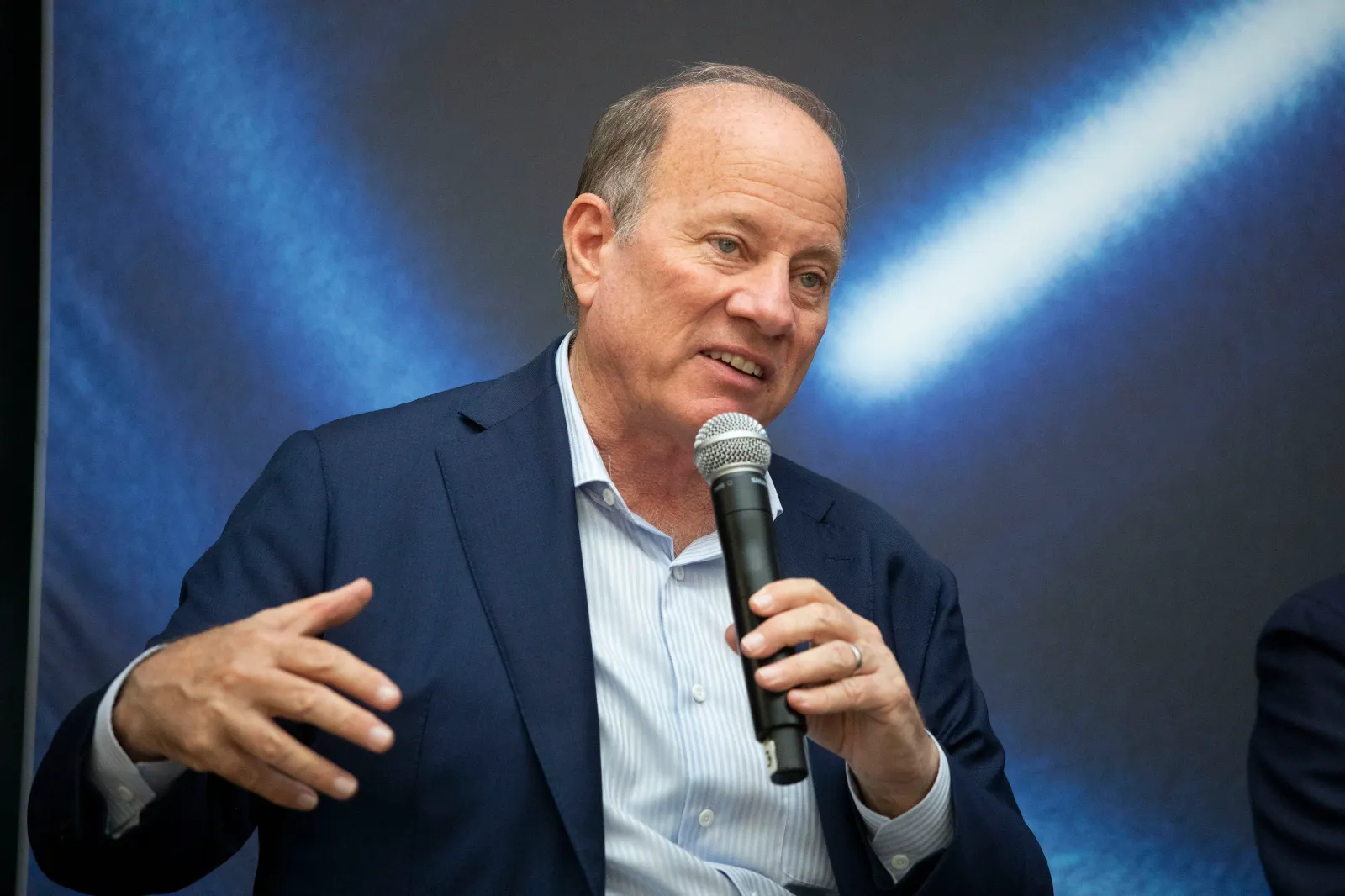
Democrats’ chances of winning the Michigan gubernatorial race surged after independent candidate Mike Duggan dropped out of the race to succeed Governor Gretchen Whitmer.
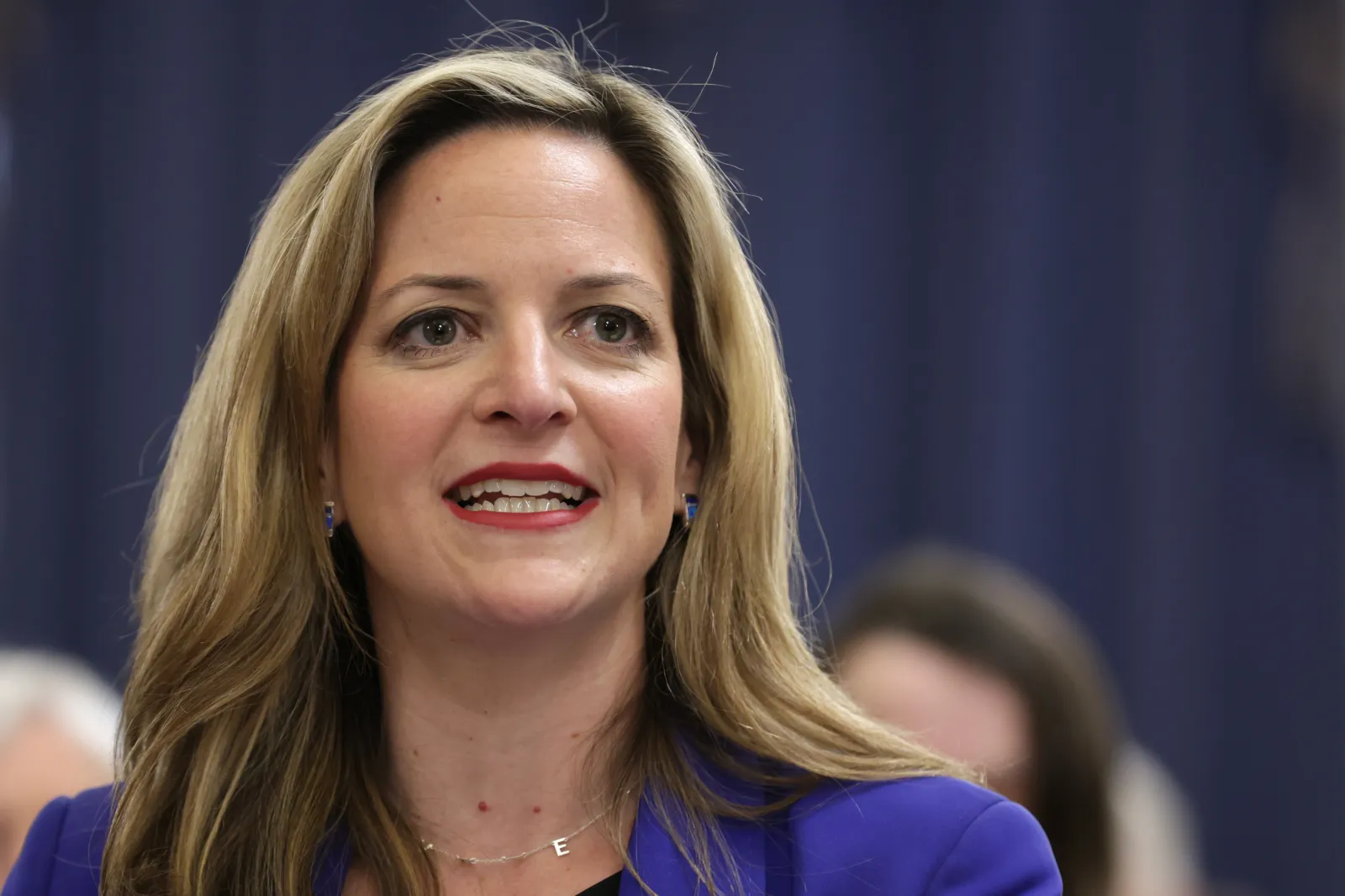
The race for the Michigan governor's seat is poised to be among the most competitive of the 2026 midterm elections, with both parties viewing it as winnable. Democratic Secretary of State Jocelyn Benson is viewed as the front-runner for the party’s nomination, while the GOP primary is more competitive. Michigan is an evenly divided battleground state that backed President Donald Trump by just under two points in the 2024 presidential race.
Duggan, the former mayor of Detroit, threatened to become a headache for Democrats if he splintered the left-leaning vote in November, giving Republicans an opportunity to flip the seat despite a national environment expected to favor Democrats. His exit was viewed as a boost for Benson in prediction markets, a key gauge of sentiment about the race's outcome.
Read More on News
Newsweek reached out to leading campaigns for comment via email.
Why Did Mike Duggan Drop Out of the Race?
Duggan announced his exit from the race in a letter to his supporters on Thursday, writing that while there was “excitement for real change” in his independent bid, the mood of the country had “shifted” by April amid outrage over the Iran war.
“But for the public in general, our internal polling showed the intense anger over gas prices and Iran was boosting Democrats in every office nationally. The Chamber poll last week showing we’d fallen 11 points behind the Democratic candidate reflects that reality,” he wrote.
...
Polling, as well as challenges building a national fundraising base, contributed to the decision, he wrote.
“I got into this race to try to change our politics, not to be a spoiler. I’m still hopeful our campaign will prove to have a real long-term impact. 23% support in the last poll means more than 1.6 million Michigan voters are today looking for a Governor candidate serious about reducing the toxic partisan politics,” he wrote. “ If the candidates on the ballot this year take that message to heart and truly reach out to those voters, we will have accomplished something important.”
Benson, in a statement, wrote that she welcomes his ideas and supporters.
“We may not always agree on everything, but we share a commitment to building a stronger Michigan,” she wrote.
Michigan GOP Chairman Jim Runestad said in a statement that voters “saw through a lifelong Democrat masquerading as an independent.”
“Now attention turns to Jocelyn Benson, who still hasn’t answered serious ethical questions, while Republicans will nominate a proven leader focused on Michigan families,” he said.
Duggan Exit Is 'Seismic' Shift
David Dulio, a political science professor and director of the Center for Civic Engagement at Oakland University, told Newsweek that Duggan’s exit has been a “seismic shift” in Michigan politics.
“We won’t know the full effect until people have had a chance to digest it, but I think the conventional wisdom is that Duggan was pulling more votes from Jocelyn Benson than say John James, so it stands to reason that Jocelyn Benson is probably most helped by Duggan’s exit,” he said.
The economy and education are going to be two of the major issues shaping the gubernatorial race, he said.
Marjorie Sarbaugh-Thompson, a Wayne State University political scientist, told Newsweek that it was always a “wild card which party would lose more votes to a Duggan campaign in the general election.”
“I suspect that both political parties are heaving a sigh of relief. It was just really hard to predict what impact he would have,” she said.
Michigan was once the home of independent voters and ticket-splitters, making it “fertile ground” for an independent candidate like Duggan. But currently, public opinion polls show more political polarization.
“That Michigan is not the political landscape now. I suspect that the main dynamic in the general election will be the effect of the national battle between the two major political parties and whether any other third‑party candidates gain some traction,” she said.
Democrats Surge in Prediction Markets
Following Duggan’s announcement, Democrats surged in prediction markets measuring the likelihood of victory in November. Democrats’ chances of victory jumped from 67 percent to 84 percent on Kalshi and from 70 percent to 82 percent on Polymarket from Wednesday to Thursday.
...
Prediction markets allow traders to buy and sell contracts tied to political outcomes and current events, aggregating real‑money wagers into probability estimates. Prices fluctuate as traders react to polling, fundraising, candidate developments and broader political trends. They measure trader sentiment at a given moment but do not always accurately predict the future.
Who Are the Candidates in the Michigan Governor's Race?
While Benson is viewed as the leading Democratic candidate, several Republicans are running, including Representative John James, businessman Perry Johnson, former Attorney General Mike Cox and GOP Senate Leader Aric Nesbitt.
What Do Latest Polls Show About the Michigan Governor's Race?
Duggan is a former Democrat-turned-independent, so some in the party feared he could siphon more votes from Democrats than from Republicans in November, bolstering the GOP’s chances of winning the race, particularly if he put up a stronger-than-expected showing.
But polls have shown Benson with an advantage.
Mitchell Research Poll (May 1-7, 400 likely voters)
- Secretary of State Jocelyn Benson: 42 percent
- Representative John James: 30 percent
- Former Detroit Mayor Mike Duggan: 13 percent
- Secretary of State Jocelyn Benson: 42 percent
- Businessman Perry Johnson: 32 percent
- Former Detroit Mayor Mike Duggan: 13 percent
- Secretary of State Jocelyn Benson: 41 percent
- Former Attorney General Mike Cox: 30 percent
- Former Detroit Mayor Mike Duggan: 14 percent
Glengariff Group (April 28-May 1, 600 respondents)
- Secretary of State Jocelyn Benson: 34 percent
- Representative John James: 29 percent
- Former Detroit Mayor Mike Duggan: 23 percent
- Secretary of State Jocelyn Benson: 34 percent
- Businessman Perry Johnson: 26 percent
- Former Detroit Mayor Mike Duggan: 23 percent
Michigan Is a Key Swing State
Michigan is roughly evenly divided between Democrats and Republicans and has swung between both parties in recent elections.
Former President Barack Obama carried the state easily in both of his runs—by more than 16 points in 2008 and by just under 10 points in 2012. But Trump flipped it in 2016, carrying it by less than half a percentage point.
Trump lost the state in 2020, when former President Joe Biden carried it by just under 2 points. But Michigan flipped back to the Republican Party in 2024, with Trump winning it by about 1.4 points—the strongest showing for a Republican presidential candidate since 1988.
At the same time, Democratic Senator Elissa Slotkin managed to win an open seat by less than half a percentage point.
The state has become more competitive for Republicans due to a Democratic collapse in more rural areas that once leaned Democratic. Trump’s inroads with white working-class voters helped carry him to victory in the state. Harris’ collapse with Muslim and Arab American voters in 2024 also contributed to Trump’s victory in Michigan. Those voter groups will be crucial to the gubernatorial race this year.
At the same time, Democrats have made gains in suburbs of cities like Detroit and Grand Rapids, helping to offset those losses.
Michigan also has a competitive Senate race this year to replace retiring Democratic Senator Gary Peters. That race is viewed as a toss-up.
Who Is Jocelyn Benson?
Benson has served as the Michigan secretary of state since 2019, winning reelection by nearly 14 points in 2022. Before her time in office, she was dean of the Wayne State University Law School and worked for the Southern Poverty Law Center and Ross Initiative in Sports for Equality.
View 0 Comments
Submit Correction
View Editorial & AI Guidelines