
...

By Kate Plummer
Senior US News Reporter
0
Share
Newsweek is a Trust Project member
See more of our trusted coverage when you search.Prefer Newsweek on Googleto see more of our trusted coverage when you search.
An Indian conglomerate controlled by billionaire Mukesh Ambani shipped hundreds of thousands of dollars’ worth of refinery catalysts to Russia during the Ukraine war, according to trade data reviewed by Newsweek—a legally complex but politically sensitive flow of industrial inputs that could draw scrutiny as Washington debates how aggressively to enforce or expand sanctions on Moscow.
Between April 2023 and January 2025, Reliance Industries exported roughly half a million kilograms of fluid catalytic cracking catalysts, or FCCs, to Russia across 31 shipments, according to bills of lading aggregated by ImportGenius and shared with the anti‑corruption research group DeKleptocracy Project (DKP).
Newsweek independently verified the export records with ImportGenius, which estimated the total value at about $420,000.
Read More on News
FCCs are chemical inputs used in oil refining, which play a critical role in refinery efficiency, making the shipments notable because Russia’s energy sector remains a central source of state revenue during the war with Ukraine, even as Western sanctions seek to constrain it.
No Evidence of Wrongdoing, Just Political Sensitivity
There is no indication the shipments violated U.S. or European sanctions, and Newsweek is not alleging wrongdoing.
Sanctions regimes largely target specific entities and categories of goods, not all industrial inputs.
Still, specialists say the exports are likely to draw scrutiny because Reliance is connected to the Trump Organization through the licensing deal with Reliance affiliated entity, Reliance 4IR Realty Development, at a time when the U.S. administration is deciding how aggressively to enforce or expand Russia-related sanctions.
...
Mark Temnycky, a non-resident fellow at the Atlantic Council think tank’s Eurasia Center, told Newsweek: “This is significant because oil refining is central to Russia's ability to generate revenue from its energy sector and finance its ongoing invasion of Ukraine.”
He added: “Reliance [Industries] exports directly help Russia address one of its most identifiable industrial weaknesses.”
Newsweek is not alleging that any of these transactions violated sanctions or export-control laws. Experts said that determining any such allegation would depend on factors including product classification, end user, origin, and whether any U.S.-origin components or technology were involved, potentially bringing the transaction under U.S. export controls.
Restricting Russia’s Oil Revenue
U.S. sanctions and export-control laws restrict flows of money and goods to Russia by prohibiting dealings with certain entities or sectors and regulating the sale of certain products abroad.
Export restrictions do not generally apply to foreign firms, but they can still be triggered if U.S.-controlled inputs are part of the supply chain or if sanctioned end users are involved.
Daniel Fried, a former U.S. ambassador to Poland who previously served as the assistant secretary of state for European and Eurasian affairs, told Newsweek: “The U.S. and E.U. have restricted sale to Russia of certain refinery catalysts, so Reliance [Industries]’ sale of them could be a violation of export regulations. The export restrictions do not apply to foreign firms, but if Reliance Industries has inputs from U.S. sources, they might.”
Newsweek has not established that the shipments contained U.S.-origin inputs, violated export controls, or breached sanctions.
The White House, Reliance Industries, the Kremlin, and the U.S. Treasury did not respond to Newsweek’s request for comment on this story.
Russia’s Call For Catalysts
As part of a 2025 project called New Materials and Chemistry, the Russian Agency for Technological Development published a priority chemical list, outlining the chemicals Russia needs to develop its chemical industry and offering grants of up to 150 million rubles (or just over $2 million) for critical chemical products.
According to a DKP translation of the list, nine of the 99 priority chemicals on the list were FCC catalysts and other catalysts related to oil refining.
Russia can officially refine about 6.5 million barrels of oil per day, according to data supplied by research and analysis body Carnegie Politika, although well over 30 percent of the refining capacity has been damaged during the war with Ukraine.
...
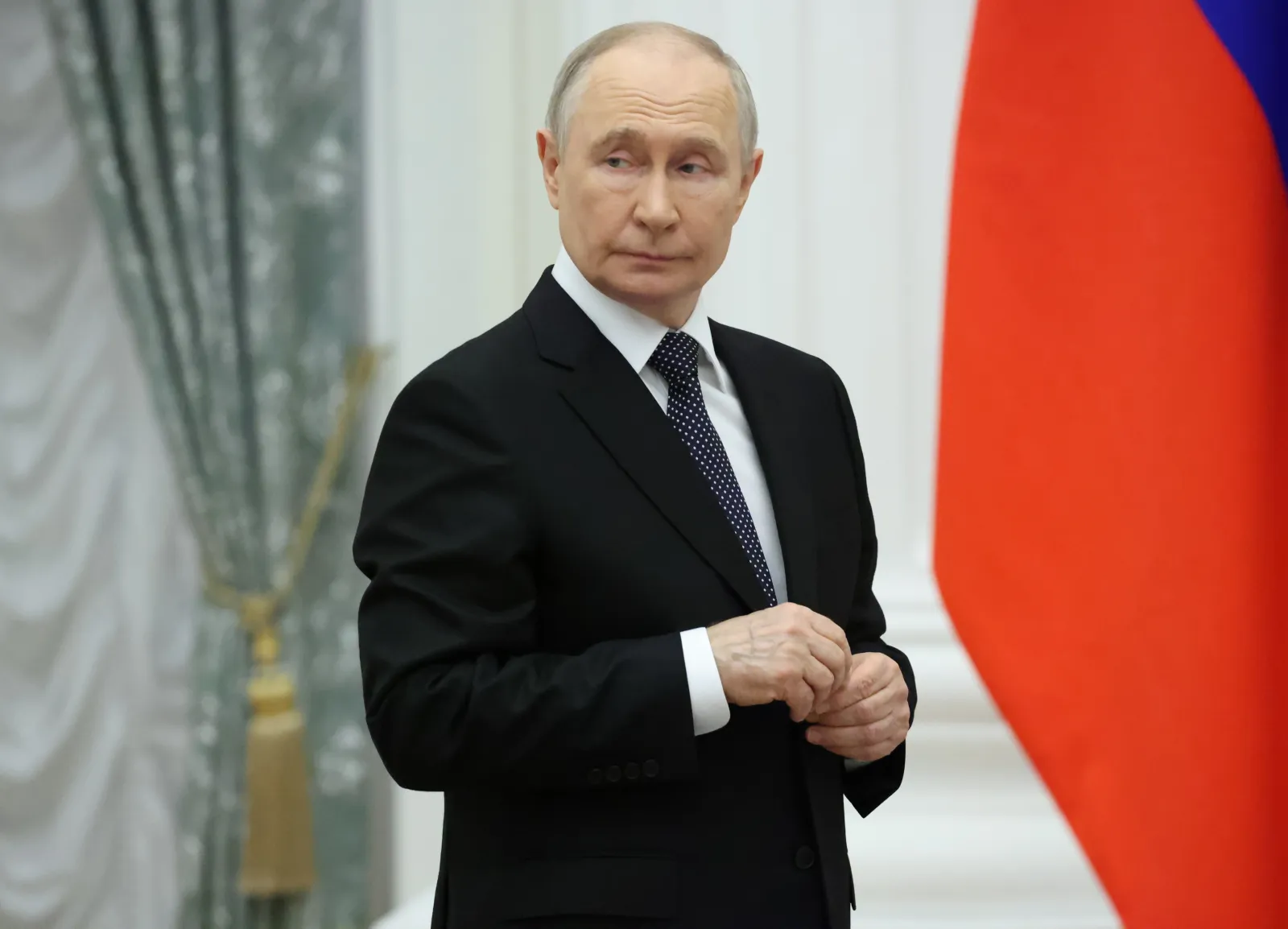
In an announcement about the New Materials and Chemistry project, Russian President Vladimir Putin said: “Catalysts also represent a cross-cutting priority. These are indeed the very foundation of chemistry–substances that determine reaction rates. It is imperative to ensure not only their development, but also subsequent testing, pilot production, and ultimately the broad industrial utilisation and scaling-up of domestic solutions.”
Speaking to Newsweek, Hilary Ingham, a professor in economics at the University of Lancaster in the U.K., said that Reliance Industries “appears to be supplying a technically important input into Russia’s refining system at precisely the point where Western policy is trying to constrain Russia’s energy capacity and revenues. FCC catalysts are important, without them refineries become less efficient and harder to operate at scale.”

...
Trump’s Links to Reliance Industries
Reliance Industries, which operates the Jamnagar Refinery Complex in Gujarat, India, the largest single-site oil refining facility in the world, is owned by Ambani, who until April 2026 was Asia’s richest person.
According to the Bloomberg Billionaires Index, he has a net worth of $90.8 billion.
Ambani attended Trump’s inauguration in January 2025 and, in May 2025, he was a guest at a state dinner in Doha, hosted by the Emir of Qatar. Trump and his daughter, Ivanka Trump, attended Ambani’s son’s pre-wedding celebrations in 2024, alongside her husband, Jared Kushner.
According to the president’s 2025 annual financial disclosure report, Reliance 4IR Realty Development, an affiliated entity of Reliance Industries, paid the Trump Organization, the holding company that runs Trump’s business empire of homes, luxury hotels, casinos and golf courses, a $10 million development fee for licensing the Trump name in Mumbai.

...
Meanwhile, in March 2026, Trump announced the construction of a refinery in Brownsville, Texas, saying it would be backed by investment from Reliance Industries, which would buy the products the refinery produces.
While the company is not a public-sector or government-owned initiative and is being developed by a private company called America First Refining, Trump celebrated the deal. On his social media platform Truth Social, Trump wrote: "Thank you to our partners in India, and their largest privately held Energy Company, Reliance Industries, for this tremendous investment.”
America First Refining did not respond to Newsweek’s request for comment.

...
An ‘Obvious Appearance Problem’
Ingham said: “The Trump problem is more political and ethical than legal. Reliance [Industries] has had highly visible links to the Trump world.”
She added: “This in and of itself does not prove wrongdoing, but it creates an obvious appearance problem if the same company is also involved in trade that may indirectly support Russia’s oil-refining resilience.”
Reliance Industries’ Relationship With Russia
Reliance Industries has garnered scrutiny for its commercial relationship with Russia in the past. In November 2025, it said it stopped importing Russian crude oil to comply with an EU ban on fuel imports and U.S. sanctions on Russian oil producers.
In February 2026, it resumed purchases of Russian oil in a sanctions-compliant manner.
Reliance is not itself sanctioned.

...
U.S. and Russia Ties
The new revelations follow previous Newsweek reporting that has outlined how the Kremlin has continued trading throughout its war with Ukraine. Vessels that have been sanctioned by the U.S. shipped more than $11 billion worth of Russian oil last year.
Meanwhile, from January 2024 to January 2025, the U.S. imported $192 million in oil products from Nayara Energy, a refiner backed by Rosneft Energy—a Russian company that is sanctioned by the U.S.
In January 2025, Newsweek revealed that American firms in Russia paid the country $1.2 billion in profit taxes in 2023.
Electronic components manufactured by U.S. companies are still turning up in Russian fighter jets via intermediary trade routes, according to a July report from the International Partnership for Human Rights (IPHR), the Independent Anti-Corruption Commission (NAKO) and media outlet Hunterbrook that was shared exclusively with Newsweek.
Future Pressures
In response to the U.S. and Israel’s war with Iran, which resulted in Iran closing the Strait of Hormuz (through which most Middle East oil flows) Trump announced a sanctions waiver allowing countries to purchase Russian oil and petroleum products until May 16.
In May, 14 Democratic senators urged Treasury Secretary Scott Bessent to reimpose sanctions on Russian oil, warning in a letter that the temporary measure could boost Putin’s coffers.
View 0 Comments
Submit Correction
View Editorial & AI Guidelines