...

By Joe Edwards
Reporter
0
Share
Newsweek is a Trust Project member
See more of our trusted coverage when you search.Prefer Newsweek on Googleto see more of our trusted coverage when you search.
A powerful solar storm hammered Earth on Monday, with experts reporting that this was the most powerful solar radiation storm seen since October 2003.
"This is the largest solar radiation storm in over 20 years," the Space Weather Prediction Center said on Monday.
What Causes a Solar Storm?
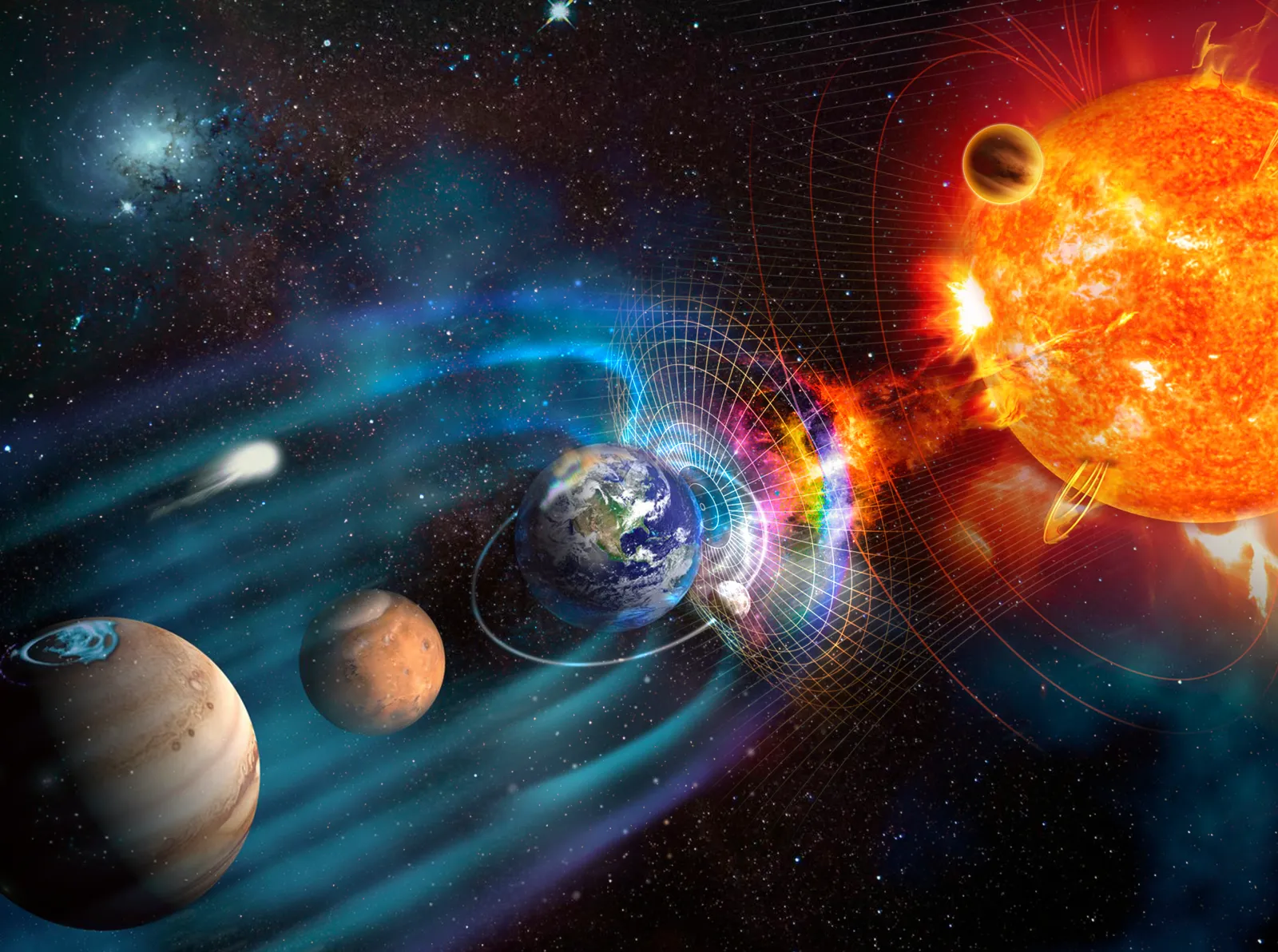
NASA explains that a solar storm occurs when the sun ejects a sudden surge of particles, energy, and magnetic fields into space.
Read More on News
When a solar storm is aimed at Earth, it can disrupt the planet’s magnetic field—triggering what’s known as a geomagnetic storm—which may lead to radio outages, power disruptions, and vivid auroras. Despite this, people on the ground are safe because Earth’s magnetic field and atmosphere shield us from the worst of these storms, it said.
...
“The sun creates a tangled mess of magnetic fields—kind of like a disheveled head of hair after a fitful night of sleep. These magnetic fields get twisted up as the sun rotates—with its equator rotating faster than its poles,” NASA said.
“Solar storms typically begin when these twisted magnetic fields on the sun get contorted and stretched so much that they snap and reconnect (in a process called magnetic reconnection), releasing large amounts of energy.”
The Space Weather Prediction Center (SWPC) said on Monday that potential effects from the solar radiation storm were primarily limited to space launch, aviation, and satellite operations.
“High flying interests, mainly along polar routes should monitor the situation,” the agency advised.
In a Tuesday geomagnetic storm alert, the SWPC said cautioned over potential effects on satellites and GPS systems.
“This solar radiation storm—we haven’t seen one at this level… since the year 2003. This is all related to a strong solar flare that happened yesterday, that caused these enhanced energetic powers to shower over Earth, along with this blast of coronal mass ejection—this strong magnetic fields and solar winds that move through space," SWPC service coordinator Shawn Dahl said in a video update on Monday.
“When they arrive here, they can arrive like they did today, with intensification in the normal geomagnetic levels we have.”
Where To See Northern Lights in US Today

...
The SWPC’s aurora viewline forecast suggests that the northern lights may be visible in at least 24 states tonight, including:
- Alaska
- Washington
- Oregon
- Idaho
- Montana
- Wyoming
- North Dakota
- South Dakota
- Nebraska
- Minnesota
- Iowa
- Wisconsin
- Illinois
- Indiana
- Michigan
- Ohio
- Pennsylvania
- New York
- Connecticut
- Rhode Island
- Massachusetts
- Vermont
- New Hampshire
- Maine
Dahl told Newsweek on Tuesday that "mainly just the north portions of the northern tier of the U.S. might see the northern lights" Tuesday night.
SWPC operations chief Mike Bettwy previously told Newsweek that general viewing tips for the northern lights include viewing late at night, away from city lights, and taking pictures with mobile phones or other technology “since the aurora may be visible on those devices even though the human eye may not always detect it.”
The SWPC’s aurora viewline forecast is regularly updated on its website.
Update 01/20/26, 2:19 p.m. ET: This article was updated with comment from SWPC service coordinator Shawn Dahl.
View 0 Comments
Submit Correction
View Editorial & AI Guidelines