
By Aristos Georgiou
Science and Health Reporter
0
Share
Newsweek is a Trust Project member
See more of our trusted coverage when you search.Prefer Newsweek on Googleto see more of our trusted coverage when you search.
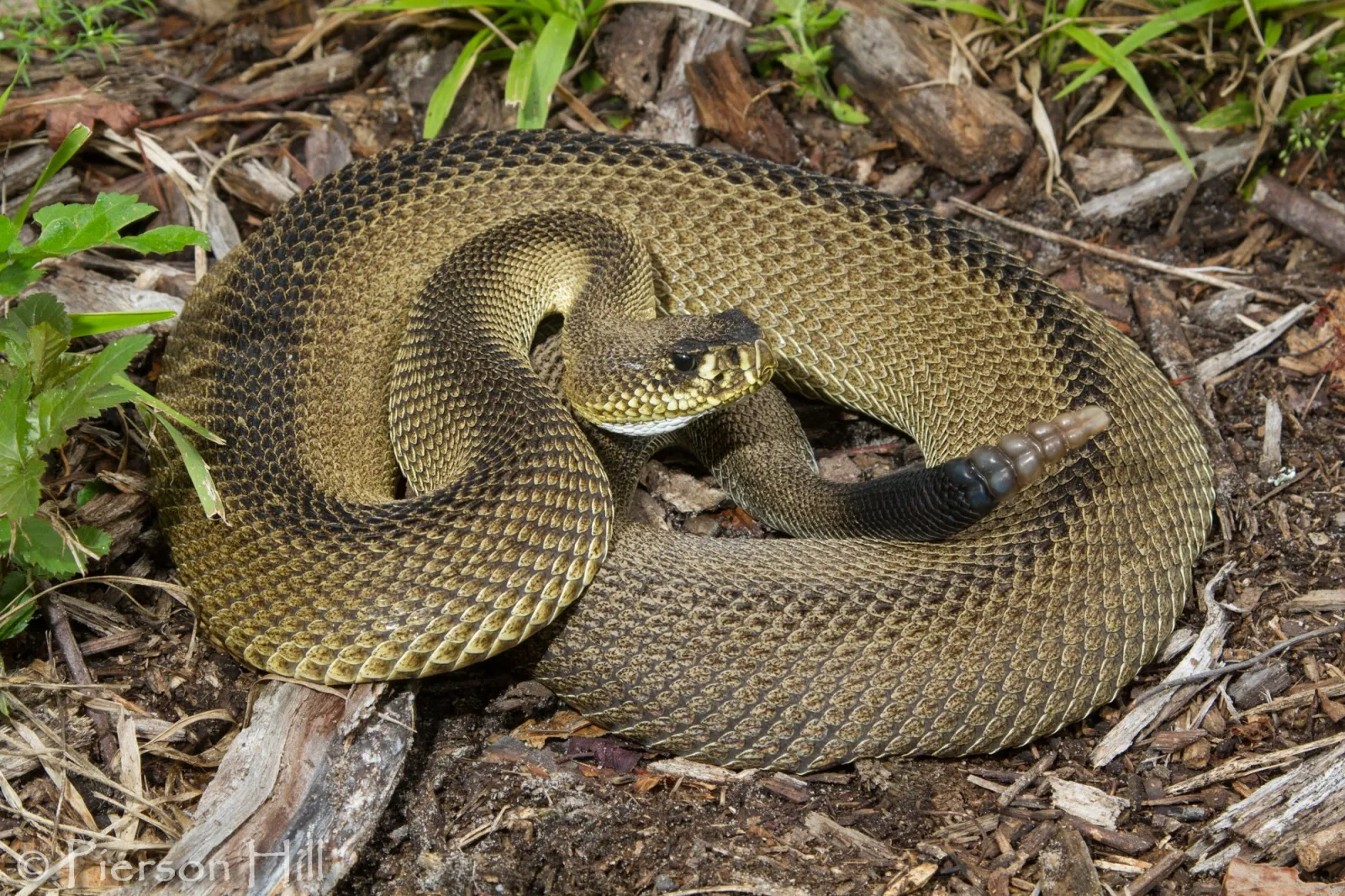
A researcher has discovered an "extremely unusual patternless" eastern diamondback rattlesnake in northern Florida.
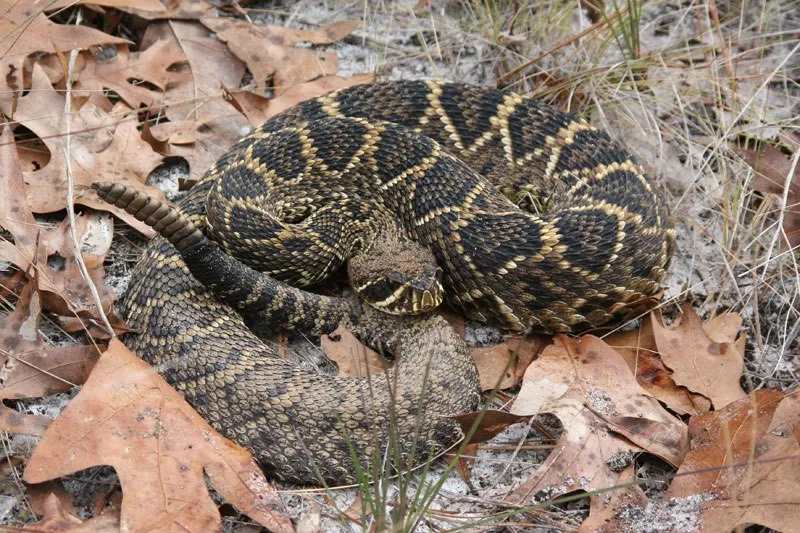
The vast majority of eastern diamondbacks—a large, venomous rattlesnake found throughout the state—have brown, tan or yellow skin with brown diamonds along their back that have a cream outline, according to the Florida Fish and Wildlife Conservation Commission (FWC).
But Pierson Hill, a FWC biologist, came across a rare mutant diamondback, that has no diamond pattern on its back.
Read More
Sharks May Start Feasting on Hundreds of Dead Whales in Mass Stranding Off Tasmania, Authorities Warn3 min read

Weak Stranded Whales in Australia to Be Euthanized, Hundreds Already Dead4 min read

Grizzly Bear Kills Hunter in Alaska in First Ever Fatal Attack at Wrangell-St. Elias National Park2 min read

Eastern diamondbacks grow to an average of 3-6 feet in length and can weigh up to 10 pounds, making them the longest and heaviest venomous snakes in North America, according to the FWC.
They like to spend most of their time hidden in vegetation, waiting for prey. In the winter months they tend to take shelter in gopher tortoise burrows or tree stump holes.
Upon discovering the unusual patternless diamondback, Hill fitted the snake with a microchip so it can be identified by scientists in future, before he released the animal.
"This color morph is exceptionally rare—only a small handful of patternless diamondbacks have been documented by biologist," the FWC's Fish and Wildlife Research Institute wrote in a Facebook post.
...
When you compare Hill's picture of the patternless diamondback to an image of normal specimen (see below) the differences between the two are clear.
According to Hill, it is "very likely" that this patternless trait is heritable given that it has been seen several times before—albeit rarely. The biologist said that both parents of the snake would need to pass on one or more recessive gene variants—known as alleles.
Each gene has two copies—one inherited from each parent. When the copies of each of these differ, they are referred to as alleles.
Recessive genes can be passed down the generations with their effects masked by the presence of dominant genes, until an organism is born that has two recessive alleles for that specific gene.
...
Eastern diamondbacks are one of six venomous snake species that reside in Florida—alongside dusky pigmy rattlesnakes, timber rattlesnakes, cottonmouth water moccasins, coral snakes and copperheads.
If you encounter one, the FWC recommends that you should treat it with caution and leave the animal alone. Eastern diamondbacks can bite you at a distance up to two-thirds of their body length.
But while they can inflict a painful bite, which can be fatal to humans in severe cases, these snakes play a significant ecological role by controlling rodent populations, given that they eat several types of mice, rats, squirrels and rabbits. Incredibly, the snakes are capable of eating prey that weighs up to 85 percent of their own body weight.
View 0 Comments
Submit Correction
View Editorial & AI Guidelines