10
Loading video...

By Pandora Dewan
Senior Science Reporter
0
Share
Newsweek is a Trust Project member
See more of our trusted coverage when you search.Prefer Newsweek on Googleto see more of our trusted coverage when you search.
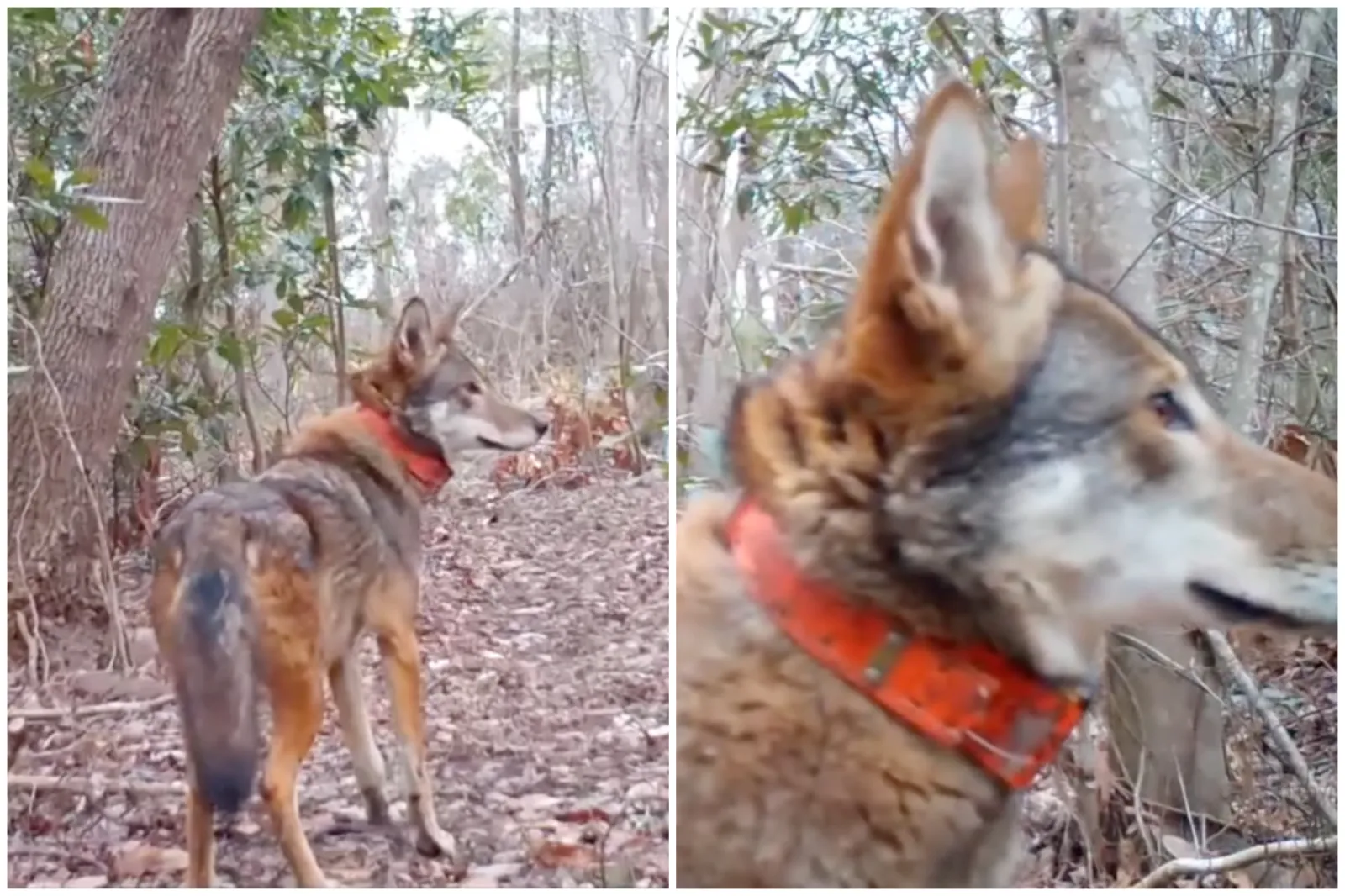
A rare red wolf has been caught on a trail-cam in North Carolina's Alligator River Wildlife Refuge. The wolf is one of the world's most endangered carnivores, and fewer than 17 adults are thought to exist in the wild today.
"People have killed them for generations," Will Harlan, Southeast director for the Center for Biological Diversity in North Carolina, told Newsweek. "They were targeted in extermination campaigns throughout the 20th century. By 1980, red wolves were declared extinct in the wild."
...
Read More
New Fear Unlocked as Woman Finds 3-Inch Venomous Tarantula Under Her Tent3 min read

Chilling Moment Shark Enters ‘Hunt Mode’ as She Smells Diver in Ocean3 min read

Bear Caught Testing Out Trampoline in New York Family’s Backyard3 min read

Red wolves were one of the first species listed under the Endangered Species Act in 1967. In 1987, four pairs of red wolves were released into the wild in Dare County, North Carolina, in the Alligator River National Wildlife Refuge.
"The U.S. Fish and Wildlife [Service] led a successful reintroduction program in eastern North Carolina, and the population of red wolves grew to 150 wolves by 2010," Harlan said. "But then political pressure, illegal management and agency inaction caused the program to fall apart. Fortunately, the program—and the wolves—are starting to bounce back, but...gunshot remains a leading cause of death for red wolves."
Red wolves once roamed across an area stretching from southeastern Texas to central Pennsylvania. Today, the Fish and Wildlife Service estimates that only 14 to 17 adults exist in the wild, and they can only be found in five counties on North Carolina's Albemarle Peninsula (Beaufort, Hyde, Tyrell, Washington and Dare), which contains the Alligator River National Wildlife Refuge.
To track their population, the Fish and Wildlife Service uses GPS collars via radio telemetry.

...
Red wolves and Mexican gray wolves are two distinct, but closely related, species, according to National Geographic. Both species are listed under the Endangered Species Act. Red wolves are slightly smaller than their gray cousins, weighing between 45 and 80 pounds, according to the Fish and Wildlife Service.
Losing red wolves can affect the balance of their surrounding ecosystem, which is why their reintroduction is so important.
"As apex predators, they control populations of rodents, deer, raccoons and opossums," Harland said. "They reduce crop damage from deer, rodents and raccoons and help protect declining bird and turtle species. Red wolves also control invasive nutria populations, which wreak havoc on local ecosystems and economies. They also hold ground from the migration of Eastern coyotes.
He continued: "Red wolves used to roam across most of the Eastern United States. Without them, deer, raccoon and rodent populations have significantly increased, leading to increased disease, collisions with automobiles and agriculture damage."
To protect these animals, Harlan said, the Fish and Wildlife Service needed to release significantly more captively bred red wolves into the wild.
"It can also strengthen law enforcement to help prosecute and deter poachers," he said. "It can improve outreach and coexistence strategies in the red wolf recovery area, and it can create additional red wolf recovery areas within its historic range."
View 0 Comments
Submit Correction
View Editorial & AI Guidelines