10
Loading video...

By Joe Edwards
Reporter
0
Share
Newsweek is a Trust Project member
See more of our trusted coverage when you search.Prefer Newsweek on Googleto see more of our trusted coverage when you search.
NASA has responded again to debunked claims that Earth will lose gravity briefly on Wednesday.
Social media has been awash with claims that our planet will briefly lose its gravity on Wednesday, a theory tied to an alleged leaked NASA project known as "Project Anchor."
What Has NASA Said?
NASA senior science communicator Karen Fox told Newsweek that the outlandish conspiracy theory “comes around every year.”
Read More on News
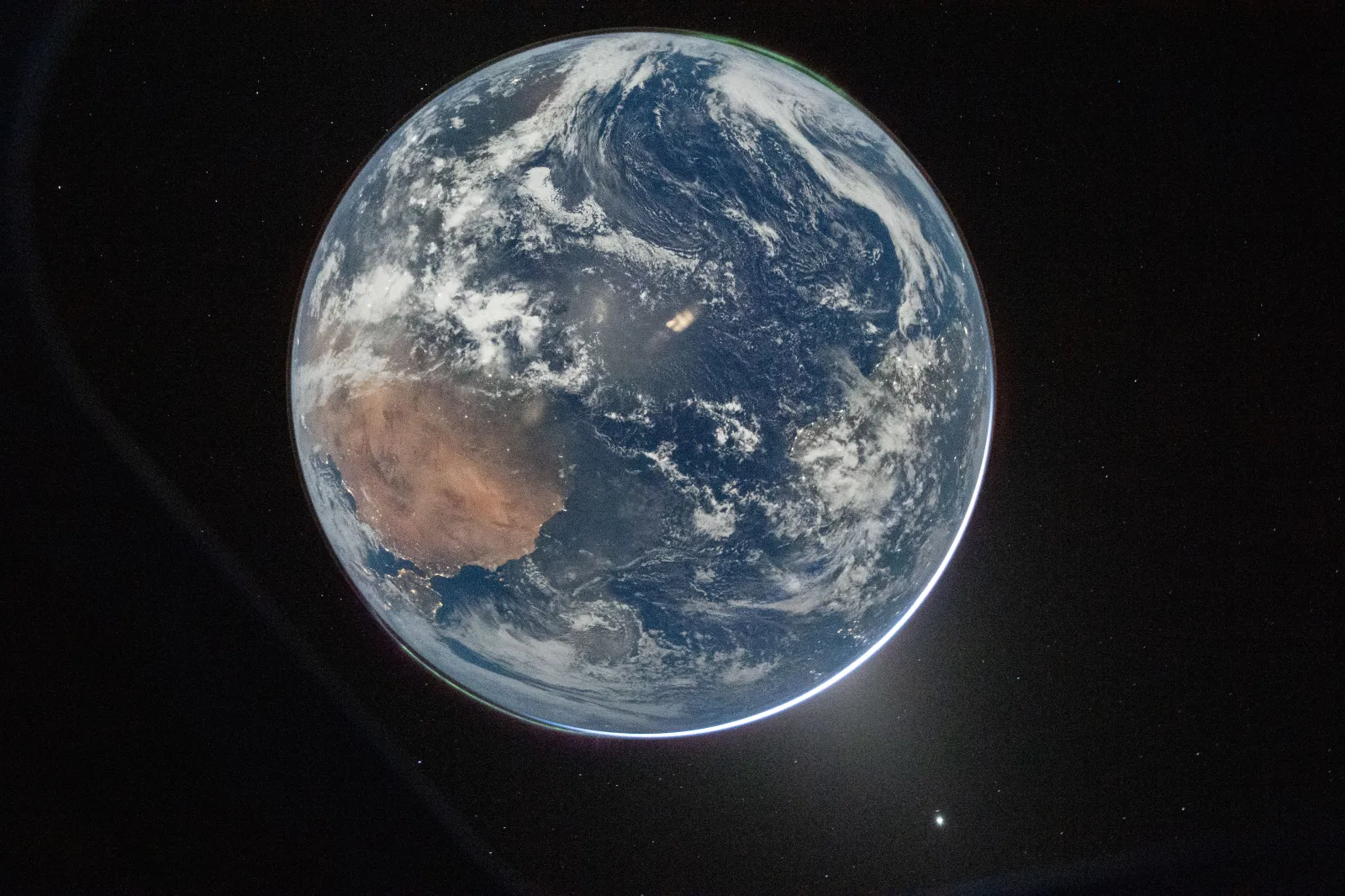
An agency statement Fox provided on Wednesday said: “The Earth will not lose gravity on [Wednesday]. Earth's gravity, or total gravitational force, is determined by its mass. The only way for the Earth to lose gravity would be for the Earth system, the combined mass of its core, mantle, crust, ocean, terrestrial water, and atmosphere, to lose mass.”
NASA has addressed similar claims previously, but the topic appears to have gained renewed traction on social media as August 12 approached.
...
What Is 'Project Anchor'?
In a January report, fact-checking outlet Snopes examined the “Project Anchor” claim after it began spreading online.
The rumor alleged that a secret NASA document had leaked in November 2024, warning that Earth would briefly “lose gravity” on August 12, 2026, causing mass casualties and global disruption.
Snopes rated the claim false, reporting that it found no credible search results that any such NASA project leaked.
According to Snopes, the story appeared to pick up steam through copy-and-paste social media posts, including an Instagram video that claimed NASA was preparing for a seven-second “gravitational anomaly” but withholding the information from the public.
The posts included dramatic details, such as an alleged $89 billion budget, predictions of tens of millions of deaths, and claims that only selected officials and specialists would be protected in bunkers.
Solar Eclipse, Meteor Shower Expected Wednesday
Today’s date is of astronomical significance, with a total solar eclipse expected to be visible along a path that crosses Greenland, Iceland, northern Russia, the Atlantic Ocean, Spain and a small corner of Portugal.
Other countries in the Northern Hemisphere will also be able to view a partial eclipse, according to NASA—including parts of the northern U.S. (from Alaska to North Carolina), most of Canada, much of Europe, and northwestern Africa.

...
NASA’s statement added: “A total solar eclipse has no unusual impact on Earth's gravity. The gravitational attraction of the Sun and Moon on the Earth, which doesn't impact Earth's total gravity, but does impact tidal forces, is well understood and is predictable decades in advance."
The annual Perseid meteor shower is also expected to reach its peak Wednesday night into early Thursday morning, NASA said previously.
Contact Newsweek editor on this story: Edward Pearcey.
View 0 Comments
Submit Correction
View Editorial & AI Guidelines