
...

By Khaleda Rahman
National Correspondent
0
Share
Newsweek is a Trust Project member
See more of our trusted coverage when you search.Prefer Newsweek on Googleto see more of our trusted coverage when you search.
Progressive Democrats scored victories in primary elections on Tuesday, highlighting the growing power of the party’s insurgent left and the shape it is taking for November’s midterm elections.
In Colorado, 29-year-old Democratic socialist Melat Kiros defeated Representative Diana DeGette, an incumbent who has been in office almost as long as Kiros has been alive. And in the state’s lone swing district and one of the party’s top pickup targets, progressive state Representative Manny Rutinel beat moderate former state Representative Shannon Bird.
While other establishment-backed candidates held off progressive challengers, the results are the latest sign of the rising influence of the party’s left flank amid an intensifying debate over whether voters want younger, more progressive leaders over established veteran lawmakers.
Read More on Politics
Last week, three progressives endorsed by New York City Mayor Zohran Mamdani swept establishment-backed candidates in New York’s congressional primaries, ousting two sitting congressmen.
The wins have reportedly prompted concern among Democratic leadership who fear Mamdani and his supporters could push the party too far left ahead of November’s midterm elections, when voters will decide which party controls Congress for the last two years of President Donald Trump’s term.
Generational Change
In the race to represent Colorado’s 1st Congressional District, political newcomer Kiros emerged triumphant over DeGette, who had comfortably controlled her House seat in Denver for nearly 30 years and is considered a progressive lawmaker herself. Kiros had the endorsement of Senator Bernie Sanders, while DeGette was backed by Colorado's established Democratic House delegation.
Kiros’ victory on Tuesday further signals Democratic voters' desire for generational change, as she centered her campaign on the message that the district needed new leadership after decades of representation by the same member of Congress.
...
The district, which includes the city and county of Denver, is deep blue, so Kiros is all but assured of defeating Republican Christy Peterson in November and reaching Congress in January. If she wins, she would become both Colorado's first Black female representative in Congress and the first Gen Z woman elected to the U.S. House of Representatives.
In a speech after her primary victory, Kiros, a lawyer-turned-doctoral student, touted a movement that is "just getting started" and "winning from coast to coast."
She promised to take the fight to Trump and the oligarchy, abolish U.S. Immigration and Customs Enforcement, pass "Medicare for All," and end what she termed the "genocide in Palestine."
She said: "We believe that fundamental change can and will happen if we fight for it. If we organize and show no fear in standing up for what’s right, that is the message that Denver has sent to both parties, to Donald Trump and to the entire country."
A Progressive Win in Key Battleground
Progressives also claimed victory in Colorado’s competitive 8th District, where Rutinel won the Democratic nomination over Bird. He will face Republican Representative Gabe Evans in November.
Democratic Party leaders thought a moderate like Bird was the best candidate to challenge Evans. Rutinel, who is Latino, has argued that his personal story and more aggressive economic agenda make him the better candidate against Evans in the heavily Hispanic district.
The race will be closely watched, since Democrats view it as one of their best chances of picking up a seat in November.
Republicans believe they have a better chance of defeating Rutinel than they would have Bird, so Rutinel’s performance in November will serve as a key test of whether progressives can win in a highly competitive district.
Some Setbacks
But not all progressives have won their races, and Tuesday’s results saw another example of a centrist Democrat fending off a challenge from the left.
In Colorado's Senate primary on Tuesday, incumbent Senator John Hickenlooper won over self-fashioned "insurgent progressive" state Senator Julie Gonzales.
Gonzales told supporters during a concession speech that her campaign had "put the Democratic establishment on notice: keep taking folks like us for granted at your own peril," according to Colorado Public Radio.
She said: "John Hickenlooper may have won tonight’s primary. But our movement has already won, because Colorado, we are making it clear that the days of do-nothing Democrats are over in this state."
Hickenlooper said his win was a sign of a coming Democratic sweep in November.
"We’re gonna take back the U.S. Senate, we will take back the house and then we’re going to stop President Trump in his tracks," he said.
Related Story
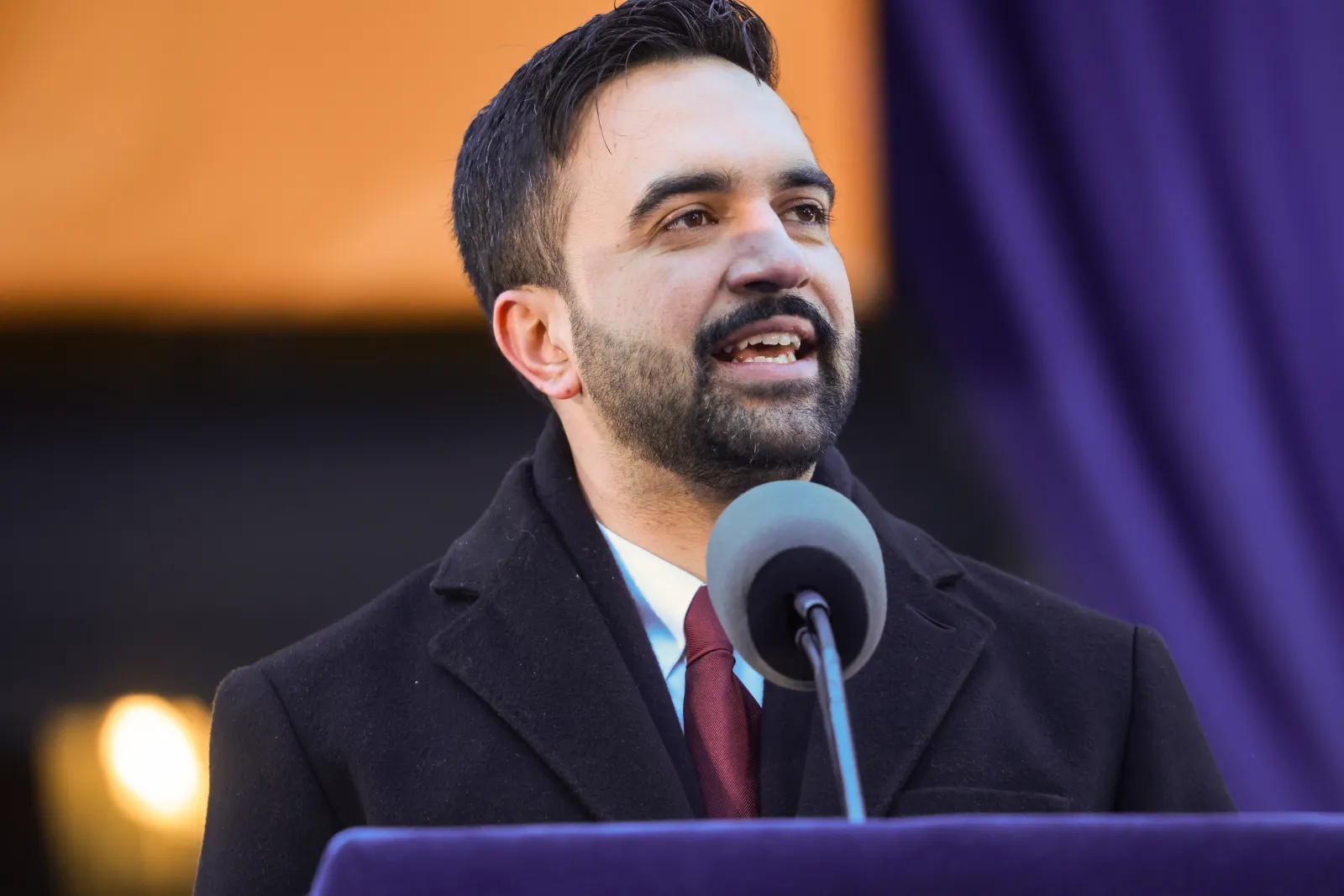
Mamdani Candidates Sweep—What Polls Show About Views of Socialism in US
A Midterm Test for Democrats
The sweep of Mamdani-backed candidates last week sent a message to establishment Democrats about which faction of the party holds greater sway in America’s largest city and one of the party’s most reliable strongholds.
As well as showcasing the growing influence of the ascendant progressive movement led by Mamdani, a democratic socialist, it signaled that voters want dramatic change on key issues, including Israel’s war in Gaza and affordability.
"I believe that Democratic voters are fed up with corporate Democrats who don’t recognize what time it is, who aren’t bringing enough energy to the fight against Trump and are just demonstrating what we’re against, instead of showing what we’re for," Brad Lander, the Mamdani-backed candidate who defeated Representative Dan Goldman in last week’s primary, recently told Newsweek.
"They want to see a real seriousness in taking on the special interests that are rigging the economy and the government."
But while progressives have racked up a series of primary wins in states including Kentucky, Texas and Maine, it remains to be seen whether candidates can win in the more competitive districts, where moderates typically do better.
"Primary elections tend to attract fewer and more extreme voters, so these voters are more influential in these types of elections," Costas Panagopoulos, a professor of political science at Northeastern University, told Newsweek. "In recent years, these voters have been numerous enough to outnumber centrists and to push both parties toward the polar ends of the ideological spectrum."
Panagopoulos said that "the risk is the types of candidates that emerge from these races often face challenges in general elections, when the voter pool is more balanced to include centrists and independents."
The shifts in the Democratic Party "have been happening in the GOP for quite some time, which have sometimes been perilous for the Republicans," he added. "It remains unclear how things will play out for Democrats this cycle and beyond, but there is clearly pressure from more extreme ideologues to push the party to the left."
Grant Davis Reeher, a professor of political science at Syracuse University, told Newsweek that neither party is "positively viewed at the moment—the disapproval ratings for both are extremely high. That creates fertile ground for fundamental challenges to their brands and their messages. Democratic socialism supplies that for Democrats.
It "also represents a more extreme contrast with Trump and Trumpism, and the energy in the Democratic Party is more with voters extremely dissatisfied with Trump," he said. But he added that it "remains to be seen just how lasting the more Left position will be."
But progressive candidates won't necessarily hinder Democrats’ chances in November, according to Raymond La Raja, a professor of political science and co-director of the University of Massachusetts Amherst's polling program.
"How much are voters willing to punish the Republican Party? Increasingly, it seems they are very unhappy with direction of country with Trump and Republicans in charge," La Raja recently told Newsweek.
"So that means ideology matters less in the general election—so progressives may do just as well in the general election."
This article includes reporting by The Associated Press.
Update, 07/01/26 10:35 a.m. ET; this article was updated with comment from Grant Davis Reeher.
Contact Newsweek editors on this story: Toby Meyjes and Sam Wilson.
View 0 Comments
Submit Correction
View Editorial & AI Guidelines