
10
Loading video...


By Hugh Cameron and Hannah Parry
0
Share
Newsweek is a Trust Project member
See more of our trusted coverage when you search.Prefer Newsweek on Googleto see more of our trusted coverage when you search.
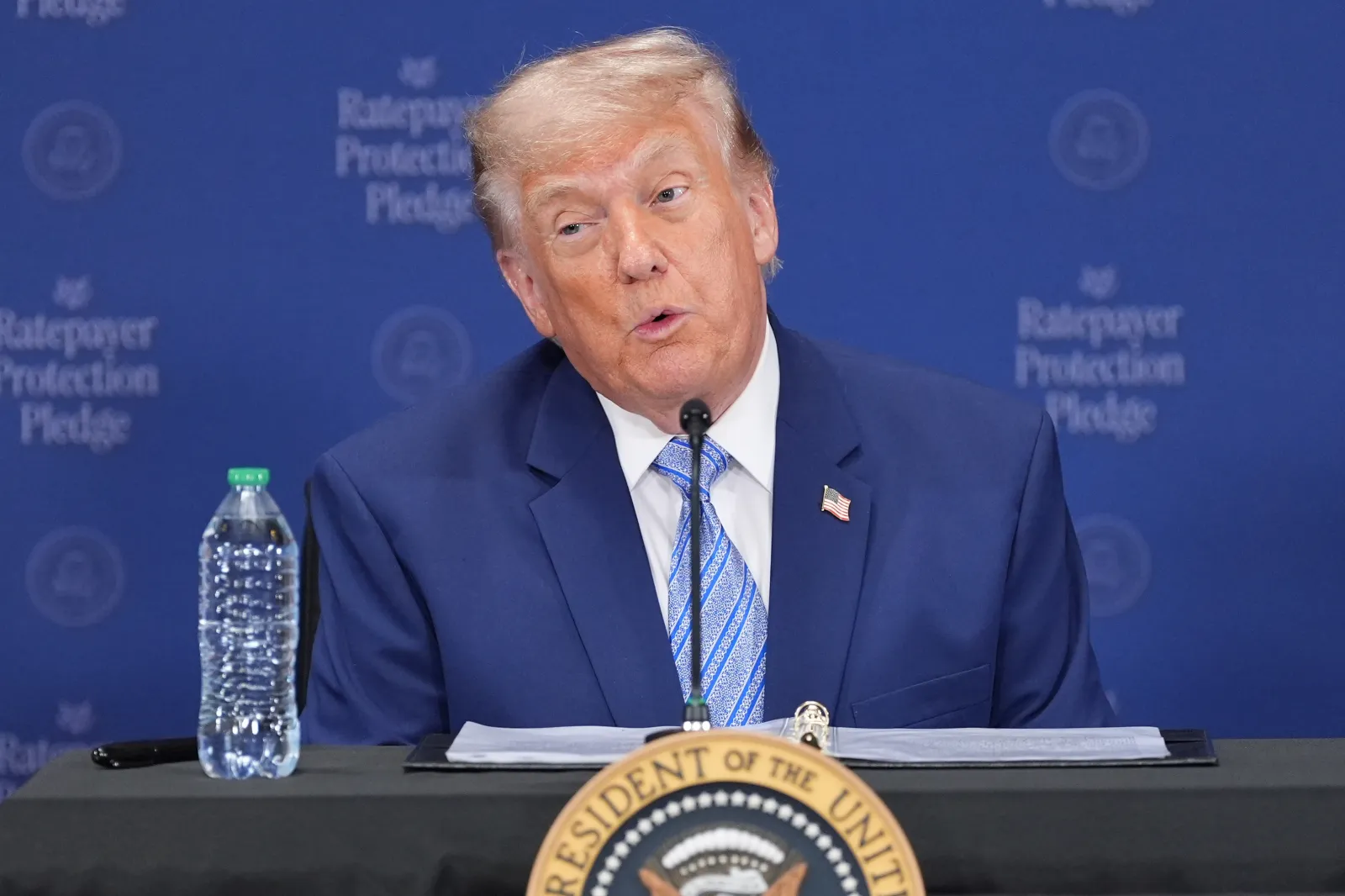
President Donald Trump has placed new, double-digit tariffs on dozens of the United States’ largest trading partners—the latest attempt by his administration to build back the tariff regime that was dismantled by the Supreme Court early this year.
As of 12:01 a.m. on Friday, levies of between 10 and 12.5 percent are being placed on over 80 nations in total—including Canada, China, and the 27 which make up the European Union (EU)—who together account for nearly all the country’s imports.
Trump has also threatened to impose another "substantial" tariff on the European Union after it fined several U.S. tech companies for breaching antitrust rules.
Read More on News
In a post on Truth Social, the president accused the E.U. of taking "direct aim at GREAT American Companies," adding that "this illegal and highly discriminatory practice started at these high levels during the first year of the Sleepy Joe Biden Administration, but it’s not going to continue during the Trump Administration."
"The United States of America is not a “PIGGYBANK” for Europe, nor will we allow it to be!" he added, as he announced he was launching a 301 Investigation into the EU fines against the likes of Google, Apple, Meta and Amazon. The E.U. stated it was fining the companies to protect consumer data privacy and enforce fair competition, among other issues.
"The European Union will pay a very big price for this illegal and highly unethical conduct, which I have consistently warned them about. The penalties will be entirely reversed and, we anticipate, a substantial TARIFF to be placed on them at the earliest possible moment," he added.
Related Story
New Trump Tariffs: Map of Countries Impacted as Global Allies Hit Out
Why Did Trump Impose Tariffs Again?
The U.S. has said the duties are in response to countries allowing goods produced using forced labor to enter the supply chain, following a monthslong investigation into the matter. “The United States has had a forced labor import ban for nearly a century, and rigorously enforces it; it’s well past time for our trading partners to do the same,” said U.S. Trade Representative Jamieson Greer.
But their size and timing—just as the stopgap duties implemented after the Supreme Court decision in February were set to expire—have raised doubt about this as a rationale.
“While the tariffs purport to target forced labor, they apply to virtually all U.S. trading partners at rates of 10 percent or 12.5 percent, which effectively recreates the baseline tariff regime that was struck down by the Supreme Court,” Erica York, vice president of Federal Tax Policy at the Tax Foundation, told Newsweek. “If the policy goal was really focused on the issue of forced labor, the tariff regime would not so closely resemble a continuation of the expiring tariffs.”
Jason Miller, professor of Supply Chain Management at Michigan State University’s Eli Broad College of Business, said, “All available evidence suggests that the forced labor claim is a facade to replace the IEEPA tariffs that SCOTUS ruled illegal with alternative tariffs viewed as resting on more solid legal grounds."
Newsweek has contacted the Commerce Department and U.S. Trade Representative for comment.
Which Products Are Affected?
Greer's office said that countries who have committed to enforce bans on forced labor will be hit with the lower, 10 percent rate, with the remainder subject to a new 12.5 percent tariff.
Drawing on Census Bureau data, the U.S. International Trade Commission (USITC) and figures from the Observatory of Economic Complexity (OEC), the chart below shows the new tariff rates as well as the product the U.S. imports most heavily from each country—goods that could see prices rise if past trends repeat.
And more tariffs may be on the way. The U.S. has launched an anti-dumping investigation into 16 nations it believes may be overproducing goods to drive down prices and undercut the competitiveness of American firms.

...
“The United States will no longer sacrifice its industrial base to other countries that may be exporting their problems with excess capacity and production to us,” Greer said in March.
How Have Trading Partners Reacted?
On Thursday, Greer said he was encouraged by those nations who had “moved quickly to adopt forced labor import prohibitions, and look forward to ensuring their effective enforcement.”
However, many of America’s top trading partners have responded with frustration to the move, as well as confusion given what they see as the mechanisms they already have in place to keep forced labor out of the supply chain.
Dominic LeBlanc, the minister responsible for Canada-U.S. trade, said the move was “not unexpected,” but pointed to what he described as Canada’s “robust frameworks to prevent and address forced labor.”
Japan’s Chief Cabinet Secretary Minoru Kihara called the new tariffs “regrettable,” in remarks quoted in Nippon.com, while Australian Trade Minister Don Farrell said the duties were "completely unjustified” and New Zealand Prime Minister Christopher Luxon said the decision was “extremely disappointing.”
“Extremely disappointing to see new U.S. tariffs on New Zealand and 59 other countries,” Luxon posted to X. “The U.S. investigation did not provide meaningful evidence to support claims in relation to forced labour. Tariffs are not the way - they drive up costs and uncertainty for businesses.”
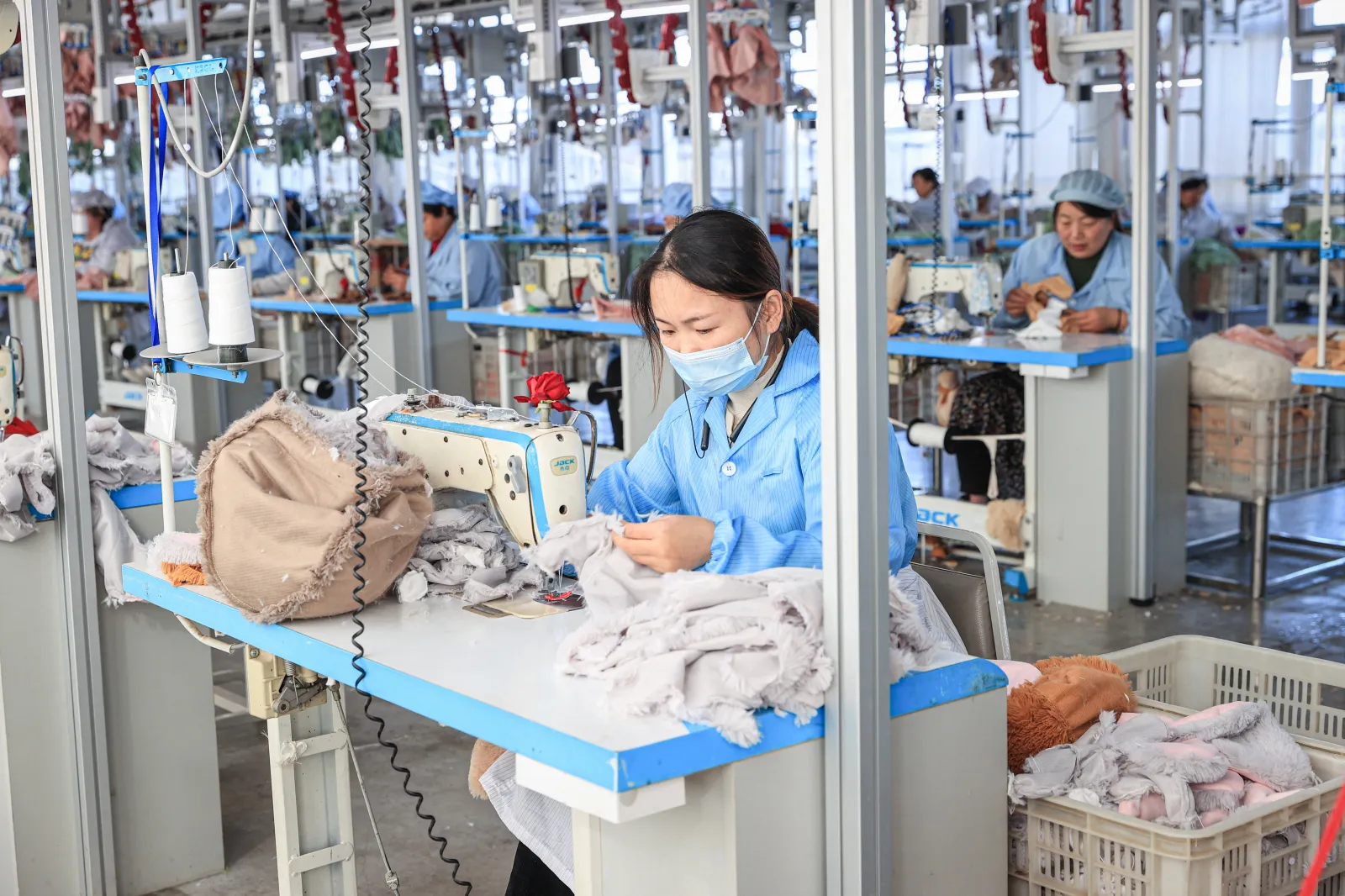
China has likewise expressed annoyance at the new unilateral tariffs, while denying that there is any forced labor in the country.
Related Story
China Protests Trump’s Latest Tariffs
The United Kingdom has said the change will not materially alter the tariffs to which its businesses are subject, though the EU’s previous 15 percent rate has been brought down to 10 percent—a change experts say will give the union greater relative access to the American market, particularly in sectors that were not covered under last year’s U.K.-U.S. trade deal.
“The EU now has better market access to the U.S. relative to the U.K.,” Thiemo Fetzer, a professor of economics at Warwick University, told Newsweek. “That means in relative terms U.K. producers of similar goods will lose out, so it’s a shock to U.K. manufacturing in many parts.”
Contact Newsweek editors on this story: John Fitzpatrick and Gray R. Thomas
View 0 Comments
Submit Correction
View Editorial & AI Guidelines