...

By Aristos Georgiou
Science and Health Reporter
0
Share
Newsweek is a Trust Project member
See more of our trusted coverage when you search.Prefer Newsweek on Googleto see more of our trusted coverage when you search.
Researchers have uncovered fascinating insights into the lives of prehistoric Native Americans who made camp in the Great Lakes region around 13,000 years ago.
The camp, now called the Belson site, was set up in what is now southwest Michigan by a small band of people from the Clovis culture, as first reported in a study published in 2021. It is considered to be the earliest confirmed archaeological site in the state.
But now a fresh study, authored by the same team and published in the online journal PLOS One, has shed new light on the site. The work reveals, among other discoveries, that the Clovis people likely returned to the site annually over several years, while also providing information on what they were eating.
Read More on Science
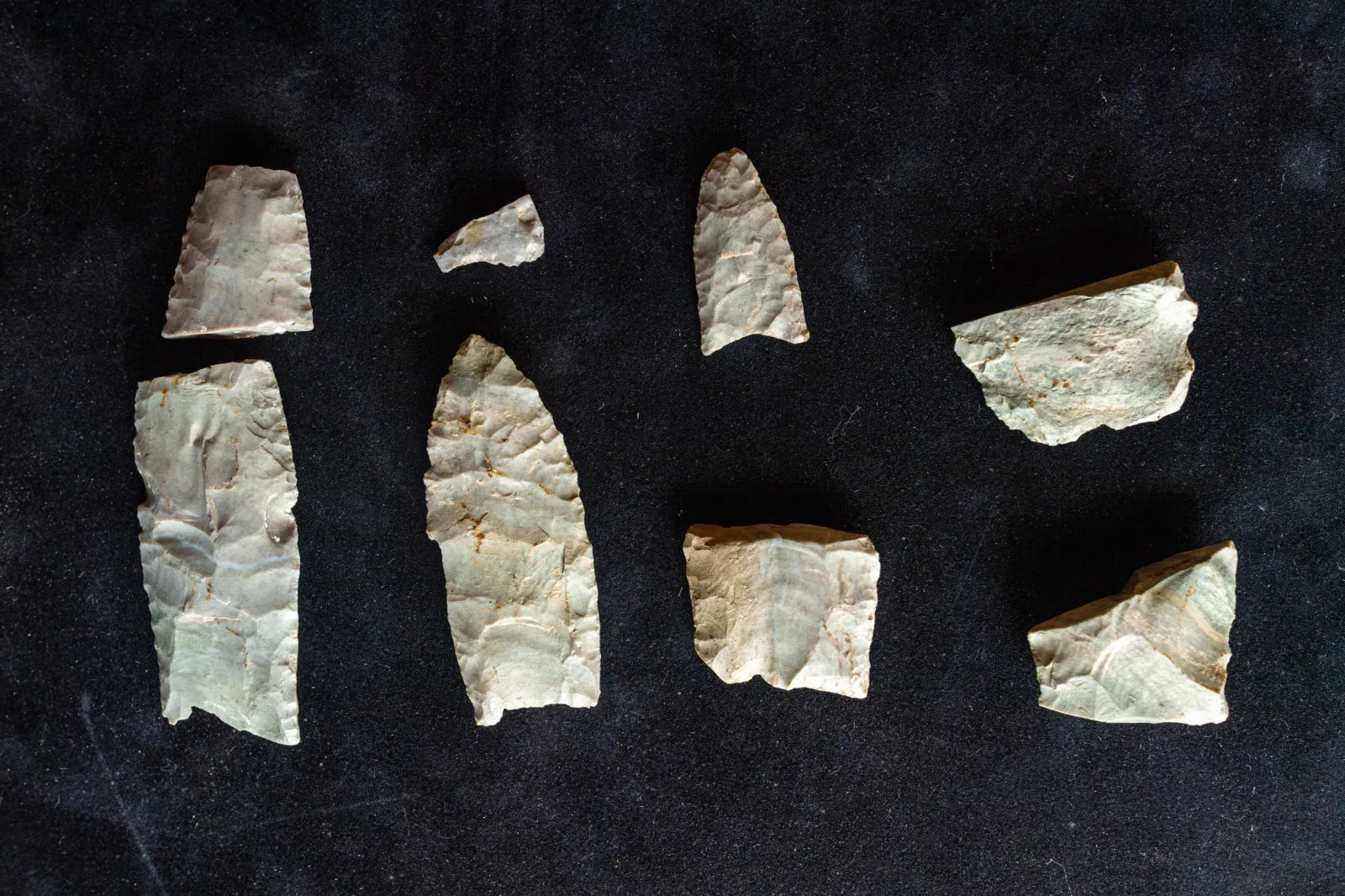
The Clovis culture was a prehistoric Native American people that lived roughly 13,000 years ago in North America near the end of the Pleistocene epoch. The culture—known for its distinctive pointed and sharp-edged stone tools—is named after the Clovis archaeological site in New Mexico where researchers first uncovered evidence of them.
"The Clovis people are the ancestors of modern Native Americans, and were the first people to occupy the Great Lakes region," study lead author Brendan Nash, a doctoral student of archaeology at the University of Michigan, told Newsweek.
"Where Clovis came from is a huge debate, but it is clear that once established, Clovis people were very successful and proliferated into the multitude of Native American cultures that are seen today, including the south American cultures."
...
Until recently, there was no evidence of Clovis settlement in the Great Lakes region. During the latter part of the Pleistocene, the Earth experienced its most recent ice age. In North America, this was characterized by an event known as the Wisconsin glaciation, which began between around 100,000 to 75,000 years ago and ended roughly 11,000 years ago.
This event resulted in Michigan becoming totally covered in glacier ice—along with most of the northern part of the continent—making the land inhospitable to humans. But, by around 13,000 years ago, toward the end of the last ice age, the ice sheet had receded and was likely only covering Michigan's Upper Peninsula, as well as the northern tip of the Lower Peninsula—nicknamed "The Mitten."
In fact, the southern portion of The Mitten, including the Belson site, would have have been free of ice around 16,000 years ago and open for people to inhabit, although it took some time for Clovis settlers to move in.
The latest study has revealed that, around 13,000 years ago, Clovis people were meeting up in what is now central Indiana in the winter near a source of good stone for making tools. In the spring, the big group split into many smaller ones, which probably consisted of extended families. The evidence suggests that one of these extended family groups moved northwest to southwest Michigan—i.e., the Belson site.
"This pattern of movement from central Indiana to the Belson site by Clovis users happened at least two times, but it could have been as many as five or six," Nash said. "It is likely that this pattern of migration actually happened for many more years, but It's hard to say how many because other sites that people may have moved to in the spring and summer have not been found.
"This tells us that Clovis people had a very intimate familiarity with the landscape of Midwest North America, and that they created a [way of life] that included being highly mobile, moving hundreds of kilometers per year on migratory routes where people would aggregate in the winter near good sources of stone for making stone tool, and where they would trade ideas and mates, before splitting apart in the spring."
An analysis of protein traces found on some of the stone tools—known as Clovis points—from the Belson site also demonstrated that the diet of this group included various animals.
The team found evidence of musk ox, caribou or deer, hare and an extinct peccary—a pig-like animal—protein on the tools.
"Taken together, the ancient protein data suggests that these people had a broad spectrum diet, eating a wide variety of animals," Nash said in a press release. "Our findings are contrary to the popular notion that Clovis people were strictly big game hunters, most often subsisting on mammoths and mastodons."
It is likely that these Clovis people also ate plants, but such material cannot be detected using the kind of protein tests that the team used. In addition, plant remains are rarely preserved for so long.
The Belson site is situated in an area with a good view to the south, over a river channel that herds of herbivores would cross in the spring, according to the study. The site likely served as a relatively short-term camp where prehistoric people positioned themselves to take advantage of migrating animals while hunting smaller and more varied game opportunistically, the authors propose.
"The site has a fireplace and debris from re-sharpening hunting weapons and animal processing tools, so people were likely living at Belson for a short time hunting local animals and processing them for meat, hides, and other materials," Nash told Newsweek.
The researcher said it is surprising that Clovis people seemingly came back to the exact same campsite year after year.
"They even seem to have re-used the same fireplace, re-sharpened their stone tools in the same location and likely slept in the same place. Why this place and not half a mile up or down the St. Joseph River?" Nash added.
"This site teaches us about a way of life lost to time," he said in the release.
Do you have a tip on a science story that Newsweek should be covering? Do you have a question about archaeology? Let us know via science@newsweek.com.
Update 10/01/24, 7:30 a.m. ET: This article was updated to include additional comment from Brendan Nash.
View 0 Comments
Submit Correction
View Editorial & AI Guidelines