
...

By Amanda Greenwood
Associate News Editor
0
Share
Newsweek is a Trust Project member
See more of our trusted coverage when you search.Prefer Newsweek on Googleto see more of our trusted coverage when you search.
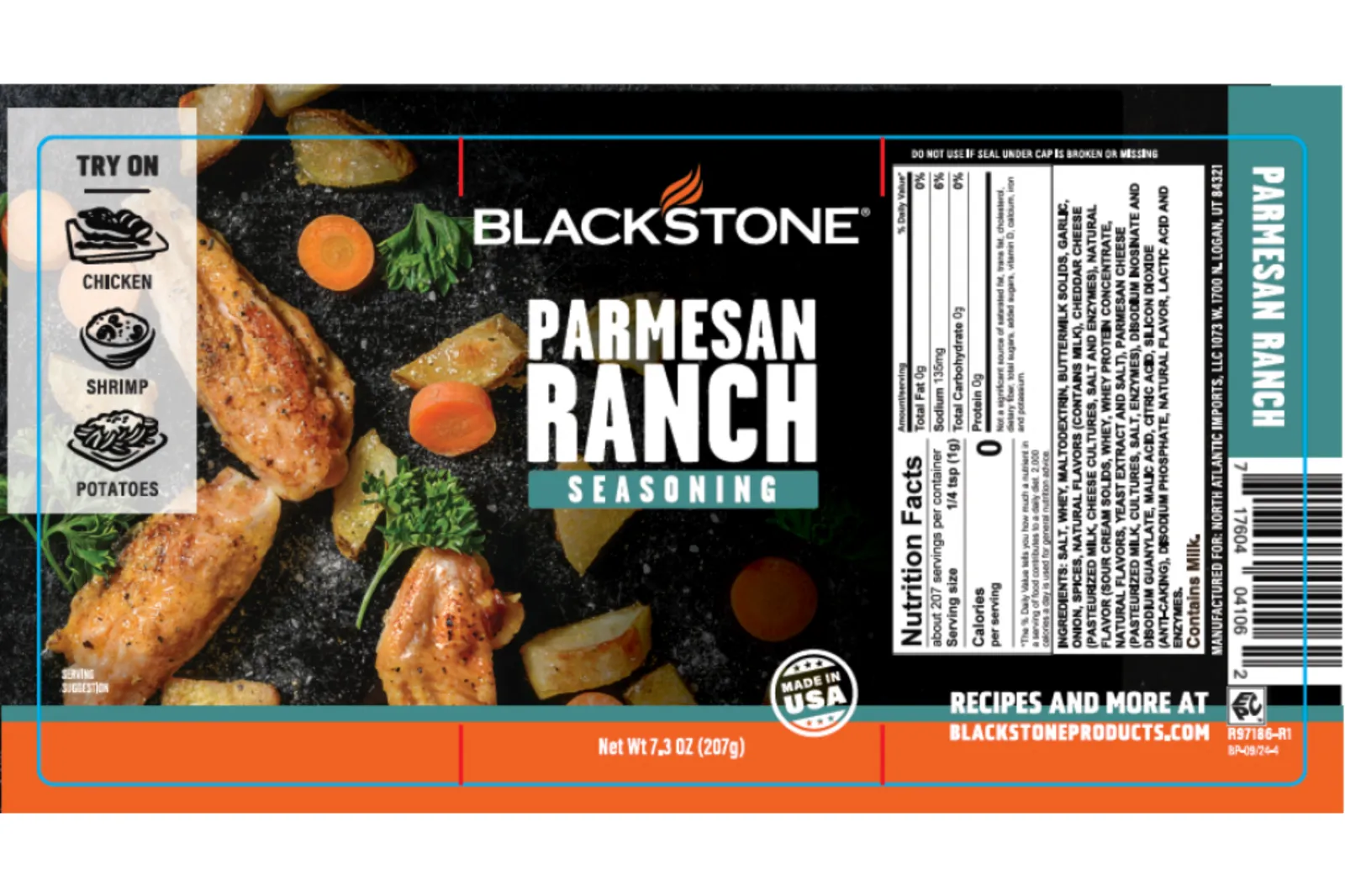
Blackstone Products has voluntarily recalled select lots of its Parmesan Ranch seasoning after discovering a potential contamination risk linked to salmonella, according to a statement published by the U.S. Food and Drug Administration (FDA) on May 15, 2026.
The recall affects Blackstone Parmesan Ranch seasoning, sold in 7.3-ounce containers, carrying the following lot numbers and best-by dates:
- Lot number: 2025-43282, best by July 2, 2027.
- Lot number: 2025-46172, best by August 5, 2027.
- Lot number: 2026-54751, best by August 12, 2027.
Read More on News
The affected products were sold “nationwide exclusively through Walmart stores” and the company’s website, meaning that millions of consumers across the U.S. may have bought the potentially contaminated seasoning.
...
Why the Product Was Recalled
The recall was not triggered by contamination detected in the finished seasoning itself, but by a third-party supply issue. Blackstone’s supplier, California Dairies, recalled certain lots of its dry milk powder—which was used in the Parmesan Ranch seasoning—after it was found to have potential salmonella contamination.
The FDA says that, at the time of publishing, no illnesses linked to the product have been reported so far.
However, multiple wholesale distributors and manufacturers were impacted by the California Dairies recall. It sparked a series of additional food recalls in April and May, per the FDA. That recall impacted products from major retailers like Giant Eagle and Ghirardelli, since they used the powdered milk and buttermilk in their products.
The Blackstone recall did not have a specific classification, or series of designation issued by the FDA which determines the health severity of the recall.
What Consumers Should Do
Consumers who have purchased the affected seasoning are being urged by the FDA not to consume it under any circumstances.
Instead, they should:
- Check the lot number and “best by” date on the bottom of the container.
- Dispose of the product immediately.
- Contact Blackstone Products for a replacement or more information.
The company has set up a customer support line on 1-888-879-4610 to handle replacement requests.
For now, officials emphasize that the recall is precautionary and that acting quickly—by discarding affected products—is the best way for consumers to reduce any potential risk.
What is Blackstone Products?
Blackstone is a major retailer founded in 2008, most known for producing outdoor grills and griddles. The grills are popular in outdoor and camping setups. Blackstone's headquarters are based in New York, New York, and products are sold at massive retailers like Walmart, Target, Amazon, Lowe's, Costco, Tractor Supply Company and more.
What Is Salmonella and Why Is It a Serious Health Risk?
Salmonella is a type of bacteria and one of the leading causes of foodborne illness in the United States.
According to the Food Safety and Inspection Service (FSIS), salmonella causes about 1.35 million infections, 26,500 hospitalizations, and roughly 420 deaths each year in the U.S.
The Centers for Disease Control and Prevention (CDC) reports that people infected with salmonella typically develop symptoms between 6 hours and 6 days after exposure, although this can vary.
Common symptoms include:
- Diarrhea
- Fever
- Nausea
- Vomiting
- Abdominal cramps
Most symptoms last four to seven days and disappear by themselves, but more severe cases can occur, which need medical treatment. In rare instances, the bacteria can enter the bloodstream and cause serious complications, including arterial infections, endocarditis, or arthritis.
Who Is Most Vulnerable?
While most healthy adults can recover on their own, certain groups face a higher risk of developing severe illness after Salmonella poisoning. These include:
- Young children
- Older adults
- People with weakened immune systems
For these populations, salmonella infections can become life-threatening and may require hospitalization.
What to Do if You Experience Symptoms
Anyone who develops symptoms should monitor their condition closely and contact a health care provider if symptoms become severe or don’t subside after seven days.
Medical attention is especially important if symptoms include prolonged diarrhea, high fever, dehydration, or signs that the infection may be spreading beyond the digestive system.
View 0 Comments
Submit Correction
View Editorial & AI Guidelines