10
Loading video...



By Jordan King, Hollie Silverman, and Amanda Castro
0
Share
Newsweek is a Trust Project member
See more of our trusted coverage when you search.Prefer Newsweek on Googleto see more of our trusted coverage when you search.
Cardinal Pietro Parolin, the Vatican secretary of state, said he felt "deep sorrow" after the Society of St. Pius X (SSPX), a breakaway traditionalist Catholic group, consecrated four bishops without papal approval on Wednesday.
"I wish to express deep sorrow ... because, when speaking of the unity of the Church, an act of this kind deeply wounds that unity," he said while speaking with journalists on Wednesday, Crux Now reported.
"We know that episcopal ordinations performed without a papal mandate break the unity of the Church and incur very specific sanctions," Parolin said, adding, "fundamentally, excommunication."
Read More on News
"I do not know the timing or the manner in which this excommunication will be imposed," he continued, noting that the consecration of a bishop without permission from the pope is "an act that is schismatic in itself."
On Thursday, the Vatican followed through with its threats and announced the excommunication of the six bishops connected to the ceremony. It also warned SSPX lay followers who formally adhere to the fraternity that they are to be considered excommunicated.
Newsweek contacted the Vatican and SSPX for comment by email on Wednesday.
Related Story
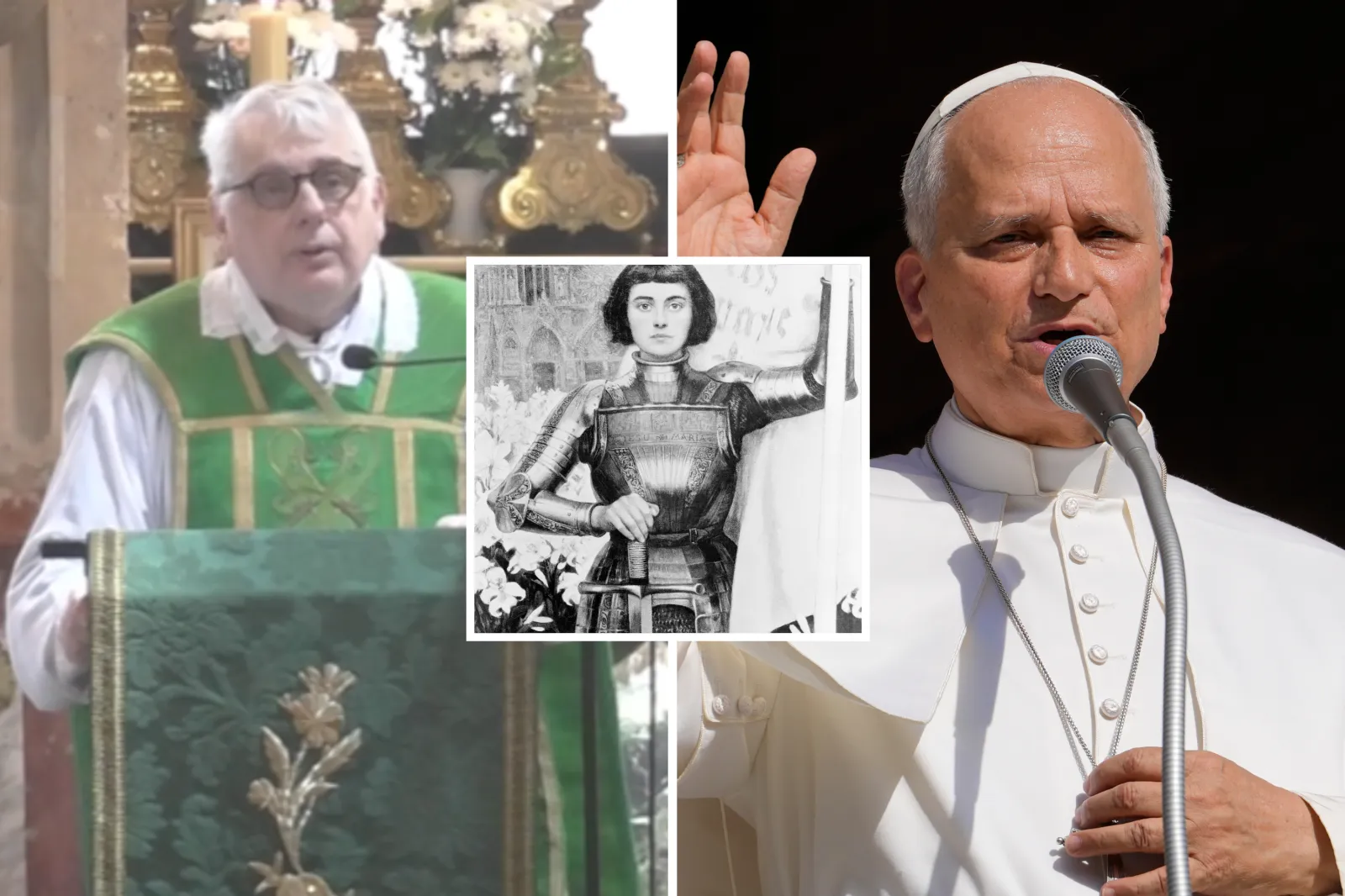
Rebel Catholic Priest Facing Excommunication Compares Group To Joan of Arc
The consecration ceremony began on Wednesday morning at the SSPX's seminary in Écône, Switzerland, despite repeated warnings from the Vatican that proceeding without the pope's mandate would constitute a schismatic act and could result in excommunication for those involved.
The consecrations mark the SSPX's most significant act of defiance since Archbishop Marcel Lefebvre, who founded the group in 1970, illicitly consecrated four bishops in 1988, triggering excommunications and a decades-long dispute with Rome.

...

...
1 of 2
Bishop Alfonso de Galarreta served as the consecrating bishop, while Bishop Bernard Fellay served as co-consecrator. Both men—the society's last remaining bishops prior to the ceremony—were excommunicated from the Catholic Church when Lefebvre consecrated them in 1988. But Pope Benedict XVI lifted the excommunications in 2009 as the Vatican worked to reconcile with the society.
During the ceremony, Michael Goldade, an American, became the first of the four priests to take the oath, pledging obedience to the church, the pope and the Holy See as he swore on the Gospels.
Goldade was followed by Pascal Schreiber of Switzerland and Michel Poinsinet de Sivry and Marc Hanappier, both of France.

...
The consecrator then began the formal examination of the bishop-elects, asking questions about their conduct and faith.
The four men were first asked to affirm that they were "willing to behave according to Scripture." They were then questioned on whether they would "teach the Scriptures, accept tradition, give obedience to Peter and his successors, do good and avoid evil, seek chastity and sobriety, seek humility and patience and be merciful."
Each replied, "I am willing."
The examination then turned to their profession of faith. The bishop-elects each answered, "I do believe," as the consecrator asked a series of theological questions, including about the Holy Trinity and eternal life.
Each man then kissed the consecrator's ring before the Mass began.
Vatican Declares Excommunications
In a decree issued by the Dicastery for the Doctrine of the Faith, the Holy See said the ordinations constituted "an act of a schismatic nature" because they were carried out "without pontifical mandate and against the will of the Supreme Pontiff."
The ruling also extended beyond the bishops, declaring SSPX priests to be schismatic and excommunicated. It said confessions and marriages celebrated by the group's clergy are invalid, and that lay faithful who "formally adhere to the Fraternity are to be considered excommunicated."
The ruling could affect thousands of Catholics in the United States, where the SSPX has an extensive network of chapels, schools and priories.
Catholic commentator Christopher Hale told Newsweek that the scope of Thursday’s decree marks a historic escalation. “The reach is what has no precedent,” he said, noting that in 1988, penalties stopped with the bishops involved. “This decree runs through the society’s roughly 750 priests and into the pews, warning that any Catholic who formally adheres to the schism incurs the same automatic penalty.” Hale added that Rome’s decision to invalidate SSPX confessions and marriages “withdraws the concessions Pope Francis made in 2015 and 2017,” signaling that “never in the long Écône saga has Rome cast the net so wide.”
Leo's Final Appeal for Unity
On Monday, Leo—whose papacy began in May 2025 following the death of Pope Francis—appealed directly to members of the SSPX, urging them to preserve the church's unity.
"I plead with you and ask you with all my heart: please turn back!" Leo wrote in a letter to the Reverend Davide Pagliarani, the superior general of the SSPX.
In response, Pagliarani appealed to the pope to refrain from imposing sanctions, arguing that the society was acting to defend, rather than reject, the Catholic Church.
"Far be it from us to separate ourselves from the Roman Church. We desire, on the contrary, to serve her by means that are extraordinary, as one would assist a mother in distress who requires particular help, even if such help is not understood by everyone," he wrote.
Hale said the speed and tone of Leo’s response reveal the pope’s broader strategy for unity. “Leo has treated the healing of the Church’s divisions as the central work of his pontificate,” he said. “Two days before the ceremony, he sent a letter that read less like a canonical warning than a father’s plea. He gave the society every possible hour to stand down, and once the act was done, the consequence arrived within a day.”
The standoff has become an early test of Leo's leadership. While the Vatican has spent years trying to maintain dialogue with the SSPX despite deep theological disagreements, church officials have warned that ordaining bishops without papal authorization crosses a red line because bishops are responsible for preserving the Catholic Church's unity and communion with Rome.
Pope-Leo-XIV-s-Letter-to-SSPX.pdf.PDF
SSPX Says Penalties 'Have No Validity'
Before the consecrations began, the SSPX read a letter explaining why it had decided to proceed despite the Holy See's repeated warnings that the ceremony could result in excommunication.
The society argued that church leaders, since the Second Vatican Council, had abandoned Catholic tradition.
"From the Second Vatican Council up to the present day, the authorities in the church have been animated by a spirit that is contrary to that of the faith and have been acting against holy tradition," the letter said.
"They will no longer endure sound doctrine, turning away their hearing from the truth and turning toward fables," it continued.
The letter said the society therefore regarded it as a "sacred duty toward the Holy Church" to proceed with "the consecration of bishops who are entirely faithful to her tradition."
It added, "We consider every punishment and censure brought to bear against this step will have no validity."

...
Superior General Rejects Schism Claim
Pagliarani used his address during the consecration ceremony to reject claims that the society was separating itself from the Catholic Church, arguing instead that it was acting to preserve the church's faith and tradition.
"We are in the process of choosing between the faith and the church," the superior general said, adding, "It's a false dilemma."
He argued that the SSPX remained part of the Catholic Church because it continued to profess what it considers the church's historic faith.
"We belong to the church, primarily, by the faith," he said. "We want the faith of the church in order to stay inside the church, and we want the church by the faith, in the faith."

...
Pagliarani also rejected accusations that the society lacked respect for the pope, saying the SSPX's criticism stemmed from its devotion to the papacy rather than any opposition to it.
"It is precisely because we love the pope as the Vicar of Christ ... that we don't want to see the pope humiliated anymore," he said, criticizing recent interfaith initiatives and arguing that they placed "truth next to false religions."
He said the SSPX and church leaders had come to "speak two different languages," contrasting what he described as the society's emphasis on "the language of the faith" and tradition with Rome's increased focus on dialogue and "including others."
"That's not what souls need today. Souls today need our Lord Jesus Christ," Pagliarani said. "There's only one true faith."
Pagliarani said the consecrations were being carried out "not in bitterness, not in sadness," but "in joy and hope." Pointing to the society's survival after Lefebvre's unauthorized episcopal consecrations almost four decades ago, he said, "God has never abandoned us, and he will not abandon us."

...
Why Does the SSPX Reject Vatican II?
At the heart of the dispute between the SSPX and the Vatican is the Second Vatican Council, a series of meetings held between 1962 and 1965 that introduced sweeping reforms to the Catholic Church.
While the council reaffirmed core Catholic doctrine, it also encouraged greater dialogue with other Christian denominations and non-Christian religions, recognized religious liberty as a fundamental human right and acknowledged that people who are not Catholic can, in certain circumstances, attain salvation.
The SSPX argues that those teachings represent a break with centuries of Catholic tradition. It maintains that the church should continue to teach that Catholicism is the one true religion and has sharply criticized popes for participating in interfaith gatherings and ecumenical initiatives with leaders of other faiths.
Those disagreements featured prominently in Wednesday's consecration ceremony, with Pagliarani accusing church leaders of prioritizing dialogue over doctrine.
The Vatican, meanwhile, has consistently maintained that the Second Vatican Council forms part of the church's authentic teaching authority, and that its reforms are fully compatible with Catholic doctrine. It argues that dialogue with other faiths does not diminish the church's belief that the fullness of salvation subsists in the Catholic Church but seeks to promote understanding and peace.
Hale said Catholics should understand the decree as both severe and hopeful. “Excommunication in Catholic teaching is a medicinal penalty — the Church’s starkest way of telling the wanderer how far he has walked, and of pointing the way home,” he said. The door remains open, he noted, since only the pope can lift the penalties and Leo’s last word to Écône was ‘please.’
At the same time, Hale said, “This pontificate is betting that unity can hold the Latin Mass and the village parish inside one communion without tearing either away. The men at Écône wagered instead that tradition could be saved by tearing the Church that carries it, and Rome’s answer came within twenty‑four hours, naming them all.”
Contact Newsweek editors on this story: Tobias Meyjes, Shakeema Edwards and Gray R. Thomas.
Update 7/2/26, 7:07 a.m. ET: This article was updated with additional information.
Update 7/2/26, 12:09 p.m. ET: This article was updated with additional information.
View 0 Comments
Submit Correction
View Editorial & AI Guidelines